- 1. What Is the Tenfold Dedication?
- 2. The Origins of the Tenfold Dedication in Buddhist Teachings
- 3. The Role of the Tenfold Dedication on the Bodhisattva Path
- 4. The Ten Forms of Dedication and the Meaning of Each
- 5. The Meaning of the Tenfold Dedication for Lay Practitioners
- 6. The Tenfold Dedication in Modern Life
- Conclusion
1. What Is the Tenfold Dedication?
The Tenfold Dedication refers to ten methods of dedicating merit presented in Mahayana teachings. Dedication means directing the merit generated through one's practice toward a higher and more noble purpose rather than keeping it solely for oneself. In the spirit of the Bodhisattva path, all wholesome roots and virtuous practices are dedicated toward the enlightenment of all sentient beings.
A distinctive feature of the Tenfold Dedication is its emphasis on selflessness. Practitioners do not cling to merit as a personal achievement but regard it as a means of nurturing compassion and wisdom. Through dedication, merit is no longer limited by attachment to the self. This letting go allows merit to become more expansive and pure.
Understanding what the Tenfold Dedication means also helps us recognize that dedication is not merely a formal ritual. It is an inner transformation. When we perform a good deed without expecting anything in return, we are practicing the spirit of dedication.
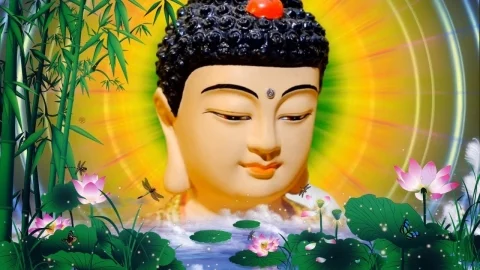
The Tenfold Dedication is expressed through doing good without expecting anything in return. (Source: Collected)
2. The Origins of the Tenfold Dedication in Buddhist Teachings
The Tenfold Dedication is clearly presented in Mahayana scriptures, particularly the Avatamsaka Sutra. Within the system of Bodhisattva spiritual attainment, the Tenfold Dedication comes after the Ten Practices and before the Ten Stages. This is an important transitional stage in which the practitioner expands their mind and gradually overcomes subtle forms of attachment to the self.
According to Buddhist scriptures and commentaries, dedication is not simply about transferring merit but also about transforming the mind. When merit is dedicated to the Dharma realm, practitioners gradually dissolve the boundary between themselves and others. For this reason, the Tenfold Dedication serves as a bridge between individual spiritual practice and the welfare of sentient beings.
Throughout the development of Mahayana Buddhism, Buddhist masters and commentators have explained this teaching as a method for preventing practitioners from falling into self-satisfaction. Without dedication, merit can itself become an object of attachment. Through dedication, the mind becomes more open and clear.
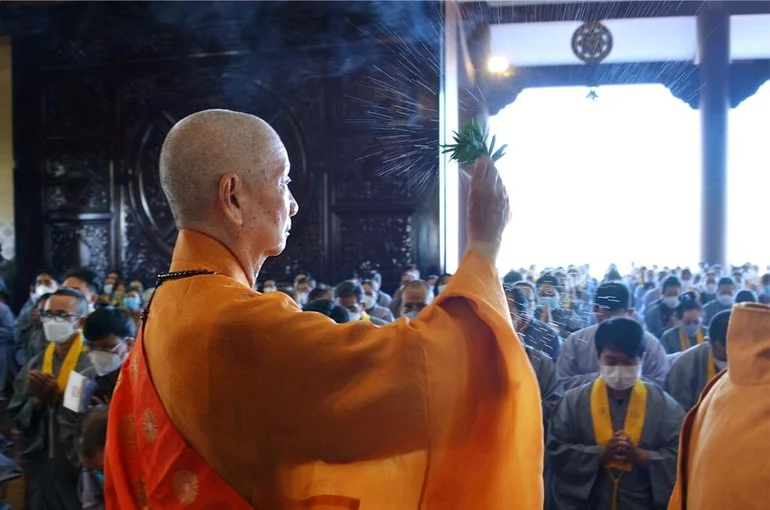
The Tenfold Dedication helps make the mind clearer. (Source: Collected)
3. The Role of the Tenfold Dedication on the Bodhisattva Path
On the Bodhisattva path, the Tenfold Dedication plays a particularly important role. While the Ten Practices emphasize performing wholesome actions, the Tenfold Dedication emphasizes letting go of ownership over the merit generated by those actions. It represents a transition from doing good deeds to doing good with the wisdom of non-self.
The Tenfold Dedication helps practitioners overcome subtle attachment to the self. Even after performing many good deeds, if one continues to think of them as personal achievements, spiritual practice has not yet reached true fulfillment. Dedication helps break down this attachment.
In everyday life, this principle is highly practical. When we do something good without seeking recognition, we feel lighter. When we help others without expecting anything in return, our hearts become more open. This act of letting go makes good deeds purer and more sustainable.

Letting go helps make the human mind more pure and clear. (Source: Collected)
4. The Ten Forms of Dedication and the Meaning of Each
The ten forms of the Tenfold Dedication are ten ways of directing merit, each carrying profound meaning. Each form of dedication is not merely a vow but also a method of training the mind.
4.1 Dedication of Saving All Sentient Beings While Remaining Free from the Concept of Sentient Beings
This form of dedication emphasizes the spirit of saving and helping all sentient beings without becoming attached to the concept of sentient beings. Practitioners aspire to help all beings, but do not see themselves as benefactors or others as recipients of their generosity. This represents the wisdom of non-self expressed through altruistic action.
In everyday life, this corresponds to doing good without placing oneself in a superior position. When we help others with an equal and impartial mind, we are practicing dedication in the spirit of non-self.

It is expressed through giving without expecting anything in return. (Source: Collected)
4.2 Indestructible Dedication
Bat hoai hoi huong refers to dedicating merit in a way that does not regress or deteriorate. This merit is grounded in right view and firm aspirations, so it is not diminished by unfavorable circumstances.
In practical terms, remaining committed to ethical values despite difficulties reflects the spirit of Bat hoai. Dedication helps the mind remain steady in the face of challenges.

Always remain committed to ethical values regardless of circumstances. (Source: Collected)
4.3 Dedication of Equality with All Buddhas
This form of dedication directs merit toward wisdom that is equal to that of all Buddhas. The mind does not discriminate between high and low, close and distant. All sentient beings possess Buddha-nature and deserve respect.
In modern society, this spirit of equality is highly important. When we view others without prejudice, we are practicing the principle of dang nhat thiet Phat hoi huong.
4.4 Dedication to All Places
Chi nhat thiet xu hoi huong means dedicating merit throughout every place within the Dharma realm. Merit is not limited by space or by any particular recipient. This helps broaden one's perspective. Even a small good deed can have great meaning when placed within a broad and selfless aspiration.
4.5 Dedication of an Inexhaustible Treasury of Merit
This form of dedication refers to the inexhaustible treasury of merit that can arise when practice is carried out correctly. When one does not cling to results, merit becomes expansive and limitless. In daily life, when we do good with an open heart, positive energy can continue to spread over time. Merit does not end with a single action but can continue to influence many people.

Merit can bring positive energy to people's lives. (Source: Collected)
4.6 Dedication of Following and Equalizing All Wholesome Roots
Tuy thuan binh dang thien can hoi huong emphasizes flexibility in performing wholesome actions while maintaining an equal and impartial mind. Practitioners learn to act according to circumstances without becoming rigid. This reminds us that good deeds should be appropriate to the situation. Flexibility makes wholesome actions more effective and practical.
4.7 Dedication of Following the Equal Contemplation of All Sentient Beings
This form emphasizes viewing all sentient beings equally, without distinguishing between those who are close or distant, familiar or unfamiliar. Compassion is extended to everyone.
In everyday life, this means maintaining an impartial attitude. When we treat everyone fairly, we are practicing the spirit of this form of dedication.
4.8 Dedication According to the True Nature of Reality
Chan nhu tuong hoi huong is based on the foundation of chan nhu, the true nature of all phenomena. Dedication is no longer constrained by concepts based on duality.
This is a profound level of meaning, reminding us that every action should arise from a correct understanding of the impermanent and conditioned nature of reality.
4.9 Dedication of Liberation from Bondage and Attachment
This form of dedication emphasizes liberation from attachment and from clinging to the merit one has accumulated. Practitioners are not bound by their own achievements.
In everyday life, when we do something good and then let it go without repeatedly mentioning it or taking credit, we take an important step toward inner transformation.
This stage is expressed through not mentioning achievements or taking credit for them. (Source: Collected)
4.10 Dedication throughout the Infinite Dharma Realm
Phap gioi vo luong hoi huong is the highest form of dedication, directing merit toward the entire Dharma realm and complete enlightenment. The aspiration encompasses everything without limitation.
This symbolizes a vast and boundless mind. When we open our hearts to all beings, we touch upon the deeper spirit of the Bodhisattva path.
5. The Meaning of the Tenfold Dedication for Lay Practitioners
Although laypeople do not enter monastic life, they can still practice the spirit of the Tenfold Dedication. Whenever we perform a good deed, instead of focusing on personal benefits, we can dedicate the merit toward our family, society, and all sentient beings.
Living responsibly, being honest at work, and showing love within the family can all become opportunities to practice dedication. When we let go of attachment to the self and expand our minds, life becomes lighter.
The Tenfold Dedication is therefore not detached from reality. It helps lay practitioners cultivate an altruistic spirit through every small action.
6. The Tenfold Dedication in Modern Life
In modern society, people often focus heavily on personal achievements. The spirit of the Tenfold Dedication reminds us that sustainable development should be connected with the interests of the community. Living kindly, taking social responsibility, and sharing value are expressions of dedication.
When we balance personal development with contributions to the community, we are living according to the spirit of the Bodhisattva path. Spiritual pilgrimages to sacred places such as Ba Den Mountain in Tay Ninh can also provide opportunities for reflection and for cultivating the aspiration to dedicate one's merit. Amid the vast landscape of mountains and sky, we may more easily recognize the smallness of the ego and understand the meaning of living for others.

The goal of the Tenfold Dedication is to pursue values that benefit the community. (Source: Collected)
Conclusion
The Tenfold Dedication consists of ten methods of directing merit in Mahayana Buddhism, helping practitioners overcome attachment to the self and expand their minds. The core meaning of the Tenfold Dedication lies in altruism and the wisdom of non-self. When properly understood and practiced, dedication is not merely a ritual but a profound method of inner transformation.
In modern life, the spirit of the Tenfold Dedication helps us live with greater kindness, responsibility, and mindfulness. Every wholesome action, when placed within a broad and selfless aspiration, can become a seed of peace and well-being. When we learn to dedicate our merit and let go of attachment, the path of spiritual practice is no longer distant but becomes present in every moment of our lives.