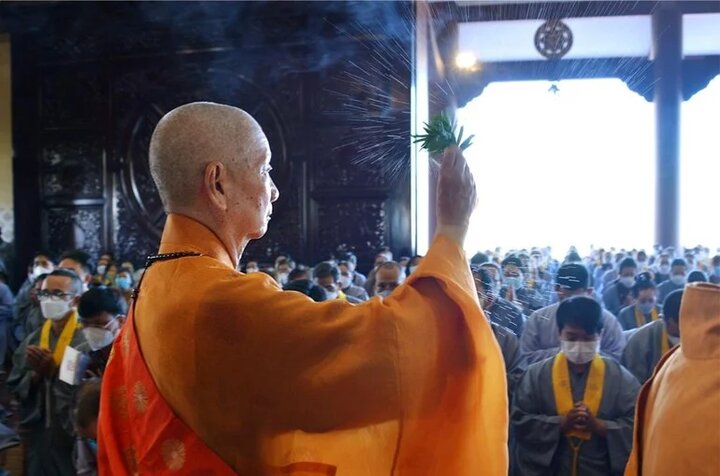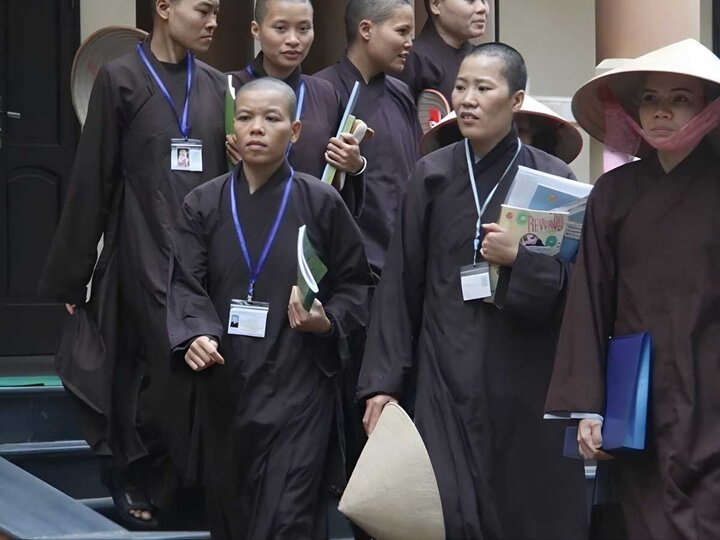
- 1. What Are Equal Enlightenment and Wonderful Enlightenment?
- 2. What Is Equal Enlightenment? Meaning and Characteristics of Spiritual Attainment
- 3. What Is Wonderful Enlightenment? The State of Complete Enlightenment
- 4. Comparing Equal Enlightenment and Wonderful Enlightenment
- 5. Important Notes and Tips for Understanding Equal Enlightenment and Wonderful Enlightenment
- Conclusion
1. What Are Equal Enlightenment and Wonderful Enlightenment?
In the Mahayana system of spiritual cultivation, particularly as presented in scriptures and commentaries such as the Avatamsaka Sutra, the Bodhisattva path is divided into many stages. After completing the Ten Bodhisattva Stages, practitioners enter the two highest levels: Equal Enlightenment and Wonderful Enlightenment.
Equal Enlightenment is the level at which a practitioner has attained an almost complete perfection of wisdom and merit. At this stage, the Bodhisattva has undergone countless lifetimes of cultivation, accumulated vast merit, and developed profound wisdom to a level almost equivalent to that of the Buddhas. The practitioner is capable of deeply understanding the truth of all phenomena while also possessing the ability to guide sentient beings through various skillful means.
However, according to the Mahayana perspective, at the level of Equal Enlightenment, a subtle portion of ignorance has not yet been completely eliminated. This form of ignorance is extremely difficult to perceive and has almost no obvious influence, but it remains the final boundary distinguishing a supreme Bodhisattva from a fully enlightened Buddha.
An important point to understand is that Equal Enlightenment and Wonderful Enlightenment are not two separate or opposing concepts. Rather, they are two successive stages in a gradual process of perfection. They reflect a subtle transformation from an almost complete state to a state of absolute perfection. If the journey toward enlightenment is compared to dawn gradually appearing in the sky, Equal Enlightenment can be seen as the moment when light has spread across the horizon, dispelling most of the darkness while a faint haze still remains in the distance.
When the sun rises high and shines in full radiance, all darkness completely disappears. This represents Wonderful Enlightenment. This image helps Buddhist practitioners understand that enlightenment is a continuous process of development, in which every stage plays an important role in guiding the practitioner toward ultimate perfection.
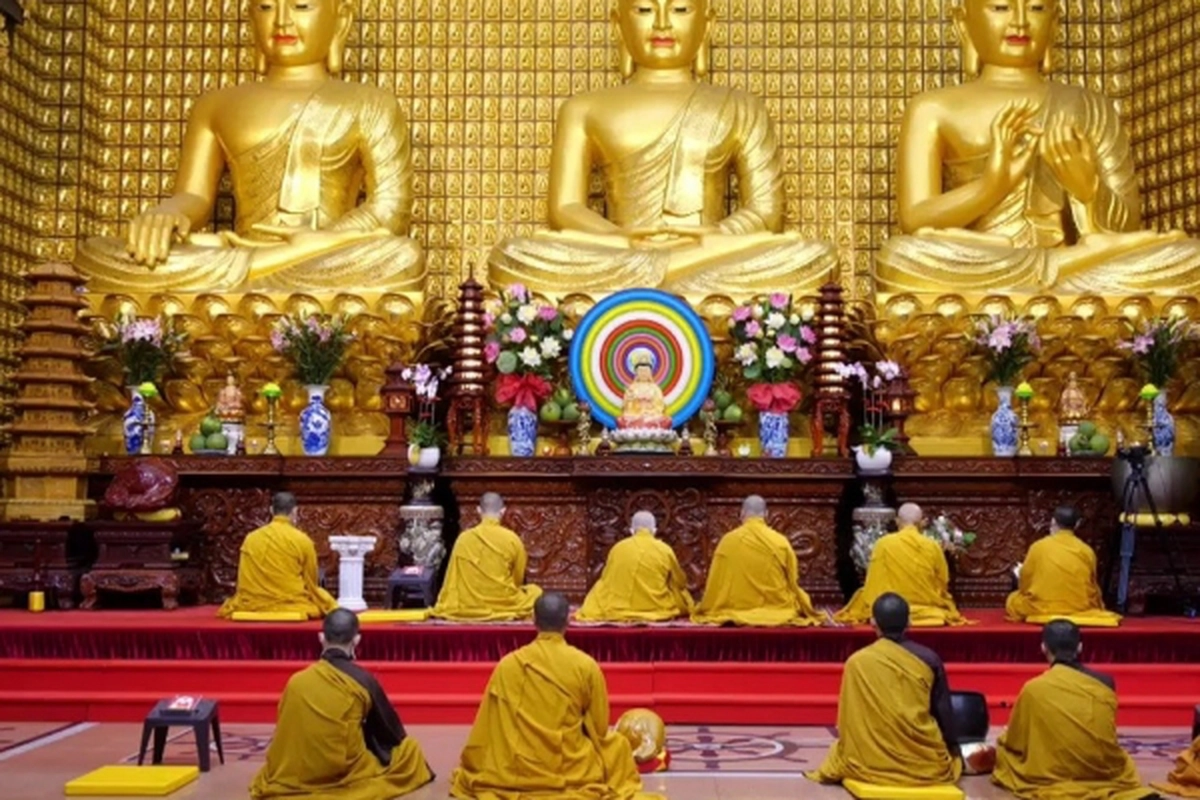
These are two stages in the spiritual journey of a monastic. (Source: Collected)
2. What Is Equal Enlightenment? Meaning and Characteristics of Spiritual Attainment
Equal Enlightenment is the highest level attained by a Bodhisattva before becoming a Buddha. At this stage, the practitioner's wisdom, merit, and ability to guide sentient beings are almost equivalent to those of a Buddha. The term “equal” means being equal, while “enlightenment” refers to awakening. However, this equality is not yet absolute.
According to Mahayana teachings, at the level of Equal Enlightenment, the practitioner still has a subtle portion of ignorance that has not been completely eliminated. This ignorance is not gross afflictions such as greed, anger, and delusion, but rather deeply hidden residual habits and tendencies. Therefore, Equal Enlightenment is regarded as a state of enlightenment that is nearly complete but not yet perfect.
The meaning of Equal Enlightenment lies in the almost absolute perfection of wisdom and compassion. A Bodhisattva at this level has undergone countless lifetimes of practice, accumulated immense merit, and overcome most obstacles. Such a Bodhisattva has the ability to guide vast numbers of sentient beings and lead them along the path of spiritual cultivation.
In relation to everyday life, Equal Enlightenment reminds us that personal growth can reach a very high level while still requiring one final stage of refinement. During the process of self-improvement, we may sometimes believe that we have completely mastered ourselves, while subtle habits and tendencies still remain. Recognizing this helps us maintain humility and continue making diligent progress.
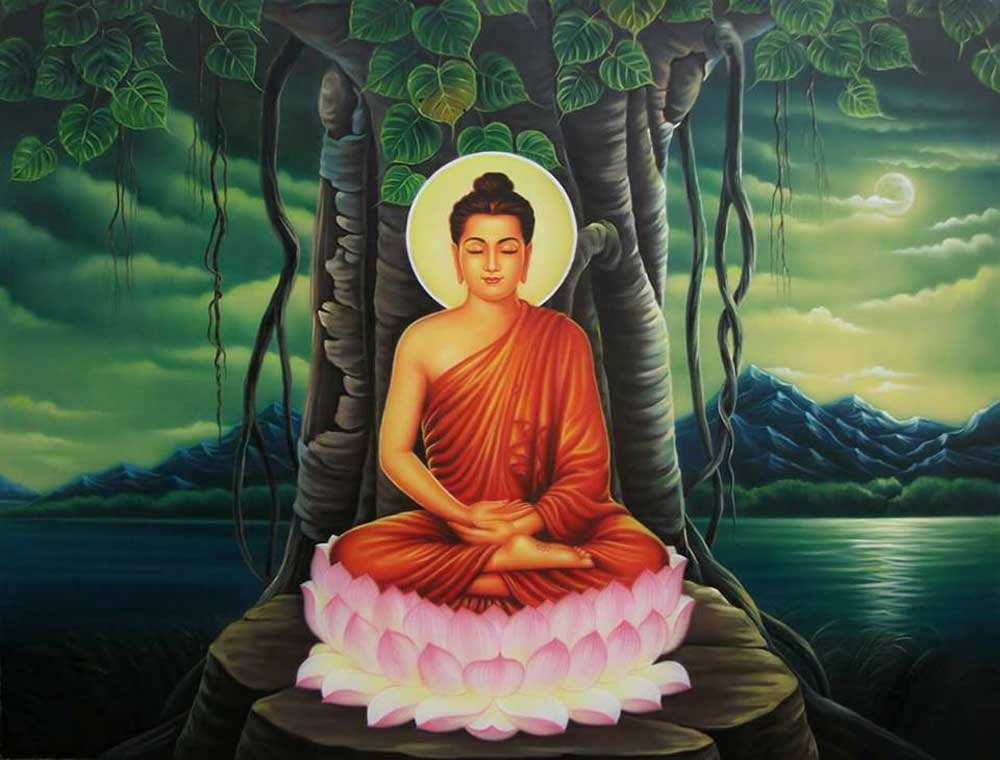
Equal Enlightenment reminds people to remain mindful and disciplined even after achieving success. (Source: Collected)
3. What Is Wonderful Enlightenment? The State of Complete Enlightenment
Wonderful Enlightenment is Buddhahood, representing a state of complete and absolutely perfect enlightenment. The term “wonderful” refers to something profound, subtle, and beyond ordinary conceptual understanding. Wonderful Enlightenment signifies the complete elimination of all ignorance, including the most subtle forms of ignorance.
At the stage of Wonderful Enlightenment, wisdom is completely clear, compassion is perfect, and there are no remaining obstacles to obscure understanding. This is a state in which all phenomena are seen exactly as they are. There is no longer a distinction between subject and object, nor attachment to the self or to phenomena.
Wonderful Enlightenment is not only the pinnacle of understanding but also the pinnacle of compassion. After attaining Wonderful Enlightenment, a Buddha continues to guide sentient beings through various skillful means. Such enlightenment is not a means of abandoning the world but of illuminating it.
In practical terms, Wonderful Enlightenment symbolizes inner perfection. Although we may not be able to attain such a state, understanding Wonderful Enlightenment gives us a clear direction. The goal of spiritual practice is not merely to reduce suffering but to develop complete clarity and boundless compassion.
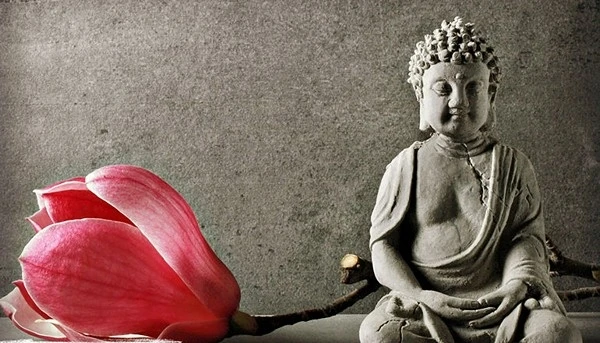
Wonderful Enlightenment represents the completion of inner perfection. (Source: Collected)
4. Comparing Equal Enlightenment and Wonderful Enlightenment
When Equal Enlightenment and Wonderful Enlightenment are compared side by side, it becomes clear that both belong to the highest levels of enlightenment in Mahayana thought. These are the highest stages in the Bodhisattva's process of spiritual attainment, representing an almost complete perfection of wisdom and merit. At both levels, the practitioner has undergone a long journey of cultivation, accumulated immeasurable merit, and developed profound wisdom while moving toward the ultimate goal of Buddhahood. Therefore, the similarity between Equal Enlightenment and Wonderful Enlightenment is that both represent the highest levels of enlightenment attainable on the Bodhisattva path, where wisdom, compassion, and the ability to guide sentient beings have reached an extraordinary level.
However, an important difference between the two levels concerns the degree to which ignorance has been eliminated. At the level of Equal Enlightenment, the practitioner has almost completely overcome the obstacles of ignorance and afflictions, but a subtle portion of ignorance remains to be fully transformed. Although this remaining ignorance is extremely small and difficult to perceive, it is still the final factor separating the state of a Bodhisattva from that of a Buddha.
When the practitioner takes one further step and completely eliminates this subtle ignorance, wisdom becomes absolutely perfect. At that point, the practitioner attains Wonderful Enlightenment, representing complete and perfect enlightenment and the full attainment of Buddhahood. Therefore, Wonderful Enlightenment can be regarded as the final boundary marking the transformation from the state of a Bodhisattva to that of a Buddha.
In terms of the ability to guide sentient beings, a Bodhisattva at the level of Equal Enlightenment already possesses vast and profound abilities. Such Bodhisattvas can understand the capacities and conditions of many different types of sentient beings while applying various skillful means to help them approach the path of spiritual cultivation. At the level of Wonderful Enlightenment, however, this ability reaches absolute perfection.
Clearly distinguishing between Equal Enlightenment and Wonderful Enlightenment helps Buddhist practitioners understand that spiritual attainment is not a sudden or abrupt process, but a gradual journey through many different stages. The path from an ordinary person to complete enlightenment is a long process of practice, transformation, and accumulation of merit. Every level in this progression has its own role and meaning, reflecting each step of the practitioner's growth in wisdom and spirituality. Understanding this helps Buddhist practitioners gain deeper insight into the structure of the Bodhisattva path while cultivating perseverance and firm confidence throughout their own practice.
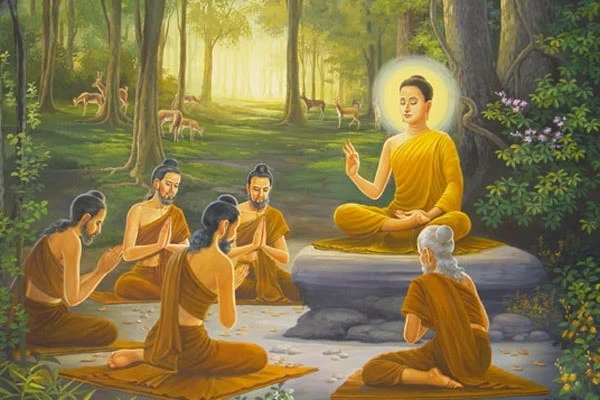
Equal Enlightenment and Wonderful Enlightenment differ in the degree to which ignorance is eliminated. (Source: Collected)
5. Important Notes and Tips for Understanding Equal Enlightenment and Wonderful Enlightenment
When learning about Equal Enlightenment and Wonderful Enlightenment, the first important point is to maintain humility. These concepts belong to the deeper layers of Mahayana teachings, so they should be approached with care and respect.
Second, these two terms should not be understood as titles used to compare superiority or inferiority. Buddhism does not aim to create a hierarchy to elevate certain individuals, but to point toward a path of spiritual cultivation. If we focus only on terminology and forget actual practice, we may fall into attachment.
Third, when combining the study of Buddhist teachings with spiritual pilgrimage, it is important to maintain a solemn attitude. Sacred spaces such as Ba Den Mountain in Tay Ninh are places where many people go for contemplation and to cultivate wholesome intentions. When visiting, it is advisable to maintain a quiet mind, avoid excessive noise, and spend time reflecting inwardly.
Choosing an appropriate time can also make the experience more meaningful. A peaceful environment creates favorable conditions for contemplation. Standing before the vast mountain and sky, we may more easily recognize the smallness of the ego and gain a deeper understanding of the path of letting go of ignorance symbolized by Equal Enlightenment and Wonderful Enlightenment.
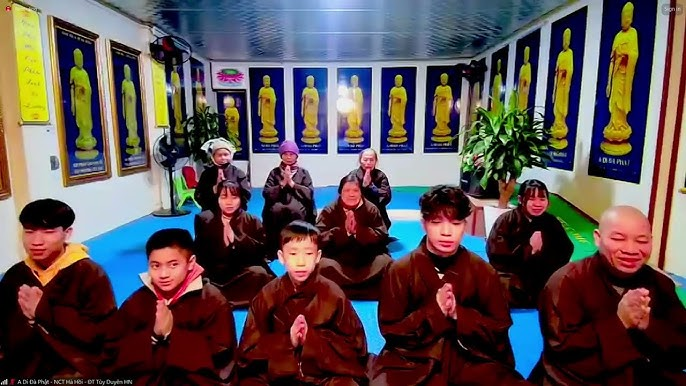 Always maintain humility when learning and practicing. (Source: Collected)
Conclusion
Equal Enlightenment and Wonderful Enlightenment are the two highest levels of enlightenment in Mahayana Buddhism. Equal Enlightenment represents a state that is nearly complete, in which wisdom and merit are almost equal to those of a Buddha but a subtle form of ignorance still remains. Wonderful Enlightenment represents complete Buddhahood, in which all obstacles have been eliminated and wisdom and compassion have reached absolute perfection.
Understanding Equal Enlightenment and Wonderful Enlightenment helps us recognize that the journey toward enlightenment is a long process that requires perseverance and humility. Although we may not yet be able to attain these levels, living mindfully each day, cultivating compassion, and developing wisdom are steps along the path toward enlightenment. When we learn to view life as a journey of inner cultivation, we can find deeper meaning in every experience and every step of our own progress.