1. What Are Monks, Nuns, and Buddhists in Buddhism?
1.1. The Concept of the Sangha and Its Origins
In Buddhism, the term “Sangha” refers to a community of ordained practitioners who live together harmoniously and follow the precepts established by the Buddha. The term originates from the Sanskrit word “Sangha,” which describes a community united in spiritual practice, studying the Dharma, and supporting one another in living a life of religious discipline. In a narrower sense, the Sangha refers to Bhikkhus and Bhikkhunis who have received full ordination and devoted themselves to monastic life.
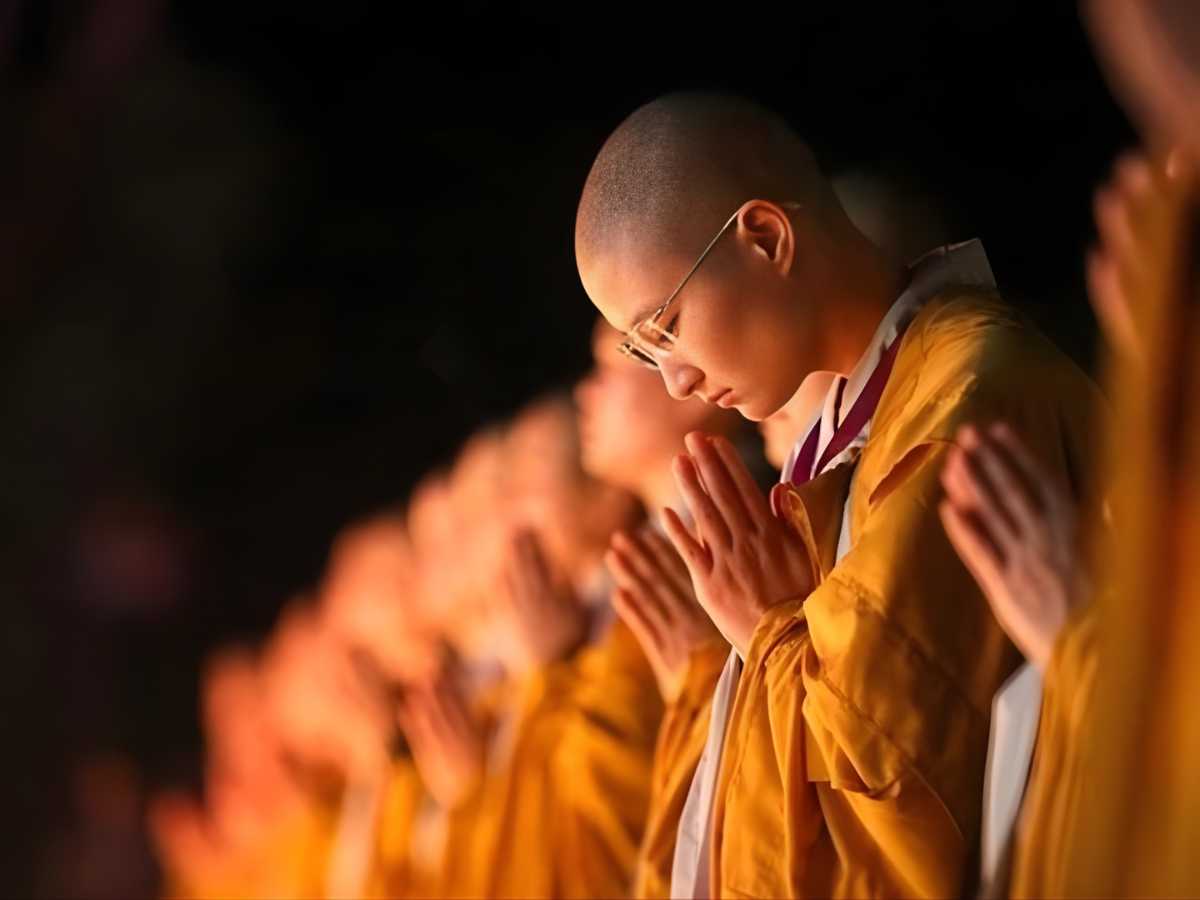
The Sangha refers to ordained practitioners who live harmoniously according to the precepts established by the Buddha. (Source: Collected)
When exploring what monks, nuns, and Buddhists are, in the broader understanding of Buddhist traditions, the Sangha is sometimes discussed in connection with the fourfold Buddhist community: monks, nuns, laymen, and laywomen who have taken refuge in the Three Jewels. Within the Three Jewels, the Sangha plays an important role in preserving and transmitting the Dharma. The Buddha is the teacher who reveals the path, the Dharma represents his teachings and principles of practice, while the Sangha helps preserve and embody those teachings within the community.
To be recognized as a fully ordained monastic, a person must receive full ordination, observe the relevant precepts, and maintain a disciplined monastic life. In addition to personal practice, members of the Sangha may engage in teaching the Dharma, guiding practitioners, and supporting Buddhist communities. Today, Buddhist monks and nuns in Vietnam practice and participate in religious activities within the unified organizational framework of the Vietnam Buddhist Sangha, the representative Buddhist organization for monks, nuns, and Buddhists across the country.
1.2. Who Are Buddhist Nuns?
“Nun” is a term used to refer to women who have entered monastic life in Buddhism. They are members of the Buddhist monastic community and, according to tradition, follow the precepts and disciplines associated with ordained life. After receiving full ordination, a nun becomes an official member of the monastic community and dedicates herself to spiritual practice and maintaining a pure and disciplined way of life.
Since the time of the Buddha, the Bhikkhuni Sangha has existed alongside the Bhikkhu Sangha as Buddhism developed. The presence of nuns has contributed to the preservation and transmission of the Dharma and to the spiritual life of Buddhist communities. Nuns may also guide female Buddhists and participate in educational and social activities.
Both monks and nuns are expected to receive ordination and practice according to the relevant Buddhist monastic discipline. They choose an ordained way of life in order to cultivate themselves and study, practice, and share the Buddha’s teachings. The cooperation between monks and nuns contributes to the stable and sustainable development of Buddhist communities.
1.3. What Is a Buddhist and How Does One Become a Buddhist?
Buddhists are people who take refuge in the Three Jewels—the Buddha, the Dharma, and the Sangha—and follow Buddhist teachings while continuing to live in society rather than entering monastic life. They maintain their family lives and social responsibilities while incorporating Buddhist practice into their everyday lives.
Taking refuge in the Three Jewels is traditionally regarded as an important beginning of Buddhist practice. Those who take refuge make the Three Refuges: taking refuge in the Buddha, the Dharma, and the Sangha, and may also undertake the Five Precepts. These basic precepts include refraining from killing, stealing, sexual misconduct, false speech, and intoxicants.
When considering what monks, nuns, and Buddhists are, taking refuge and observing the Five Precepts can be understood as a commitment to living ethically and reducing actions that cause harm to oneself and others. The fundamental difference between lay Buddhists and monastics lies in their way of life and responsibilities. While monks and nuns dedicate their lives primarily to spiritual practice and the transmission of the Dharma, lay Buddhists continue their careers, family lives, and social relationships while using Buddhist teachings as a foundation for their spiritual development and ethical conduct.
2. Differences Between Monks, Nuns, and Buddhists in Everyday Life
2.1. Differences in Appearance and Daily Life
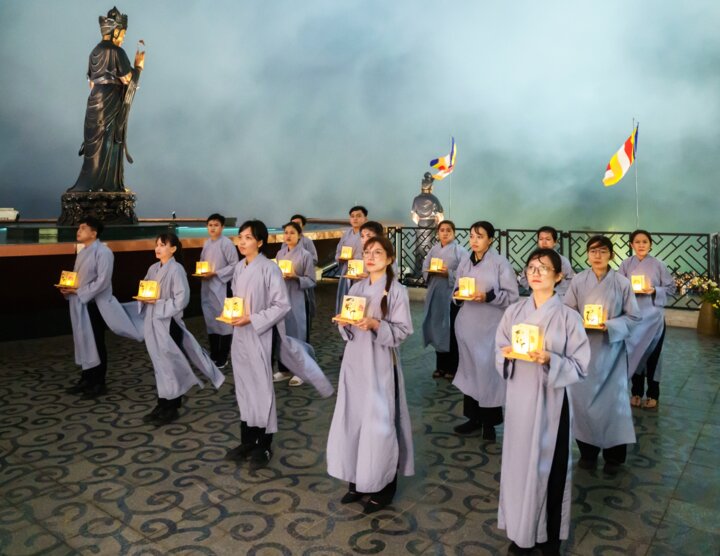
One of the most noticeable differences between monastics and lay Buddhists is their clothing. Monks and nuns generally wear robes or monastic garments associated with life in a monastery. Their simple clothing reflects their ordained way of life. Buddhists, by contrast, normally wear everyday clothing while living at home and may also wear ordinary or appropriate clothing when visiting a pagoda or temple.
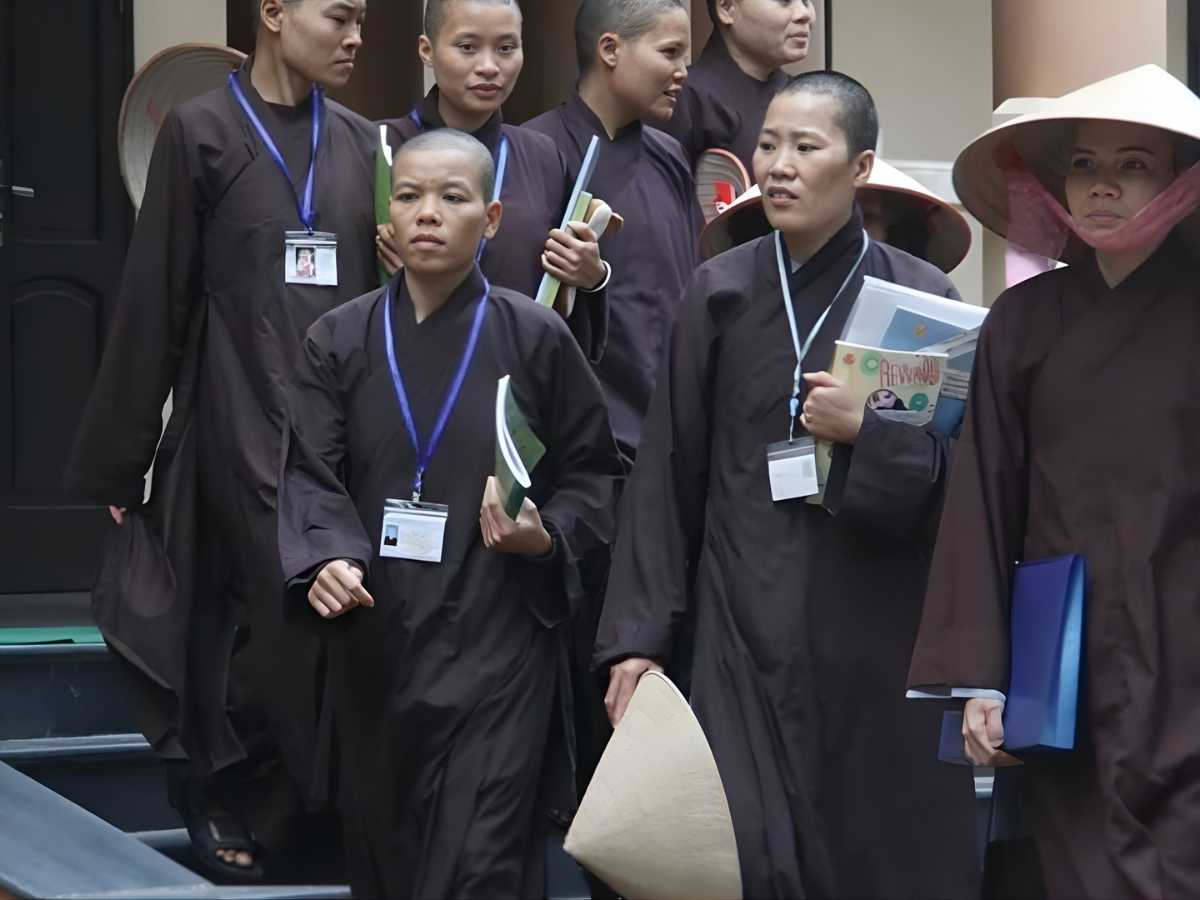
One of the most noticeable differences between monastics and Buddhists is their clothing and way of life. (Source: Collected)
The daily routines of monks and nuns also differ significantly from those of lay Buddhists. Monastics generally live in pagodas, monasteries, or meditation centers and follow established schedules that may include chanting, meditation, study, and other religious activities. Buddhists, on the other hand, live with their families and arrange their spiritual practice according to their individual circumstances.
The lives of monks and nuns are primarily oriented toward intensive spiritual cultivation and the pursuit of liberation. Lay Buddhists continue to fulfill their professional and family responsibilities while studying and practicing Buddhist teachings. Buddhism can therefore serve as a spiritual and ethical foundation through which they regulate their behavior and cultivate their inner lives within modern society.
2.2. The Roles of Monks, Nuns, and Buddhists in the Community
Within Buddhist communities, monks and nuns play an important role in providing spiritual guidance and transmitting Buddhist teachings to lay practitioners. They organize religious ceremonies, retreats, Dharma talks, and other activities that support people's spiritual lives. Through these activities, monastics contribute to the cultivation of ethical awareness and a sense of harmony within the community.
In addition to their own spiritual practice, monks and nuns may participate in educational activities and share Buddhist knowledge in ways that relate to everyday life. Various courses and retreats are organized to help people understand and apply Buddhist teachings according to their individual circumstances. Social and charitable activities may also be carried out depending on the expertise and practical conditions of each religious institution.
Buddhists play an important role in supporting the Three Jewels through their contributions to monastics and Buddhist institutions. They may participate in charitable activities, perform volunteer work, and promote ethical values within their families and communities. The connection between monastics and lay Buddhists provides an important foundation for the continued development of Buddhism in contemporary Vietnam.
2.3. Monks, Nuns, and Buddhists in the Modern Spiritual and Cultural Landscape
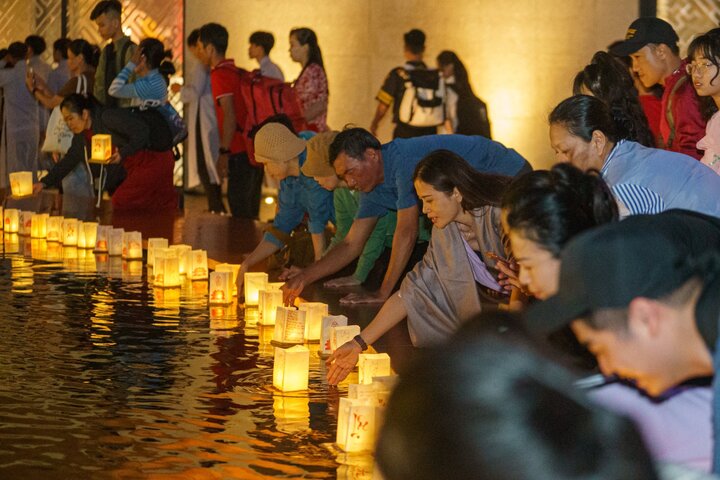
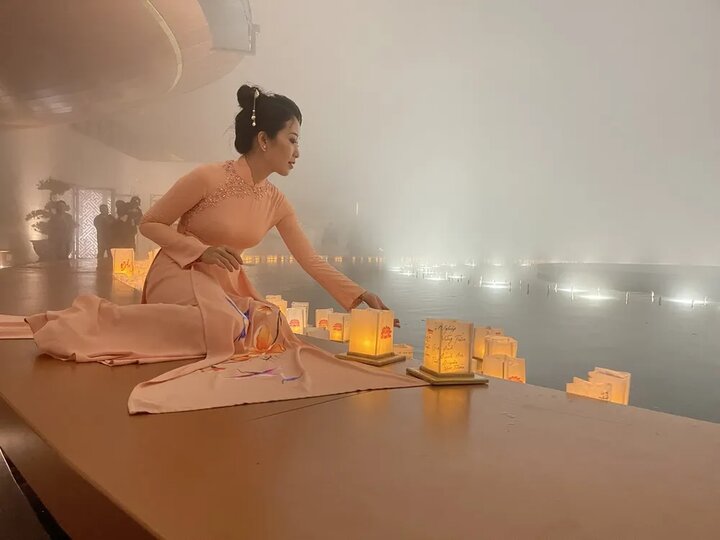
In the modern context, monks, nuns, and Buddhists increasingly participate in religious festivals, spiritual retreats, and cultural events. Celebrations such as Vesak, traditionally observed in the fourth lunar month in Vietnam, attract large numbers of Buddhists and visitors. These activities carry not only religious significance but also create opportunities for community connection.
In Tây Ninh, Sun World Ba Den Mountain regularly hosts large-scale lantern-lighting ceremonies and Buddha's Birthday celebrations. These programs attract many visitors who come to pay their respects and participate in religious ceremonies. The combination of religious practice and spiritual tourism has therefore become an increasingly notable aspect of contemporary cultural life.
👉 BOOK YOUR TICKETS TO SUN WORLD BA DEN MOUNTAIN NOW!
3. The Significance of Monks, Nuns, and Buddhists in Contemporary Spiritual Life
3.1. Preserving and Transmitting Buddhist Teachings
Monks and nuns play an important role in preserving and transmitting the Buddha’s teachings within Buddhist communities. They study Buddhist scriptures, practice according to monastic discipline, and guide Buddhists in understanding and applying Buddhist teachings. Through Dharma talks, retreats, and religious ceremonies, Buddhist teachings can be communicated and practiced in a more accessible way.
Beyond personal study and practice, monastics also connect Buddhist communities through activities held at temples and monasteries. Many festivals and retreats are organized to provide opportunities for people to learn about Buddhist teachings and cultivate their spiritual lives. These activities help maintain the presence of Buddhism as a familiar part of contemporary society.
3.2. The Role of Buddhists in Supporting the Three Jewels
Buddhists make an important contribution to maintaining Buddhist activities within local communities. They participate in Buddhist ceremonies, chanting, volunteer work, and activities at temples. Such contributions help Buddhist institutions maintain their regular operations.
In addition to religious activities, Buddhists can cultivate ethical values within their families and society. They may apply principles such as compassion, honesty, and tolerance to everyday situations. These practices help spread Buddhist-inspired values and contribute to greater social harmony and community connection.
3.3. The Connection Between Monks, Nuns, and Buddhists
Monks, nuns, and lay Buddhists maintain a close relationship within Buddhist communities. Monastics provide guidance in spiritual practice, while lay Buddhists support activities at temples and monasteries. This cooperation helps maintain stable Buddhist activities and creates opportunities for people to study and practice together.
In many community programs, monastics and Buddhists also work together to organize charitable and volunteer activities. These initiatives help promote compassion and mutual support. Through their shared efforts, humanitarian values can be preserved and strengthened. This relationship also contributes to the continued presence of Buddhism in contemporary society.
Understanding what monks, nuns, and Buddhists are helps clarify the distinctions between these concepts within Buddhism. It also provides a more comprehensive perspective on Vietnam’s contemporary spiritual life. Understanding these distinctions offers a foundation for exploring the ethical and cultural values associated with Buddhism in modern Vietnamese society.
When discussing some of Tây Ninh’s most notable destinations, many visitors immediately think of Ba Den Mountain, the highest mountain in southern Vietnam and a prominent landmark rising above the surrounding plains. From a distance, the dark mountain mass stands prominently against the sky, creating a striking and captivating landscape. As visitors approach, the scenery gradually changes from the familiar rhythm of the town to the cool, refreshing atmosphere of forest and mountain breezes.
The paths leading up the mountain offer a variety of perspectives. At times, visitors can see valleys stretching into the distance; at other moments, layers of clouds drift almost at eye level. Beyond its natural scenery, the area is also associated with numerous spiritual and cultural activities, making it an impressive starting point for exploring this distinctive destination.
Leaving the mountain landscape behind, visitors often stop at the Câu Na Hàm Buddha Statue, a prominent religious structure with strong spiritual significance. In contrast to the vastness of the mountain, the area surrounding the statue offers a solemn and peaceful atmosphere. The statue stands within an open setting, allowing visitors to observe its architecture and sculptural details from different perspectives.
Standing before the imposing structure, visitors often pause for a few quiet moments to experience the tranquil atmosphere surrounding them. This sense of serenity makes the site a meaningful stop for reflection, where people can listen to their inner thoughts during their journey.
The next stop is often the Ưu Đàm Garden, a landscaped garden designed to create a relaxing atmosphere for visitors. After experiencing the grandeur of the mountain and the solemnity of its spiritual monuments, this green space provides a gentle pause along the journey.
Small paths wind through clusters of trees, ponds, and landscaped features, creating a harmonious composition. Visitors can take a leisurely walk, observe the surrounding scenery, and enjoy a peaceful atmosphere that is rarely found in busy urban environments. The combination of nature, landscape, and tranquility makes the garden a gentle and relaxing conclusion to the journey.