- 1. What Are the Ten Bodhisattva Stages?
- 2. The Origin of the Ten Bodhisattva Stages in Buddhism
- 3. The Meaning of the Ten Bodhisattva Stages on the Spiritual Path
- 4. The Ten Stages of the Bodhisattva Path and Their Meanings
- 5. The Ten Bodhisattva Stages and Their Applications in Modern Life
- Conclusion
1. What Are the Ten Bodhisattva Stages?
The Ten Bodhisattva Stages refer to the ten stages of spiritual attainment reached by a Bodhisattva after generating Bodhicitta and entering the Bodhisattva path. In the Mahayana tradition, a Bodhisattva is someone who vows to practice not only for their own liberation but also for the benefit of all sentient beings. Therefore, the Bodhisattva's journey involves both self-awakening and benefiting others.
The concept of the Ten Stages emphasizes that enlightenment does not occur in a single moment. Each stage represents a progressively higher level of purity and perfection in wisdom and compassion. The Bodhisattva moves from eliminating coarse afflictions to gradually transforming even the most subtle habitual tendencies. This process is like polishing a rough gemstone into a radiant jewel. Each act of polishing brings it closer to perfection.
Understanding the Ten Bodhisattva Stages helps us change our perspective on spiritual practice. Rather than becoming impatient and expecting immediate results, we learn to be patient and respect the natural process of inner transformation.

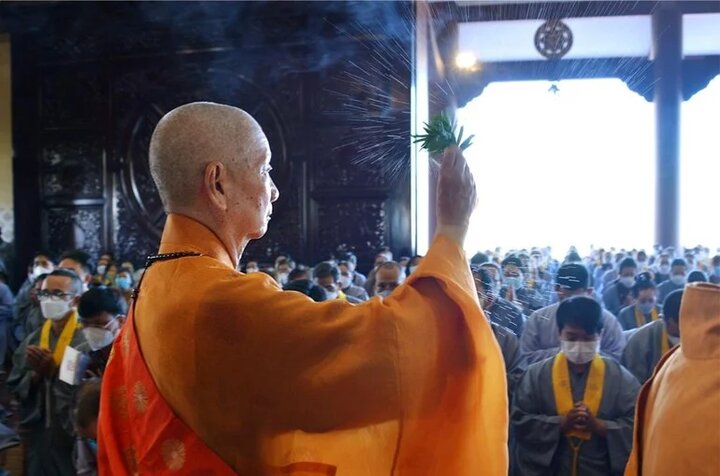
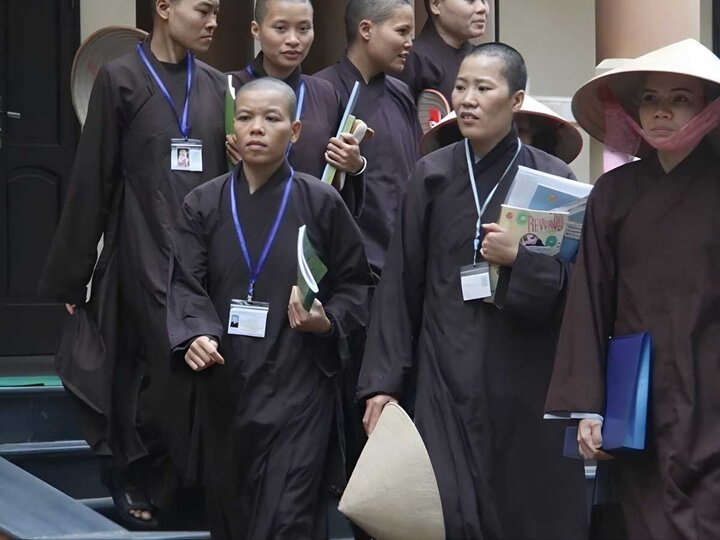
The Ten Bodhisattva Stages represent the ten highest stages of spiritual attainment for Bodhisattvas in Mahayana Buddhism. (Source: Compilation)
2. The Origin of the Ten Bodhisattva Stages in Buddhism
The teaching of the Ten Stages is clearly presented in Mahayana scriptures, particularly the Avatamsaka Sutra. In this scripture, the Bodhisattva path is described as a progressive journey through multiple levels, with the ten stages serving as important milestones that mark spiritual development.
Later Mahayana scholars further developed and systematized the teaching of the Ten Stages in greater detail. As a result, the Ten Bodhisattva Stages became an important part of Mahayana thought, reflecting the view that enlightenment is achieved through the gradual accumulation of merit and wisdom over an extended period.
From a historical perspective, the development of the Ten Stages also reflects a practical approach to Buddhist practice. The spiritual path is not presented as something vague or undefined but as a process that can be described, analyzed, and practiced in specific ways. Therefore, the Ten Stages are not merely symbolic but can also provide a clear orientation for those who aspire to follow the Bodhisattva path.
3. The Meaning of the Ten Bodhisattva Stages on the Spiritual Path
The Ten Bodhisattva Stages carry profound meaning in terms of inner transformation. Each stage is not merely a title but represents a progressively purified state of mind. At each step, the Bodhisattva removes another layer of ignorance while expanding compassion and wisdom.
One important aspect is that wisdom and compassion always develop together. Wisdom allows practitioners to see the nature of impermanence and non-self in all phenomena. Compassion prevents practitioners from falling into cold intellectual understanding and keeps them oriented toward the welfare of sentient beings. When these two qualities are balanced, enlightenment can become more complete.
For modern people, the spirit of the Ten Stages is a reminder that genuine growth is not determined by social status or material achievements but by the degree of purity and openness within the mind. Living consciously each day, reflecting on oneself, and adjusting one's behavior are ways of moving toward inner development and spiritual attainment.
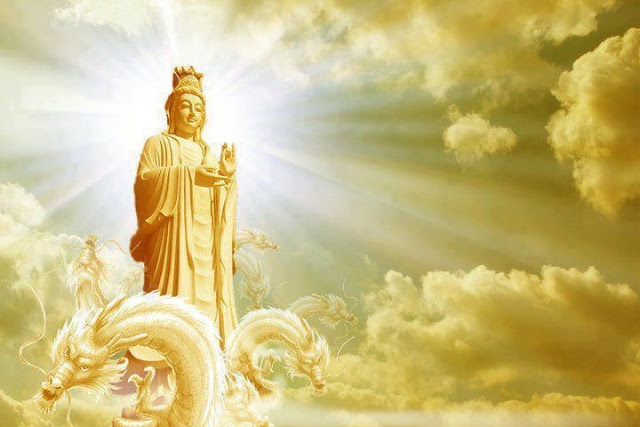
The Ten Bodhisattva Stages carry profound meanings related to inner transformation. (Source: Compilation)
4. The Ten Stages of the Bodhisattva Path and Their Meanings
The ten stages of the Bodhisattva path represent ten levels of transformation. They reflect the journey from the initial arising of Bodhicitta toward the near-completion of Buddhahood. Each stage has its own characteristics, but all are directed toward the perfection of wisdom and compassion.
4.1 The Stage of Joy
The Stage of Joy is the first stage. When the Bodhisattva gains an initial realization of the truth and clearly sees that the path they have chosen is right, a profound sense of joy arises. This is not the happiness that comes from achieving worldly desires but the joy of an initial awakening.
In everyday life, the Stage of Joy can be understood as the moment when a person discovers a meaningful purpose in life. When we know which direction to take and what we want to live for, a deep sense of joy can arise. This joy becomes the motivation to continue practicing.
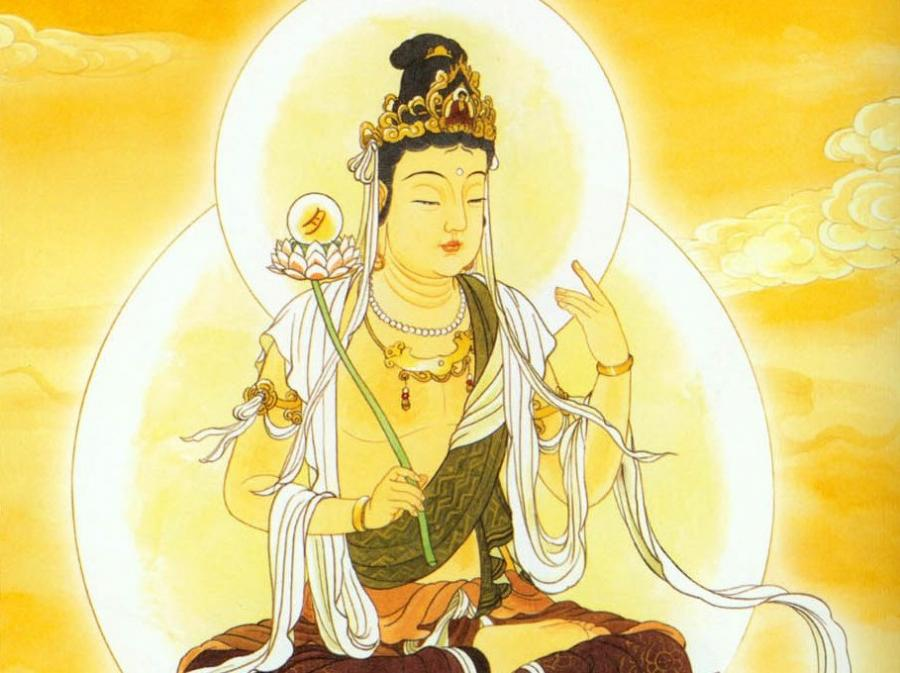
The Stage of Joy represents awareness of the path one will continue to follow. (Source: Compilation)
4.2 The Stage of Freedom from Defilements
The Stage of Freedom from Defilements represents the process of leaving behind impurities and coarse afflictions. At this stage, the Bodhisattva maintains pure ethical conduct and remains careful in every action. Negative impulses gradually become weaker.
In modern life, this stage can be compared to the process of eliminating unhealthy habits. When we commit to living with greater discipline and reducing behaviors that harm ourselves or others, we are gradually moving away from inner defilements.
4.3 The Stage of Radiance
The Stage of Radiance is the stage when wisdom begins to shine more clearly. The Bodhisattva gains a deeper understanding of the dependent arising of all phenomena. As a result, attachment gradually decreases and the mind becomes more flexible.
In everyday life, the Stage of Radiance can be compared to the point at which a person develops a deep understanding of themselves. They no longer react impulsively but learn to view situations more comprehensively and understand their causes and consequences.
4.4 The Stage of Radiant Wisdom
The Stage of Radiant Wisdom compares wisdom to a powerful flame that burns away ignorance. The Bodhisattva practices diligently and continuously reflects in order to transform even subtle habitual tendencies.
From an everyday perspective, this is the stage in which a person develops inner strength. They do not merely recognize their mistakes but also commit to correcting them and remain persistent in pursuing the ethical goals they have chosen.

This is the stage when people transform themselves and move toward the future. (Source: Compilation)
4.5 The Stage of Difficult Conquest
The Stage of Difficult Conquest represents the ability to overcome the most challenging obstacles. Subtle hindrances no longer easily disturb the Bodhisattva's mind.
In life, this stage symbolizes resilience. When facing work pressure, family conflicts, or social changes, a person with strong inner stability is less likely to be swept away by negative emotions.
4.6 The Stage of Manifestation
The Stage of Manifestation is a state in which truth becomes clearly apparent. The Bodhisattva lives in continuous awareness and is no longer obscured by delusive thoughts.
This can be related to the modern practice of mindfulness. When we live fully in the present moment and recognize each thought and action, the mind becomes clearer and more stable.

At this stage, awakening is reflected in every thought and action. (Source: Compilation)
4.7 The Stage of Far-Reaching Practice
The Stage of Far-Reaching Practice represents freedom in actions undertaken for the benefit of others. The Bodhisattva enters the world to help sentient beings without attachment to the self.
For modern people, this can be understood as a spirit of contributing to the community. It means doing good not for fame or material gain but from a genuine desire to create value for society.
4.8 The Stage of Immovability
The Stage of Immovability is the stage in which the mind is no longer disturbed by favorable or unfavorable circumstances. Whether facing praise or criticism, success or failure, the Bodhisattva maintains inner equanimity.
In everyday life, reaching this level represents significant inner development. A person with an immovable mind is less likely to allow emotions to control decisions and can therefore live with greater stability and clarity.
4.9 The Stage of Good Wisdom
The Stage of Good Wisdom represents comprehensive wisdom and the ability to guide others skillfully. The Bodhisattva understands the different capacities and circumstances of sentient beings and knows how to provide appropriate guidance.
This can be related to communication and empathy. When we know how to listen and speak at the right moment, we are practicing a principle similar to the spirit of the Stage of Good Wisdom in everyday life.
4.10 The Stage of Dharma Cloud
The Stage of Dharma Cloud is the highest of the Ten Stages before Buddhahood. Like a Dharma cloud that provides shade and nourishment to all beings, the Bodhisattva at this stage has nearly perfected wisdom and compassion.
This stage symbolizes the highest level of spiritual development. The mind becomes vast like a benevolent cloud, bringing benefit to all without discrimination.

This is the highest realm among the Ten Bodhisattva Stages. (Source: Compilation)
5. The Ten Bodhisattva Stages and Their Applications in Modern Life
Although not everyone follows a monastic path, the spirit of the Ten Bodhisattva Stages can still be applied to everyday life. Each stage can be understood as a step in inner development. Learning to maintain ethical discipline, control one's behavior, develop wisdom, and remain steady amid change are all valuable life skills.
When we view life as a journey of self-cultivation, we may become less focused on comparison and competition. Instead, we can concentrate on our own progress. Each day that we reduce an unhealthy habit and add a wholesome action, we are taking another step along the path represented by the Ten Bodhisattva Stages.
This teaching also emphasizes that enlightenment is not separate from everyday life. A Bodhisattva does not abandon sentient beings but remains engaged in the world to serve them. Therefore, working with dedication and living responsibly toward family and society can also reflect the spirit of the Bodhisattva path.

Controlling one's behavior is also part of applying the principles represented by the Ten Bodhisattva Stages. (Source: Compilation)
Conclusion
The Ten Bodhisattva Stages are a system of ten levels of spiritual attainment in Mahayana Buddhism, reflecting the gradual journey of a Bodhisattva toward enlightenment. At each stage, wisdom and compassion are progressively cultivated and perfected. The value of the Ten Stages lies not only in their religious significance but also in their potential to provide guidance for a more constructive way of life.
Understanding the Ten Bodhisattva Stages reminds us that all meaningful growth requires time and perseverance. Enlightenment is not simply a distant destination but an ongoing process of inner transformation. By living with awareness, cultivating compassion, and developing wisdom, each person can gradually move forward on their own journey toward awakening.