1. The Origins of the Deer Symbol in Buddhism
1.1. The Deer at Deer Park and the First Buddhist Sermon
In Buddhist history, the image of the deer is closely associated with the event in which Shakyamuni Buddha delivered his first sermon on the Four Noble Truths after attaining enlightenment. The event took place at Deer Park in Sarnath, India, a forest located not far from the city of Varanasi, around the 6th century BCE, when the Buddha was approximately 35 years old. There, he reunited with five companions who had previously practiced asceticism with him and delivered his teachings to them for the first time.
The image of the deer is closely associated with the event in which Shakyamuni Buddha delivered his first sermon on the Four Noble Truths after attaining enlightenment. (Source: Collected)
In artistic representations of the Buddha's first sermon, the Dharma Wheel is placed at the center as a symbol of the Buddha's teachings. Two deer kneel on either side, facing the wheel, symbolizing attentive listening in the tranquil forest setting. This image gradually became a familiar symbol associated with the moment when the Buddha's teachings were first revealed.
The name Sarnath in Sanskrit and Pali is also associated with the meaning “Lord of the Deer,” connected to an ancient legend. According to tradition, the area was once a deer sanctuary established by a local king after a male deer sacrificed itself to save a female deer from being hunted. This story further deepened the connection between the land and the image of the deer in Buddhism.
The deer symbol not only recalls the natural setting of the Buddha's first sermon but has also become a culturally significant symbol. Two kneeling deer positioned on either side of the Dharma Wheel have appeared in various forms of Buddhist art throughout history. This motif is commonly found in Buddhist temple architecture across South and East Asia, particularly on rooftops and around the main entrance gates.
1.2. Deer in Buddhist Scriptures and Legends
Beyond the event at Sarnath, deer also appear in numerous Buddhist legends and scriptures, symbolizing gentleness and compassion. Some Jātaka stories recount how the Buddha was once reborn as a deer king who was willing to make the ultimate sacrifice. These stories are used to teach the spirit of altruism, emphasizing that enlightenment also involves cultivating love and compassion toward all living beings.
1.3. The Development of the Deer and Dharma Wheel Symbol in Buddhist Art
As Buddhism spread from India to China, Japan, and Southeast Asia, the combination of the deer and Dharma Wheel gradually became a familiar motif in Buddhist art. In traditional temple architecture, this symbolic combination is often placed prominently on rooftops or in front of the main sanctuary. The image recalls the Buddha's first sermon and conveys the meaning of transmitting the Dharma to all sentient beings.
2. The Symbolic Meaning of Deer in Buddhism Through Different Dimensions of Value
2.1. A Symbol of Compassion and Non-Harm
In Buddhist teachings, the principle of non-harm, ahiṃsā, is a fundamental value that encourages people to avoid causing harm to living beings. Deer are gentle by nature, tend to avoid conflict, and live in harmony with their environment, making them a symbol of this principle. The image of the deer reminds practitioners to reduce anger, cultivate wholesome thoughts, and live responsibly toward all living beings around them.
2.2. A Symbol of Wisdom and Listening to the Dharma
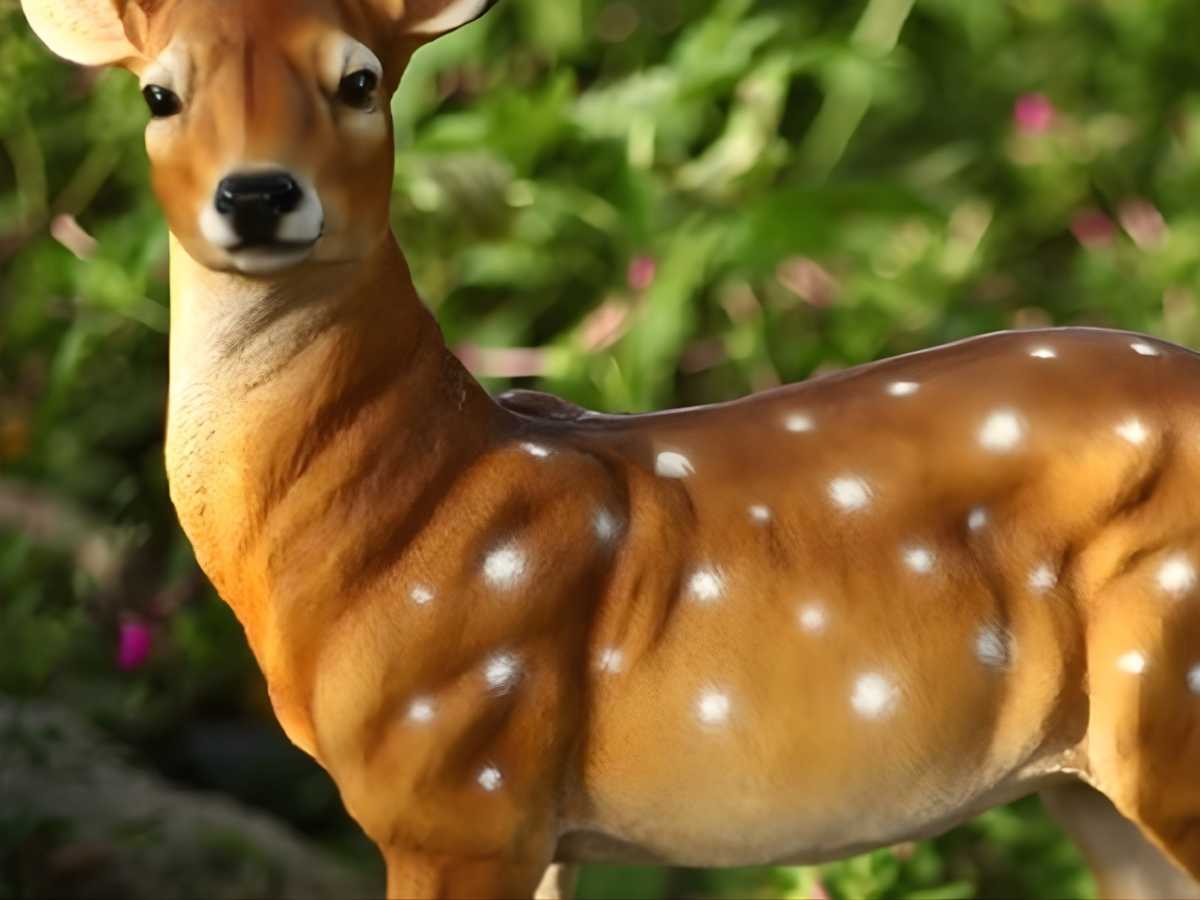
The deer symbol in Buddhism, positioned opposite the Dharma Wheel, does not emphasize physical strength but rather represents a posture of attentive listening. This reflects the Buddhist view that the journey toward enlightenment begins with receiving and listening to the Dharma. From there, practitioners gradually contemplate the teachings and put them into practice.
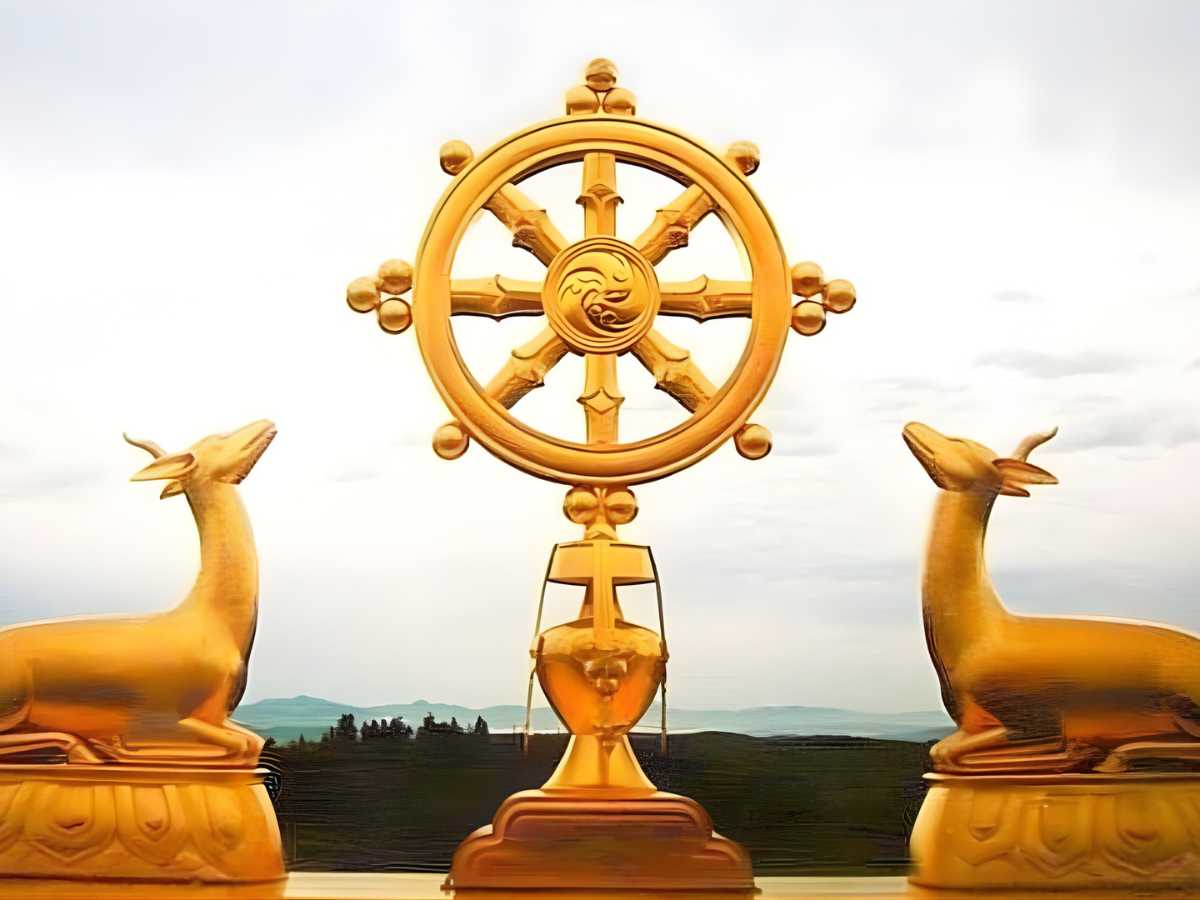
The deer symbol in Buddhism facing the Dharma Wheel does not emphasize physical strength but represents a posture of attentive listening. (Source: Collected)
Practitioners do not simply seek a peaceful environment; they also need to actively listen to and understand Buddhist teachings. Applying these teachings to one's behavior and state of mind is fundamental to the practice. In this context, the image of the deer serves as a reminder of mindfulness and a continuous commitment to learning.
2.3. A Symbol of Tranquil Nature and Harmonious Living
Buddhism emerged and developed in peaceful forest environments, where ascetics practiced away from the noise and distractions of urban life. Therefore, the image of deer associated with green forests and natural surroundings also evokes a sense of tranquility. The symbol simultaneously reflects the spirit of living in harmony with nature.
At Sun World Ba Den Mountain, the mountain landscape and spiritual complex surrounded by nature create a solemn yet peaceful atmosphere. The environment evokes associations with the tranquility of the ancient Deer Park. Although deer statues are not necessarily present throughout every area, the harmony between spirituality and nature remains a consistent feature of the destination.
👉 BOOK YOUR TICKET TO SUN WORLD BA DEN MOUNTAIN NOW!
2.4. Humanistic and Moral Educational Values
The deer symbol in Buddhism carries clear moral and educational significance. Through stories about the deer king's sacrifice, practitioners can gain a deeper understanding of the spirit of altruism. The image contributes to conveying lessons about self-sacrifice for the benefit of the community.
This symbolism is particularly accessible to children and those who are new to Buddhist teachings. Instead of presenting moral lessons through doctrinal language, the stories are conveyed through familiar images from nature. As a result, readers can more easily remember the lessons and reflect on them in their daily lives.
3. The Deer Symbol in Buddhist Architecture and Spiritual Life
3.1. Deer Imagery in Traditional Buddhist Temple Architecture
In many Buddhist temples, the deer symbol is commonly depicted together with the Dharma Wheel on temple rooftops or in front of the main sanctuary. The image recalls the event of the Buddha delivering his first sermon at Deer Park. Two deer standing or kneeling toward the Dharma Wheel represent attentive listening and reverence for the Dharma.
In Vietnam, many ancient Buddhist temples also incorporate deer imagery into architectural decoration and sculpture. These details are often placed in prominent locations to remind visitors of the value and significance of the Buddha's teachings.
3.2. The Deer Symbol in Buddhist Art and Culture
Beyond architecture, the deer symbol also appears in various forms of Buddhist art, including paintings, reliefs, and decorative sculptures. The peaceful image of deer beside the Dharma Wheel is often depicted in artworks focusing on the transmission of Buddhist teachings. These works help viewers associate the image with the event that marked the beginning of the Buddha's dissemination of the Dharma.
In Buddhist culture, the deer symbol is also associated with numerous stories and legends carrying moral significance. Jātaka stories about deer kings sacrificing themselves for their herds are often used to teach compassion. Through these stories, the deer becomes a gentle and accessible means of conveying humanistic values.
3.3. The Meaning of the Deer Symbol in Spiritual Life
The deer symbol in Buddhism also reminds people to pursue a gentle and mindful way of life. The image of deer living among green forests evokes tranquility and harmony with nature. It encourages people to live simply and cultivate compassion.
In modern life, many people turn to this symbol as a reminder of inner peace. The image of deer listening to the Dharma represents a spirit of learning and mindfulness in the face of life's challenges. This is the enduring value that the deer symbol continues to carry within Buddhist culture.
The deer symbol in Buddhism is not merely an element of temple architecture; it also conveys messages of compassion, wisdom, and harmony with nature. From the ancient Deer Park to modern spiritual destinations, the image of the deer quietly reminds each person of the journey toward mindfulness and awakening. When its meaning is understood, the symbol can be seen not simply as a relic of the past, but as an expression of a gentle and compassionate way of life in the present.
When exploring the southeastern region of Vietnam, many travelers begin their journey at Ba Den Mountain, the prominent mountain rising above the plains of Tay Ninh. From a distance, the dark mountain massif rises against the sky, creating a distinctive and easily recognizable horizon.
As visitors move closer, they begin to experience a gradual transformation of the surrounding atmosphere. Forest canopies, winding roads, and cool breezes gradually replace the familiar rhythm of residential areas below. The combination of natural landscapes and spiritual attractions makes this destination an ideal starting point for exploring the region.
The journey does not necessarily have to begin with silence. Sometimes, it starts with a powerful impression when visitors stop before the Câu Na Hàm Buddha Statue. Set against the expansive surroundings, the monumental structure appears imposing and dignified, naturally encouraging visitors to slow down, observe, and experience the sense of tranquility that gradually fills the space. After these reflective moments, travelers often seek a gentler setting to restore their emotional balance.
The next stop is Uu Dam Garden, a place with a completely different atmosphere from the grandeur of Ba Den Mountain. The space is designed around relaxation, with greenery, pathways, and carefully arranged landscape features creating a sense of harmony, intimacy, and comfort.
As they stroll through the garden, visitors can enjoy the quiet surroundings, observe the small details of the landscape, and relax their minds after the journey of exploration. This gentle transition from powerful visual impressions to a sense of serenity helps make the trip more complete, leaving behind a lasting feeling of peace and relaxation.