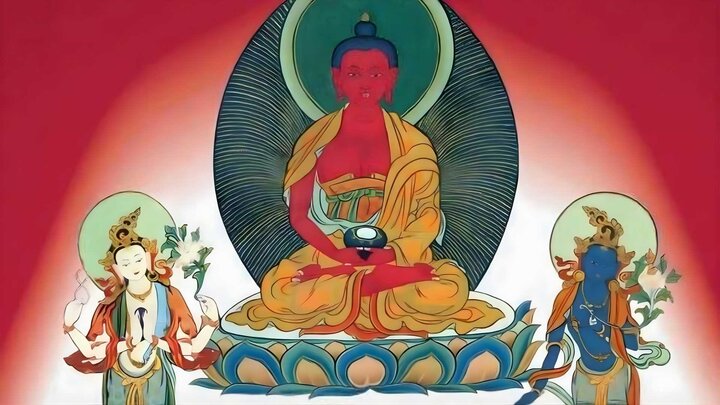
1. What Is Dzogchen in Tibetan Buddhism?
1.1. The Concept of Dzogchen and the Meaning of Its Name
What is Dzogchen in Tibetan Buddhism? Dzogchen is a term derived from the Tibetan rdzogs pa chen po, commonly transliterated as Dzogpa Chenpo. The phrase is translated as “Great Perfection” or “Great Completion,” referring to the nature of the mind, which is inherently complete, whole, and luminous within every person. Dzogchen emphasizes directly recognizing this primordial nature of the mind rather than seeking completion from external sources.
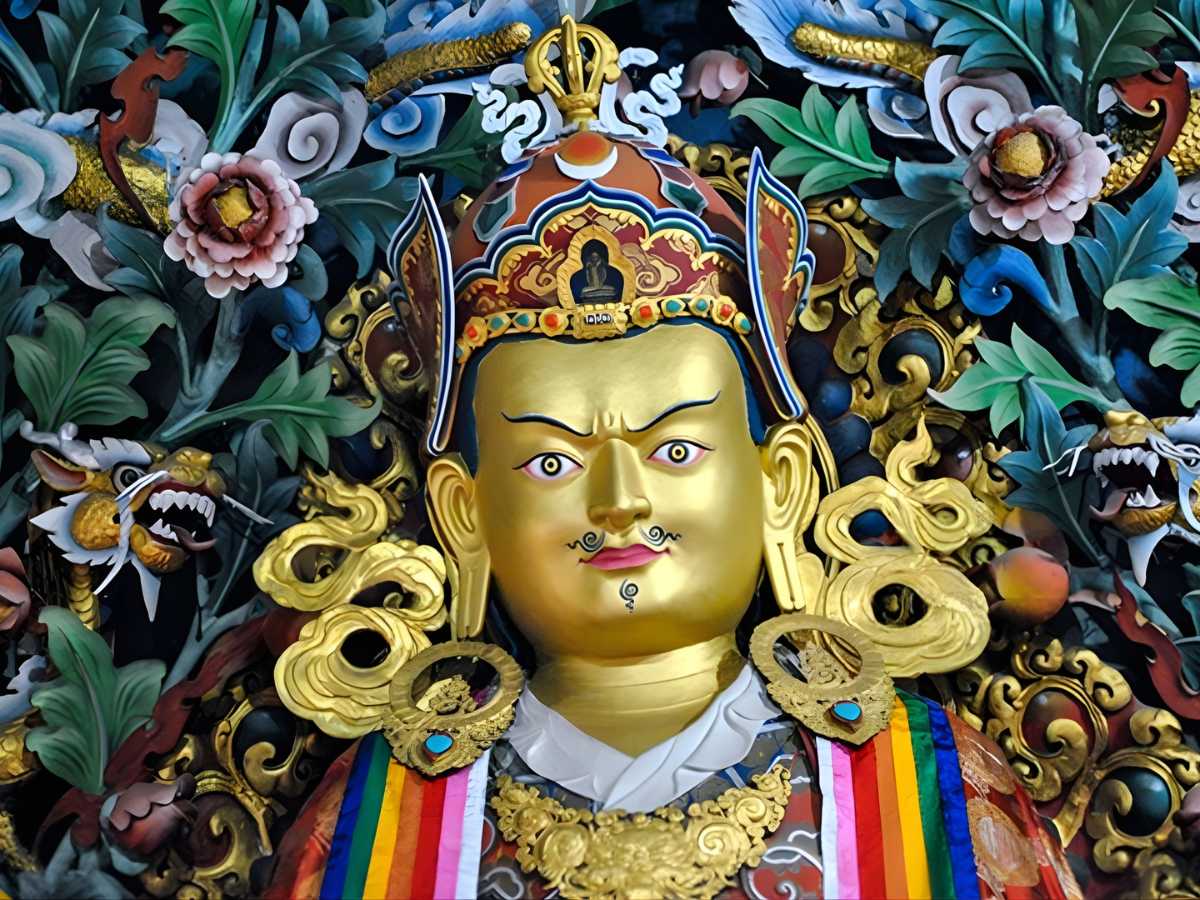
Dzogchen in Tibetan Buddhism is a term derived from the Tibetan rdzogs pa chen po. (Source: Collected)
According to the Dzogchen view, the mind is inherently complete and does not need anything added to make it whole. Practitioners are guided to recognize the primordial state of awareness that is always present. This approach differs from the gradual path of practice through various methods found in other Buddhist traditions.
Compared with Mahayoga and Anuyoga in Tibetan Buddhism, Dzogchen focuses on directly experiencing the nature of the mind. The method does not place strong emphasis on rituals or prolonged stages of transformation. Instead, practitioners go directly into awareness and maintain contemplative presence in everyday life.
1.2. The Origins and Formation of Dzogchen
Dzogchen emerged within the Nyingma tradition, the oldest school of Tibetan Buddhism, which developed in the 8th century as Buddhism spread throughout Tibet. In this context, Dzogchen came to be regarded as a core practice aimed at enlightenment. The teachings were transmitted from Indian masters and continuously preserved through successive generations.
Indian masters such as Padmasambhava, also known as Guru Rinpoche, along with many other teachers, played an important role in bringing Dzogchen to Tibet. They worked with local scholars to translate and preserve the teachings. The transmission lineage consistently emphasized direct experiential realization of the mind rather than remaining at the level of theory or abstract concepts.
1.3. Dzogchen in the Vajrayana Buddhist System
Within the Vajrayana Buddhist system of Tibetan Buddhism, Dzogchen is classified as Atiyoga, also known as the highest yoga. This system guides practitioners toward directly recognizing the nature of the mind. Compared with Mahayoga and Anuyoga, Dzogchen is regarded as a path that leads directly into the experience of awareness.
When exploring what Dzogchen is and comparing this practice with Mahamudra in the Vajrayana tradition, clear differences can be seen in their approaches. Mahamudra guides practitioners in developing an understanding of non-self and inner purity through gradual stages of practice. Dzogchen, by contrast, emphasizes simplicity and direct recognition, focusing on recognizing the state of mind that is already present and maintaining that awareness as the foundation of the path to liberation.
2. The Core Philosophy of Dzogchen and Its Approach to Practice
2.1. The Nature of Mind and the State of Natural Awareness
One of the central concepts of Dzogchen is rigpa, understood as a state of pure awareness. It refers to direct, non-dual recognition in which the mind abides in its natural clarity without being obscured by conceptual thoughts. From this perspective, the mind is inherently clear and is not governed by ordinary structures of thought.
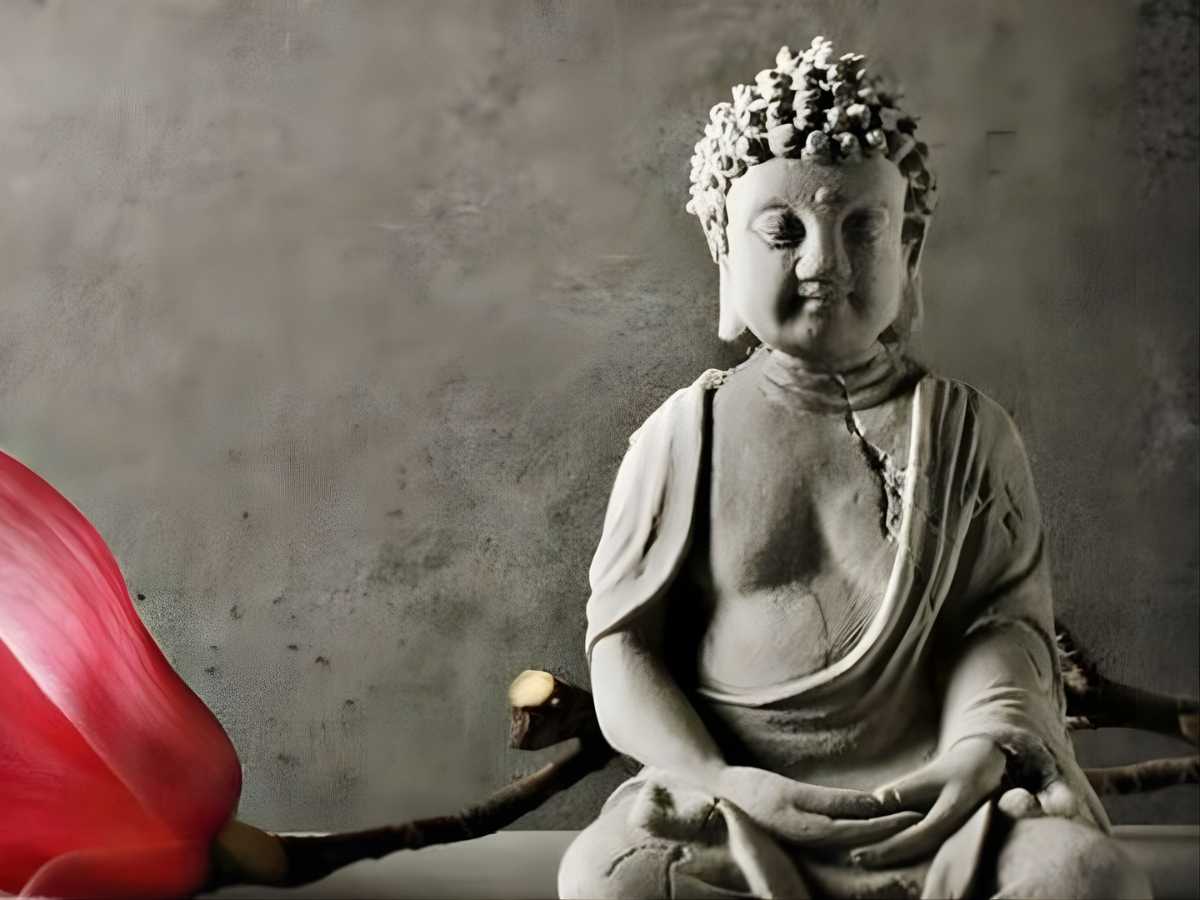
Pure awareness is direct and non-discriminating recognition. (Source: Collected)
In everyday life, rigpa can be understood as clear awareness of the present moment. This state does not become attached to the stream of automatic thoughts or continuously arising mental projections. By recognizing this, individuals can access the innate state of awareness that is already present but often obscured by psychological habits and emotions.
2.2. The Principle of Non-Fabrication and Direct Recognition
Dzogchen does not aim to transform or modify the mind in the sense of adding or removing personal qualities. The central focus of this approach is recognizing the pure and luminous nature of the mind as it already exists. This approach differs from the idea of controlling thoughts or cultivating discipline found in some other meditation methods.
According to the Dzogchen view, the mind does not need to be corrected; it needs to be recognized and maintained in a state of clarity. In everyday life, this is expressed through observing thoughts and emotions without attempting to interfere with them. When psychological phenomena are clearly seen, they naturally arise and subside, opening the way to a direct experience of the nature of mind.
2.3. Levels of Practice in Dzogchen
Dzogchen is not limited to theory but also includes specific methods of practice. The two most prominent forms commonly discussed are trekchö and thögal. Trekchö focuses on releasing attachment and allowing the mind to remain in its natural clarity.
Thögal involves more subtle practices, focusing on the direct experience of inner manifestations of light and form. These methods are often transmitted directly from teacher to student, with personal guidance playing an important role. Therefore, practicing Dzogchen requires a serious attitude and consistent, proper practice under the guidance of an experienced teacher.
2.4. Dzogchen in Modern Life
In the context of modern society, many people turn to Dzogchen as a way to maintain inner balance amid the pressures of daily life. Practicing awareness of the mind's clear state and letting go of attachment can help reduce stress in everyday activities. As a result, individuals can cultivate a sense of peace and maintain awareness amid the demands of work.
This inward journey can be associated with the experience of visiting a sacred site on a mountaintop, where the surrounding natural space feels open and separated from the noise of the city. At Sun World Ba Den Mountain in Tay Ninh, visitors can experience a sense of tranquility amid the highland landscape. The setting evokes a feeling of slowing down and reconnecting with oneself in the openness of nature.
👉 BOOK YOUR TICKET TO SUN WORLD BA DEN MOUNTAIN NOW!
3. The Role of Dzogchen in the Tibetan Buddhist Path of Practice
3.1. Dzogchen and the Path to Recognizing the Nature of Mind
Dzogchen emphasizes recognizing the natural nature of the mind. According to this view, the mind is inherently clear and does not require anything new to be created. Practitioners are guided to recognize the state of awareness that is always present. Once this is recognized, the path of practice becomes more direct and simple. Practitioners do not need to search for anything outside themselves. What matters is turning inward and observing one's own mind.
The practice is not intended to create a special state. Its purpose is to recognize the nature of mind that is already present in every moment. When the mind is clearly recognized, thoughts and emotions gradually become lighter. Attachments are also gradually released. This helps practitioners maintain awareness in everyday life. As a result, spiritual practice becomes more natural and accessible.
3.2. The Importance of Guidance from a Spiritual Teacher
In Dzogchen, the role of the spiritual teacher is extremely important. The teacher helps students directly recognize the state of rigpa. This guidance is often based on direct experiential realization. Therefore, learning Dzogchen is commonly associated with a teacher-student relationship. Proper instruction helps practitioners understand the method clearly and keeps their practice on the right path.
With the guidance of a spiritual teacher, practitioners can avoid many misunderstandings during practice. Some Dzogchen concepts are highly subtle. Reading theoretical material alone can make them difficult to fully grasp. Guidance from an experienced teacher helps students recognize the nature of mind more clearly. At the same time, practitioners learn how to maintain awareness. This allows their practice to become more stable and profound.
3.3. The Significance of Dzogchen in Modern Life
Today, many people explore Dzogchen as a way to achieve inner balance. The method encourages clear awareness of the present moment. As the mind becomes less attached to thoughts, stress can gradually decrease. Practitioners learn to observe their emotions. This can help them remain calm in different circumstances. As a result, their inner life can become lighter and more peaceful.
Dzogchen also reminds people to turn inward and observe themselves. Rather than constantly pursuing external goals, practitioners learn to slow down and become still. Awareness helps each person understand their thoughts and emotions more clearly. As inner experiences become better understood, negative reactions may gradually decrease. This creates a foundation for long-term stability while helping people live more slowly and deeply.
What is Dzogchen is not merely an academic question. It also opens a deeper perspective on the nature of mind and reality. When properly understood, Dzogchen can become a foundation for observing oneself with greater clarity. This approach is not separate from everyday life but is closely connected with each concrete experience.
Amid the sun and wind-swept landscape of Tay Ninh, Ba Den Mountain is often mentioned as a prominent symbol of the region. The mountain rises high above the vast plains, creating a landscape distinctly different from the flat fields surrounding it. Looking up from the foot of the mountain, the green forests blend with rocky cliffs, giving the area a beauty that feels both pristine and sacred.
Visitors come here not only to conquer the “roof of Southern Vietnam” but also to embark on a journey where majestic nature meets the depth of local culture. Along each route, every moss-covered stone step and winding trail reveals new perspectives, showcasing the ever-changing beauty of the surrounding landscape.
As visitors ascend, they can take in sweeping views of the vast plains below, where rice fields, lakes, and villages blend together into a peaceful landscape. From this journey, the visit often continues toward spiritual landmarks located near the mountain's summit.
From the high mountain landscape, many visitors continue to the Câu Na Hàm Buddha Statue, a spiritual structure that makes a strong impression at first sight. The large statue stands prominently against the vast sky, creating an atmosphere that feels solemn yet approachable. Its serene expression and steadfast posture have made the site a familiar stop for pilgrims.
Some visitors come simply to respectfully light a stick of incense and offer prayers for peace and well-being for their families before quietly taking in the surrounding scenery. In the expansive courtyard, gentle mountain breezes pass through, carrying with them an atmosphere of profound stillness—a striking contrast to the hectic pace of life at the foot of the mountain.
In such moments, visitors can easily feel the sense of peace spreading throughout the space. After spending time admiring the statue and its surroundings, the journey often continues toward a gentler destination located not far away.
The next stop is often Uu Dam Garden, a green space with a gentle atmosphere after the journey through the mountain. The garden is harmoniously arranged with winding paths, trees, small ponds, and various stone landscapes. As visitors enter, the sounds of the outside world seem to fade into the background, giving way to the sound of the wind and the fragrance of plants.
Visitors often walk slowly, taking in the small details of the garden along the way. Sunlight filtering through the foliage creates soft patches of light along the paths, making the space feel warm while remaining peaceful. After the journey through the mountain and the statue area, the garden becomes a quiet pause, allowing visitors to conclude their trip with a sense of relaxation and gentle tranquility.