- 1. Overview of spiritual tourism trends for young people in 2026
- 2. Top “hottest” spiritual tourism destinations for young people in 2026
- 3. Outstanding features of the spiritual tourism trend for youth in 2026
- 4. Experience when participating in spiritual tourism for young people for the first time
1. Overview of spiritual tourism trends for young people in 2026
1.1. Young people are increasingly interested in spiritual life
In the context of a fast-paced life and increasing academic and work pressure, many young people are starting to seek out activities that help balance emotions and regenerate mental energy. Instead of just choosing entertainment tourism or vibrant check-ins, they are more interested in quiet spaces that bring a sense of relaxation and peace of mind.
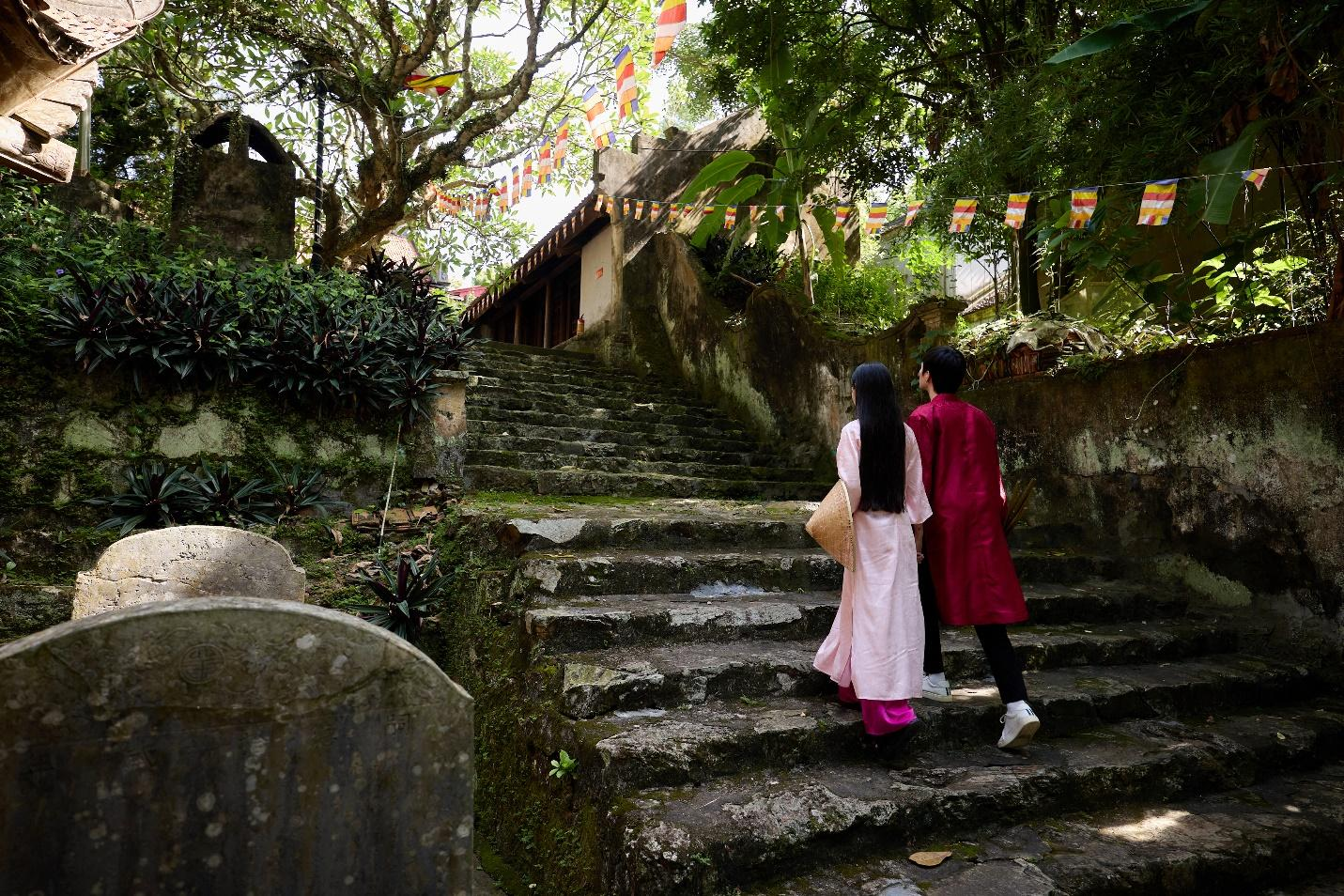
Spiritual tourism trend is increasingly prominent among young people (Source: Collected)
This change in demand has contributed to promoting spiritual tourism for young people as a clear trend, as destinations not only carry religious value but also create conditions for young people to slow down, reflect, and connect with themselves.
1.2. Spiritual tourism is no longer rigid and traditional
Previously, spiritual tourism was often associated with the image of simple worship, and the main audience was middle-aged and elderly people. However, nowadays many destinations have been invested in landscape, experiential spaces, and accompanying cultural activities, making the spiritual journey more accessible and attractive to young people.
The combination of sightseeing, experiences, cultural exploration, and check-ins has made spiritual tourism for young people more modern, suitable for the dynamic lifestyle but still valuing the spiritual values of the younger generation.
1.3. The impact of social media and the trend of “healing tourism”
Social media plays a big role in spreading images of spiritual destinations with beautiful landscapes, impressive architecture, and serene spaces. Many young people seek out these places not only for worship but also to capture moments of contemplation, inspiring a positive life.
Along with that, the increasingly popular trend of “healing tourism” has created momentum for spiritual tourism for young people to develop strongly in 2026, as the need for mental health care is placed on par with the need for rest and ordinary entertainment.
2. Top “hottest” spiritual tourism destinations for young people in 2026
2.1. Ba Den Mountain (Tay Ninh)
Ba Den Mountain stands out with a system of spiritual structures such as Linh Son Tien Thach Pagoda (Ba Pagoda), Hang Pagoda, Trung Pagoda, and the Tay Bo Da Son Lady Buddha statue complex on the mountaintop. These sites are associated with the worship of Linh Son Thanh Mau, attracting a large number of visitors to worship and pray for peace year-round.
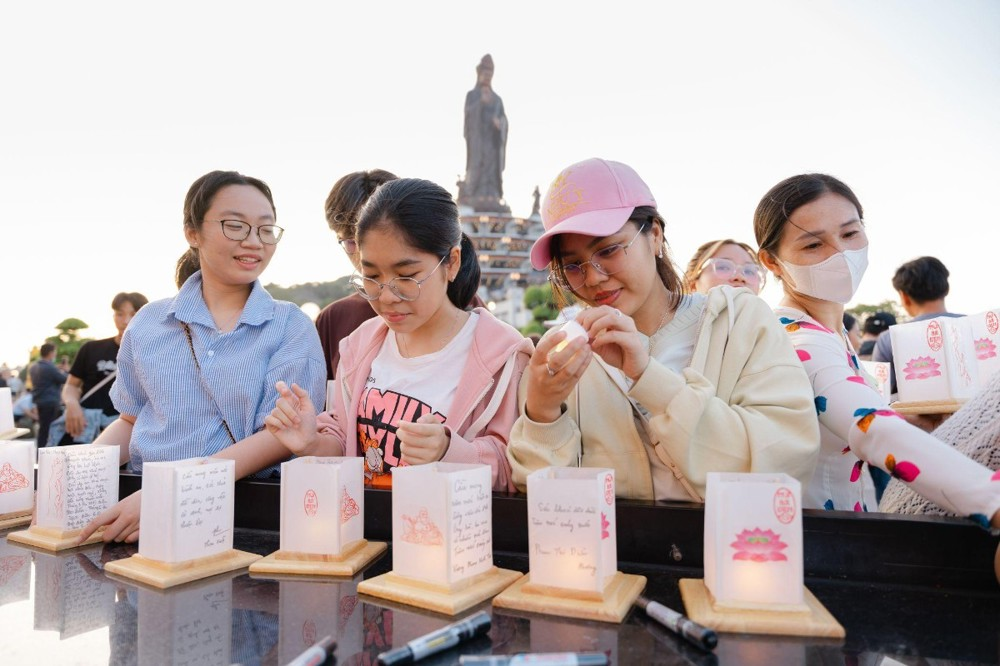
Young people participate in the lantern offering ceremony on the summit of Ba Den Mountain (Source: Collected)
With a modern cable car system, moving to the summit becomes easy, very suitable for young groups for a day trip or weekend. The combination of worship, sightseeing, and checking in with clouds and mountains helps Ba Den Mountain become a typical destination for spiritual tourism for young people in 2026.
2.2. Yen Tu (Quang Ninh)
The Yen Tu pilgrimage journey is associated with famous spiritual sites such as Giai Oan Pagoda, Hoa Yen Pagoda, Mot Mai Pagoda, and the destination is Dong Pagoda on the mountaintop. Each pagoda bears the historical imprint of the Truc Lam Zen sect, creating a pilgrimage route rich in cultural and spiritual value.
Young people come to Yen Tu not only to worship Buddha but also to experience the feeling of conquering each stage of the journey and contemplate in the serene mountain and forest space. This is a very characteristic type of experience for spiritual tourism for young people, where the journey is as important as the destination.
2.3. Fansipan Peak (Lao Cai)
On Fansipan Peak is a prominent spiritual complex featuring a bronze Great Buddha statue of Amitabha, Bich Van Zen Monastery, Kim Son Bao Thang Pagoda, and the Arhat path leading to the great bell area. The structures are built in the ancient Vietnamese pagoda architectural style, harmonizing with the Northwestern mountain and cloud landscape.
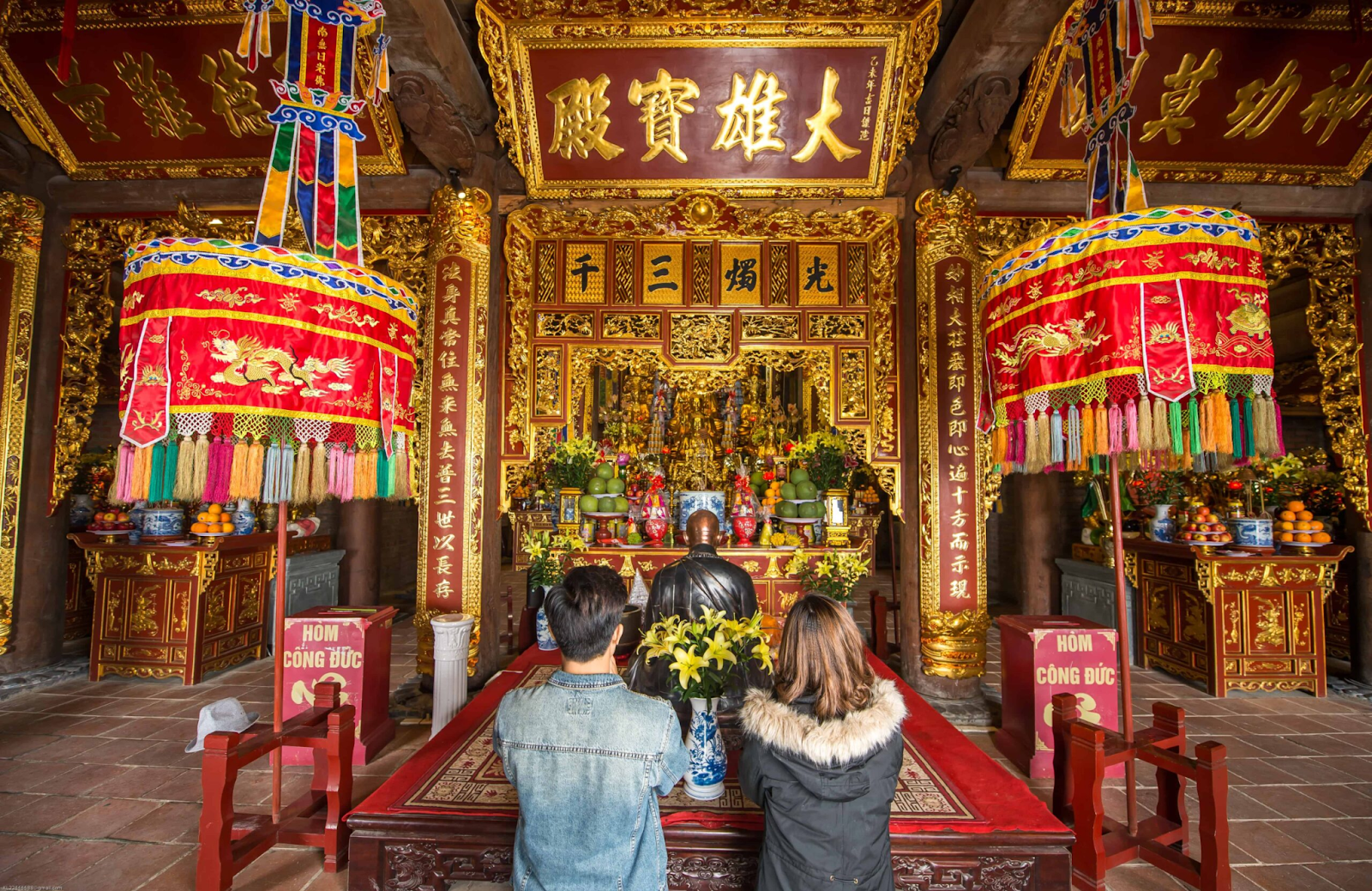
A young couple conquering Fansipan peak together and visiting Bich Van Zen Monastery (Source: Collected)
The space, both majestic and solemn, creates a very different experience for young tourists, especially for those who love the combination of exploration and contemplation. This uniqueness makes Fansipan a highlight of spiritual tourism for young people in the 2026 tourism trend.
2.4. Tam Chuc Pagoda (Ha Nam)
The Tam Chuc pagoda complex includes prominent structures such as Tam The Temple, Phap Chu Temple, Quan Am Temple, and Ngoc Pagoda on top of That Tinh Mountain. The worship spaces are spacious, solemn, and connected by internal electric vehicles, convenient for group visits.
Young people come to Tam Chuc not only to worship Buddha but also to enjoy the airy natural space, vast lakes, and unique rocky landscapes. This is a suitable destination for the trend of spiritual tourism for young people combining relaxation and scenic exploration.
2.5. Linh Ung Pagoda – Sun World Ba Na Hills (Da Nang)
Linh Ung Pagoda is located within the Sun World Ba Na Hills complex, notable for its Shakyamuni Buddha statue, main hall, and meditation-style garden areas. The pagoda's space is separate from the entertainment area, thus retaining the necessary tranquility and solemnity of a spiritual site.
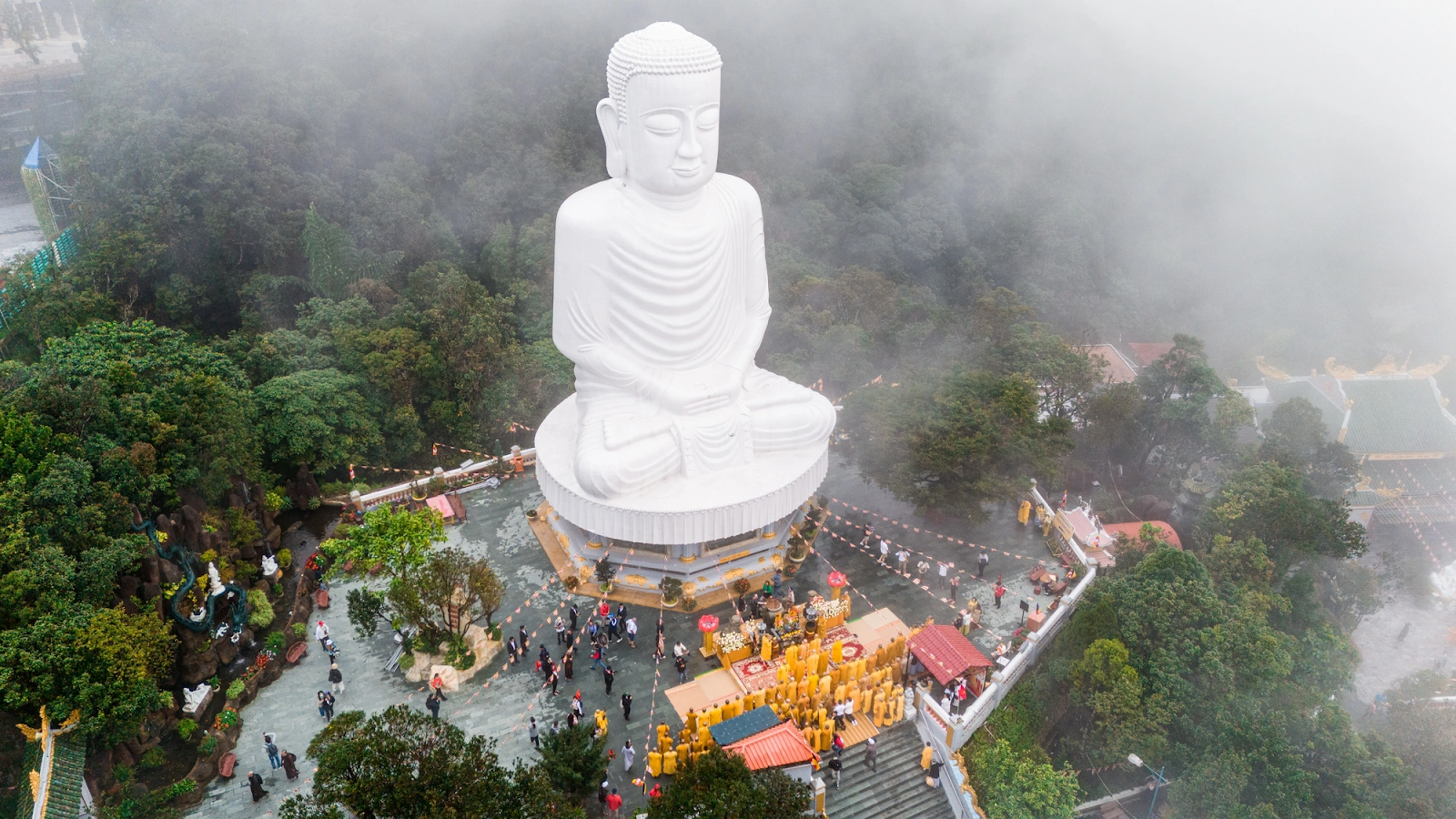
Linh Ung Pagoda at Sun World Ba Na Hills is a famous spiritual and entertainment tourist destination in Da Nang (Source: Collected)
Combining pagoda visits with cable car experiences and European architectural works makes the journey more diverse and attractive to young people. This is a typical example of the model of spiritual tourism for youth associated with integrated experiential tourism.
2.6. Truc Lam Zen Monastery Da Lat
Truc Lam Zen Monastery Da Lat is located on Phung Hoang Mountain, overlooking Tuyen Lam Lake, consisting of the main hall, the ancestral hall, and the meditation area for monks and nuns to practice. The space here is known for its tranquility, lush green scenery, and is very suitable for meditation and relaxing walks.
Many young people choose the monastery as a stop on their journey to regain spiritual balance amidst a packed travel itinerary. This is also a clear manifestation of the trend of spiritual tourism for youth towards gentle, healing, and slow living.
3. Outstanding features of the spiritual tourism trend for youth in 2026
3.1. Prioritizing personal experiences and emotions over formal rituals
Unlike traditional pilgrimage which focuses on rituals, many young people today approach spiritual tourism as a journey of emotional experience and self-contemplation. They are interested in finding quiet spaces, enjoying the scenery, walking within the pagoda grounds, or participating in mentally relaxing activities.
This change in approach makes spiritual tourism for youth gentler and more approachable, meeting the need to find balance between academic and work pressures and personal life.
3.2. Combining spirituality with exploratory and resort tourism
Many young people do not completely separate spiritual tourism from experiential tourism. A trip can include visiting pagodas in the morning, sightseeing at noon, and checking in and enjoying local cuisine in the afternoon. The "one trip - many experiences" model is increasingly popular.
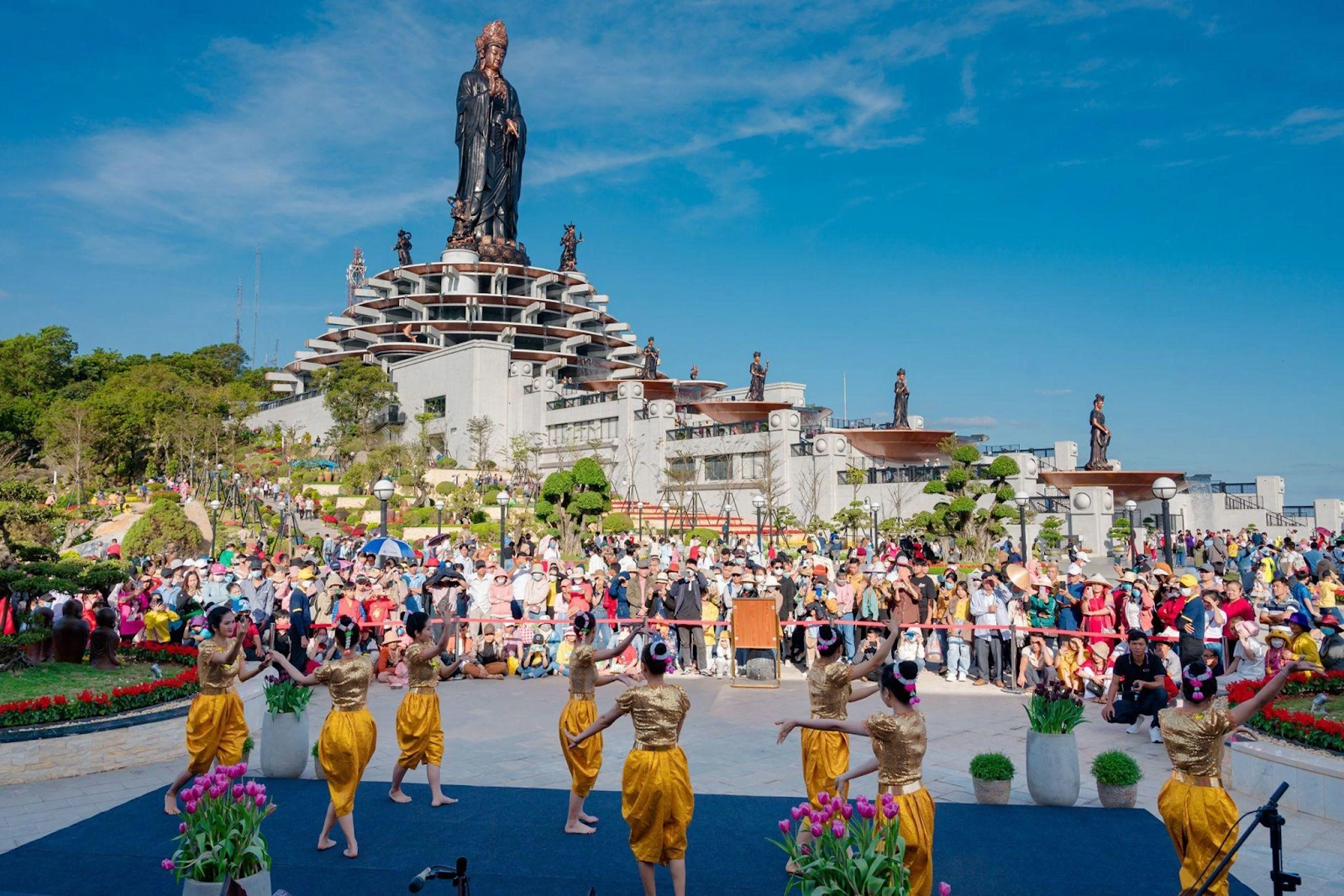
Young people tend to combine spiritual tourism with leisure and resort tourism (Source: Collected)
This trend helps spiritual tourism for young people become more flexible, not limited to the framework of rituals but expanding to activities that are relaxing and explore local culture.
3.3. Emphasis on beautiful spaces, impressive architecture, and social media sharing
Spiritual destinations with unique architecture, high-altitude landscapes, clouds, mountains, or lakes are often preferred by young people. These spaces not only serve the purpose of worship but also meet the need to capture images and share personal experiences on social media.
The spread of images has contributed to the strong development of spiritual tourism for young people, as each trip can become a source of inspiration for the community interested in spiritual life.
3.4. Greater focus on "healing" and self-development
Besides beliefs, many young people turn to spiritual sites with the desire to reduce stress, regain balance, and reorient their personal emotions. Activities such as meditation, walking in green spaces, and limiting the use of electronic devices are considered effective ways to regenerate spiritual energy.
This need has clearly shaped spiritual tourism for young people in 2026, when tourism is not just for fun but also for mental health care and inner development.
4. Experience when participating in spiritual tourism for young people for the first time
4.1. Learn about the destination and etiquette at sacred places beforehand
Before going, it is advisable to learn about the history, spiritual significance, and regulations at the destination, such as dress code, how to offer incense, or areas where photography is restricted. This will not only help the trip go smoothly but also show respect for the sacred space.
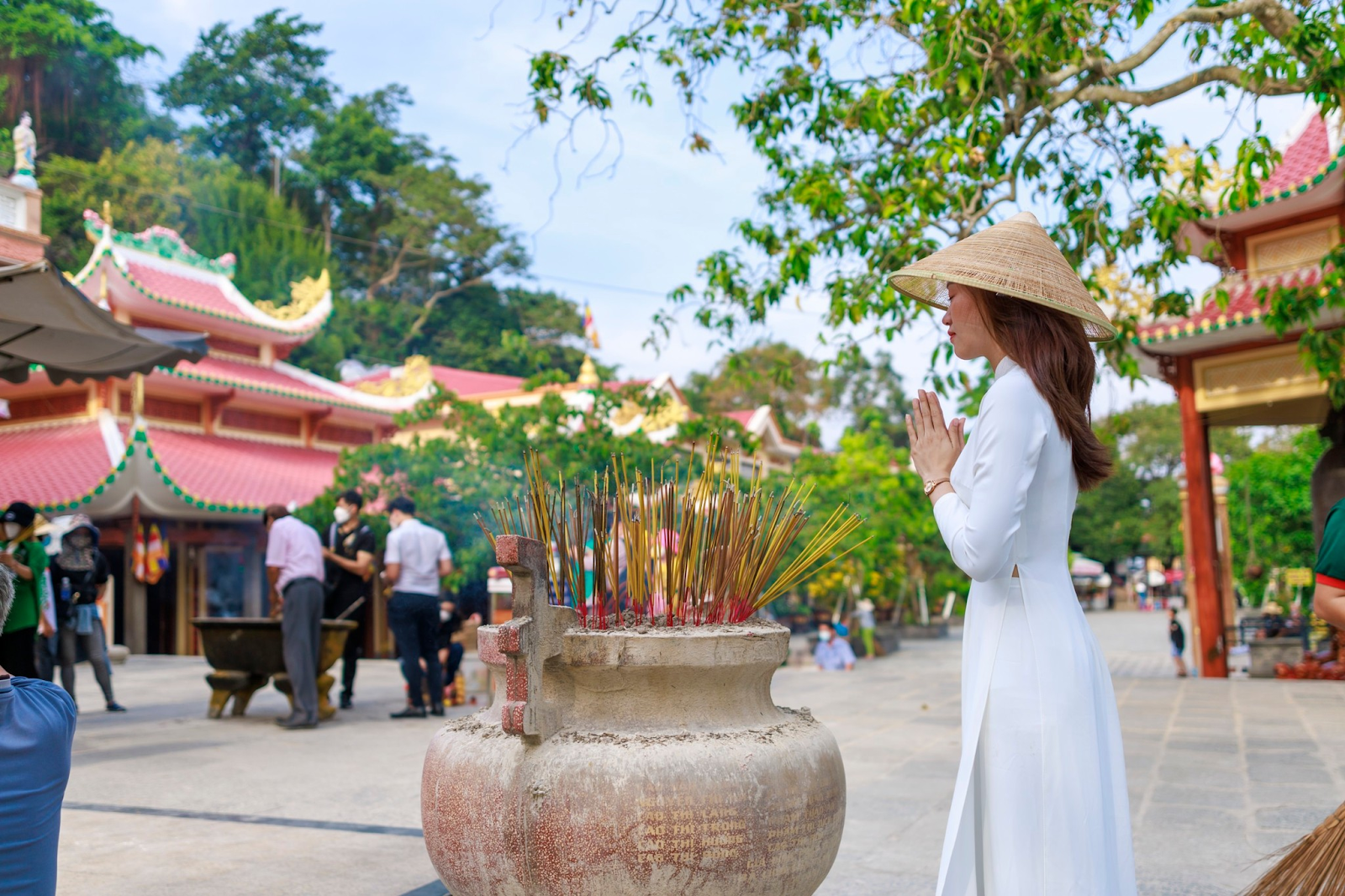
Travelers should learn about spiritual destinations before a spiritual trip (Source: Collected)
For spiritual tourism for young people, understanding correctly and behaving appropriately will help the experience become more complete, avoiding feelings of awkwardness or violating necessary rules at pagodas, temples, and monasteries.
4.2. Plan a relaxed itinerary, avoid visiting too many places in one day
Many young people tend to want to combine multiple destinations in one trip; however, this can easily cause fatigue and reduce the meditative experience. The itinerary should be arranged at a slow pace, with time for rest and enough quiet moments to feel the space.
When participating in spiritual tourism for young people, the quality of the experience is more important than the number of destinations, especially for trips aimed at relaxation and spiritual healing.
4.3. Maintain an open attitude and an experiential spirit
Spiritual tourism is not just about visiting a specific place but also a process of observing, listening, and feeling. Maintaining an open mindset, not focusing on formalities, will help each person find their own value in the trip.
It is this experiential spirit that makes spiritual tourism for young people an inner exploration journey, rather than just a regular tour.
The shift in demand for slow living, mental health care, and the search for sustainable values is making spiritual tourism increasingly interesting to young people. No longer limited to the framework of traditional rituals, today's trips are experiential, healing, and connect more deeply with oneself.
With the diversity of destinations and modern approaches, spiritual tourism for young people is forecast to continue developing strongly in 2026, becoming an ideal choice for those who want to balance exploring the outside world with the journey of self-reflection.