1. General introduction to Phước Lưu Pagoda
1.1. Location and historical significance
Located at No. 152, National Highway 22, Loc Du Quarter, Trang Bang Ward, Tay Ninh Province, Phước Lưu Pagoda is one of the typical ancient pagodas of the Southern region. About 40 km from Ho Chi Minh City, the pagoda is not only a familiar spiritual destination but also a place that preserves the traces of Vietnamese settlement over two centuries ago.
Trang Bang is one of the earliest developed lands in Tay Ninh, a convergence of many ethnic groups with rich beliefs. During their settlement journey, the people here built many ancient pagodas, among which Phước Lưu Pagoda is considered the largest Buddhist center of Trang Bang, clearly reflecting the spiritual life of the Southern residents in the early 19th century.
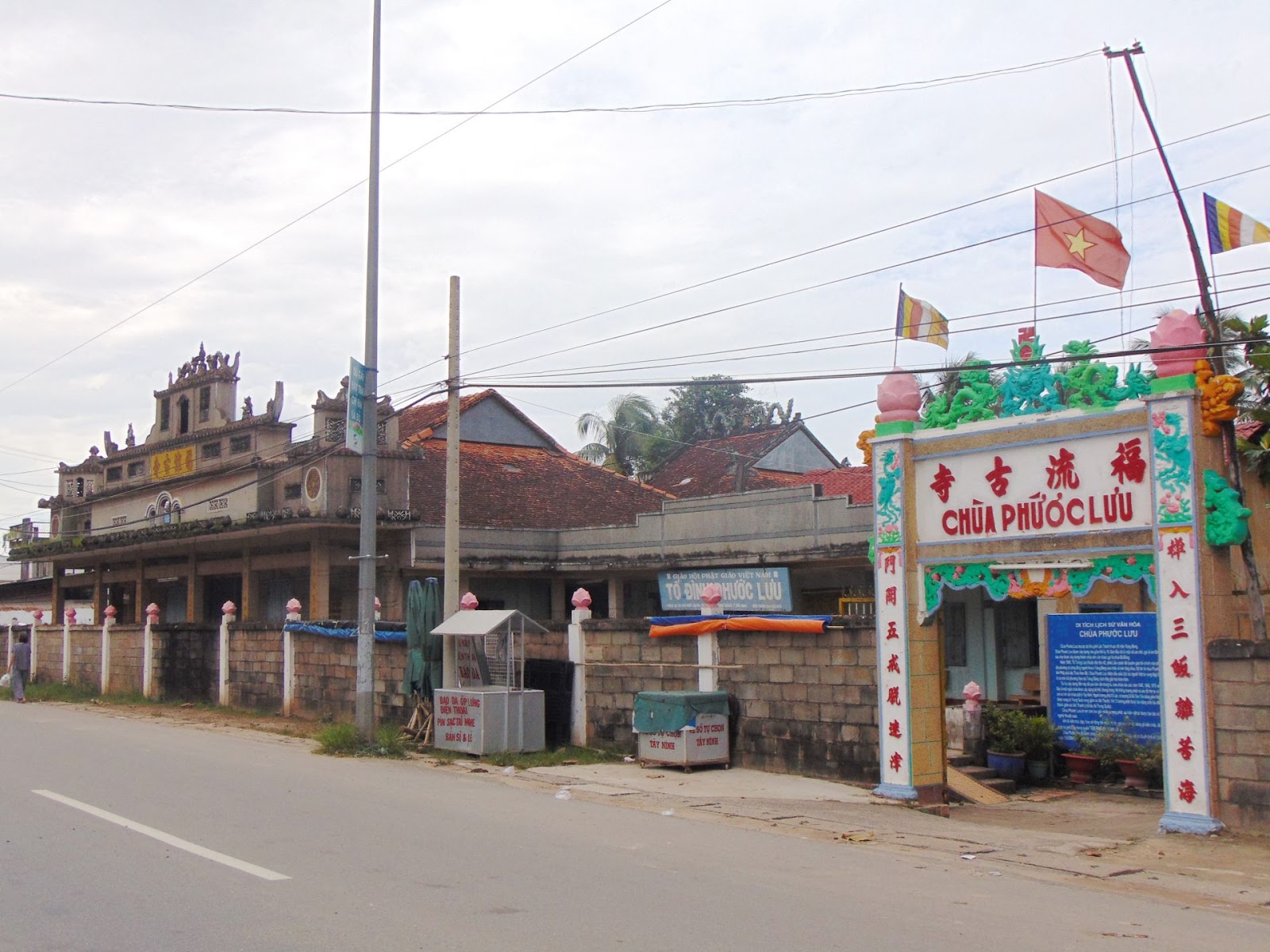
As one of the oldest ancient pagodas in Tay Ninh. (Source: Collected)
The pagoda not only contributes to shaping the cultural identity of the new land but also testifies to the Vietnamese-Chinese cultural exchange, where Buddhism blends with folk beliefs, forming the unique spiritual character of Tay Ninh today.
1.2. History of the formation of Phuoc Luu Pagoda
According to ancient documents, Phuoc Luu Pagoda was formed in the year Canh Ty 1840. Initially, it was just a small thatched hut built by the roadside in an area full of bang trees, which locals called “Trang Bang”. It was here that Mrs. Nguyen Thi Trinh, from Go Den, during her journey with the southern migrants, stopped, became a novice monk, received the Sa di precepts, with the Dharma name Chon Trinh and the courtesy name Dieu Tiet. She rebuilt the hut, worshipped Buddha, and practiced medicine to heal people, so she was called “Ba Dong” by the locals, and the small hut was named “Am Ba Dong”.
Later, nun Tran Thi Nen – Dharma name Chon Tang, courtesy name Tien Cot, from the same hometown, came to the hut to practice. As she was older, local people affectionately called her “Ba Coc”. The two women practiced together, treated illnesses, and helped the poor. From then on, their good reputation spread far and wide, and more and more people came to worship Buddha and pray for peace, causing the small hut to gradually expand.
Ba Coc’s eldest son, Mai Van Luc, later became a monk at Linh Son Tien Thach Pagoda (Ba Den Mountain), with the Dharma name Chon Huu, given name Trung Luc, and Dharma title Dieu Thong. After Ba Coc passed away, monk Trung Luc succeeded as the abbot, renaming the pagoda “Phuoc Luu” in 1900, with the meaning “Phuoc is the land of blessings, Luu is the stream of Dharma flowing eternally through generations”.
From then on, Phuoc Luu Pagoda became the center for religious activities in the Trang Bang area, opening the first Gia Giao class to teach Buddhist studies, Confucianism, and medicine to monks. Under the abbacy of monk Trung Luc, the pagoda was renovated on a large scale, with yin-yang tiled roofs, carved wooden panels, Buddha statues, horizontal lacquered boards, and couplets made by artisans from An Tinh village.
By the early 20th century, the pagoda had become the largest ancient pagoda in Trang Bang. Many successive abbots such as Most Venerable Tam Huu, Tam Co, Thien Hue Nguyen Tan, Hue Tanh, Quang Chi, Thien Chanh have continued the tradition of lecturing, practicing medicine, and training monks.
In 2004, Phuoc Luu Pagoda was ranked as a provincial-level Historical-Cultural Relic of Tay Ninh, and in 2016, it was recognized by the Vietnam Union of UNESCO Associations as a “Sacred Ancient Pagoda of Vietnam” – a testament to the pagoda’s centuries-old historical, artistic, and spiritual values.
2. Unique Artistic Architecture of Phuoc Luu Pagoda
2.1. Unique Southern Vietnamese "Nhị" (二) architectural style
Phuoc Luu Pagoda impresses with its characteristic Southern Vietnamese "Nhị" (二) architectural style, consisting of two connected four-pillar houses. The precious wooden frame includes 32 meticulously carved wooden pillars placed on stone bases, supporting a sturdy system of rafters and purlins. The combination of folk architecture and traditional carpentry techniques gives the pagoda an ancient and enduring appearance.
The pagoda's space opens along the vertical axis of "front Buddha, rear Ancestor", both showing reverence for the Triple Gem and aligning with the "heaven-earth-human" philosophy in Eastern culture.
2.2. Altar rooms and rare Buddha statue system
The center of the pagoda is the Great Heroic Treasure Hall, where Buddhas and Bodhisattvas are worshipped. The statues are arranged according to three levels of meaning:
- Upper level: The statue set of Amitabha Trinity (Buddha Amitabha, Bodhisattva Avalokitesvara, Bodhisattva Mahasthamaprapta) representing the past.
- Middle level: The statue set of the Flower Garland Trinity (Buddha Shakyamuni, Venerable Kashyapa, Venerable Ananda) representing the present.
- Lower level: The statue of Maitreya Buddha representing the future.
On the sides are altars for the Eighteen Arhats, Ten Kings of Hell, Patriarch Bodhidharma, Bodhisattva Ksitigarbha, along with large bells and drums, creating a solemn and serene atmosphere.
Notably, the pagoda also worships the Guardian Deities (Gia Lam Thanh Chung) and Linh Son Holy Mother (Ba Den), reflecting the harmonious blend of Vietnamese and Chinese folk beliefs in this ancient Southern Vietnamese Buddhist pagoda.
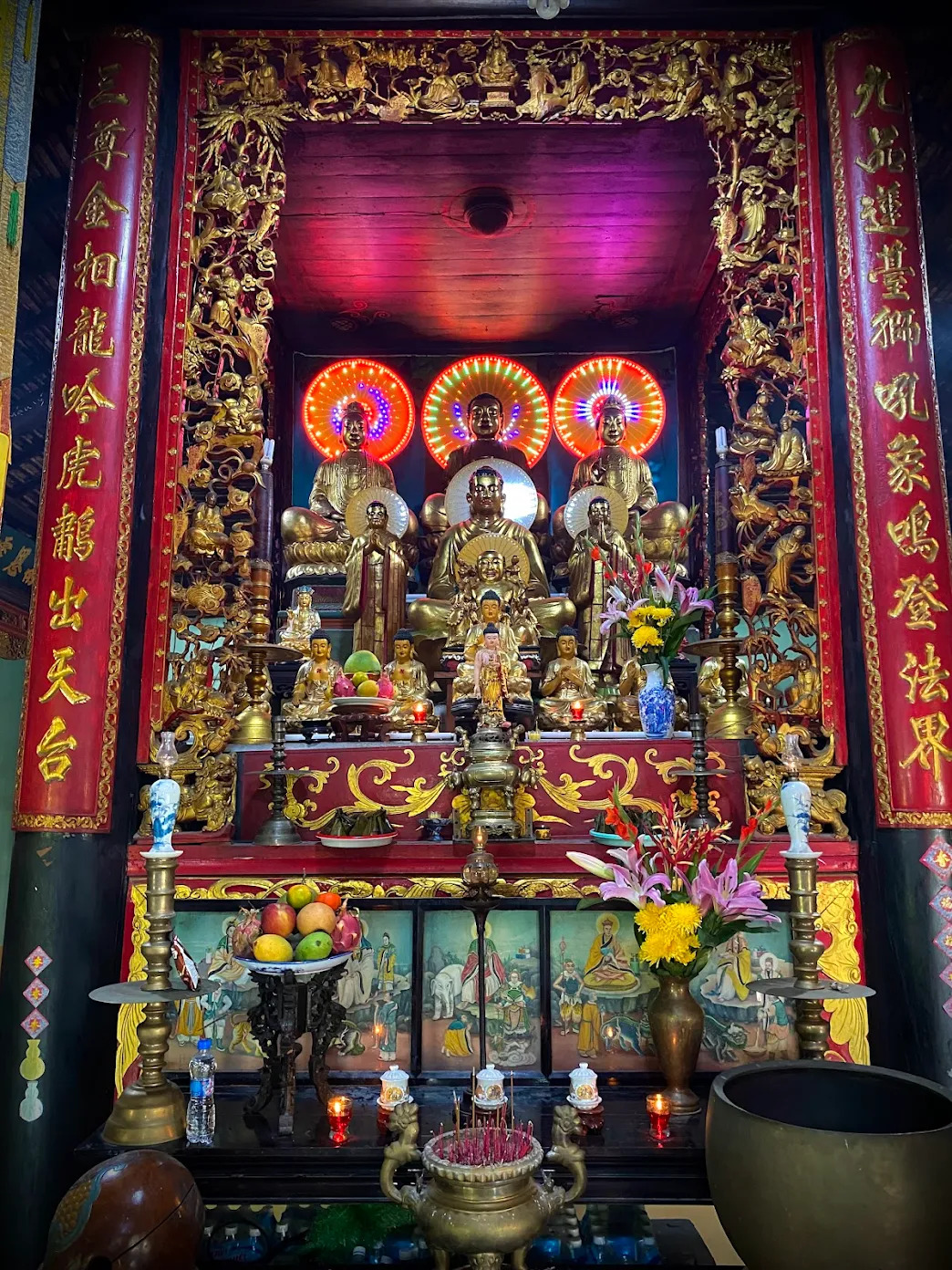
System of rare Buddha statues with historical value. (Source: Collection)
2.3. Scrolls, Couplets, and Ancient Calligraphy
The artistic value of Phuoc Luu Pagoda is honored through its system of 15 sets of decorative panels, 17 scrolls, and 22 couplets with Chinese characters. The patterns are intricately carved by artisan An Tinh with themes of the four sacred creatures, five blessings, two dragons facing the sun, phoenix, peony pheasant, etc., serving both as decoration and conveying Buddhist philosophy.
Besides, the brushstrokes of patriarchs like Truong Luc and Nguyen Tan are preserved through the scrolls "Minh Duc" and "Linh Son Thanh Mau", becoming vivid evidence of the ancient pagoda's over 180-year history.
3. Antiques Preserved at Phuoc Luu Pagoda
3.1 Paintings, Statues, and Precious Artifacts
Phuoc Luu Pagoda is not only an ancient pagoda but also a museum preserving hundreds of antiques with special historical and artistic value of the Southern region. In the main hall, the system of worship statues varies in material, style, and age. Small ancient statues carved from jackfruit wood, lacquered and gilded, such as Shakyamuni Buddha, Amitabha Buddha, Arhats, the Jade Emperor, and Heavenly Kings, have been preserved since the Bà Đồng hermitage in 1840.
Notably, the set of statues of Cundi Bodhisattva and the Three Saints of Avatamsaka, carved by woodworkers from An Tinh village in 1900, demonstrates sophisticated carving techniques, with soft statues that still exude the majesty of the Buddhas.
In addition, the pagoda also preserves many precious lines of folk paintings such as the "Ong Tao" glass painting, the "Twenty-four Filial Exemplars" inlaid with colorful mother-of-pearl, and landscape paintings on wood, testifying to the interaction between folk beliefs and Southern Buddhist art.
From the decorative panels and scrolls to each wooden pillar, every detail bears the mark of ancient artisans, contributing to creating a solemn, ancient, yet familiar and rustic worship space, true to the Western region's style.
3.2 Woodblocks and Sino-Vietnamese Scriptures
One of the most precious heritages of Phuoc Luu Pagoda is its collection of woodblocks, carved since 1898, which is a rare system of ancient printing plates still existing in Tay Ninh. These woodblocks record prayers, edicts, mantras, ordination lineages, Bagua protective charms, and invitations to the Truong Ky Ordination Council in the Year of the Dog (1909), when Grand Master Truong Luc was honored as the Chief Abbot.
All woodblocks are carved on good wood, with sharp Sino-Vietnamese characters, demonstrating sophisticated calligraphy skills and serving as valuable material for researching Southern Buddhism. Besides woodblocks, the pagoda also preserves hundreds of volumes of Buddhist sutras, vinaya, abhidharma, and ancient medical books, mostly compiled by patriarchs or copied from renowned ancestral pagodas such as Giac Lam, Giac Vien, Sac Tu Tu An, and Hoi Khanh.
3.3 Unique Artifacts with Historical Value
In the tranquil space, visitors can easily encounter the large bronze bell cast in the Year of the Pig (1881), which is one of the most sacred and intact ancient artifacts. Each ringing of the bell seems to touch the listener's heart, evoking a sense of peace and goodness.
A particularly impressive artifact for visitors is a war shell casing, repurposed by Venerable Thich Thien Nhan, a later abbot, as a gong for rituals. All these artifacts make Phuoc Luu Pagoda a "living Buddhist museum" of the Southern region, where each artifact tells a story of dharma, life, and the human spirit in the land of Trang Bang.
4. Other Spiritual Tourist Destinations in Tay Ninh
4.1. Sun World Ba Den Mountain
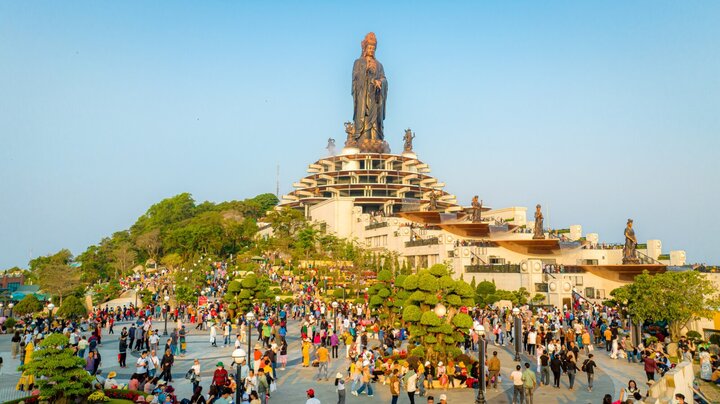
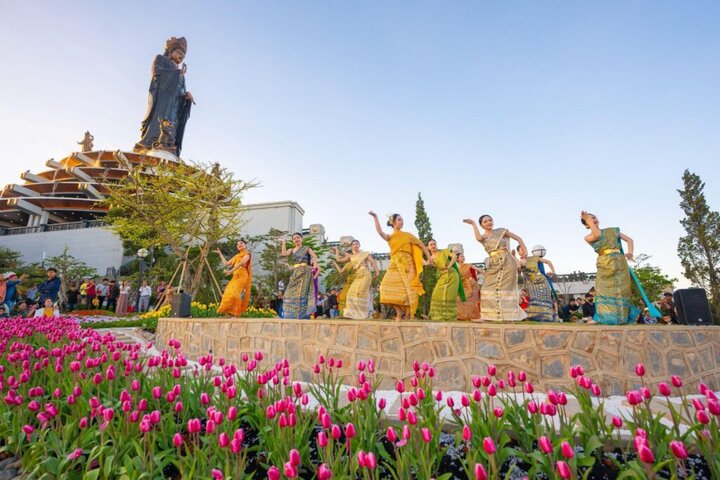
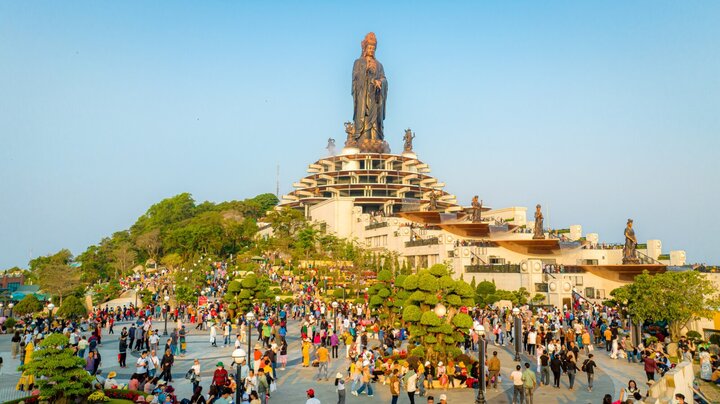
Sun World Ba Den Mountain is a spiritual cultural complex on the summit of Ba Den Mountain. From a Buddhist perspective, the journey to explore this complex is considered a journey to awaken the "four immeasurable minds" – the four virtues of loving-kindness, compassion, sympathetic joy, and equanimity – inherent in everyone. This spiritual journey begins with the Tay Bo Da Son Bodhisattva statue, the tallest bronze statue in Asia located on the mountaintop, symbolizing loving-kindness and compassion. It continues with five giant lotus-shaped water pools, leading through a vast square, and concluding at the sandstone Maitreya Bodhisattva statue – the Bodhisattva of joy and equanimity. Each pilgrimage step is a moment of focusing the mind, washing away worldly worries to achieve inner peace.
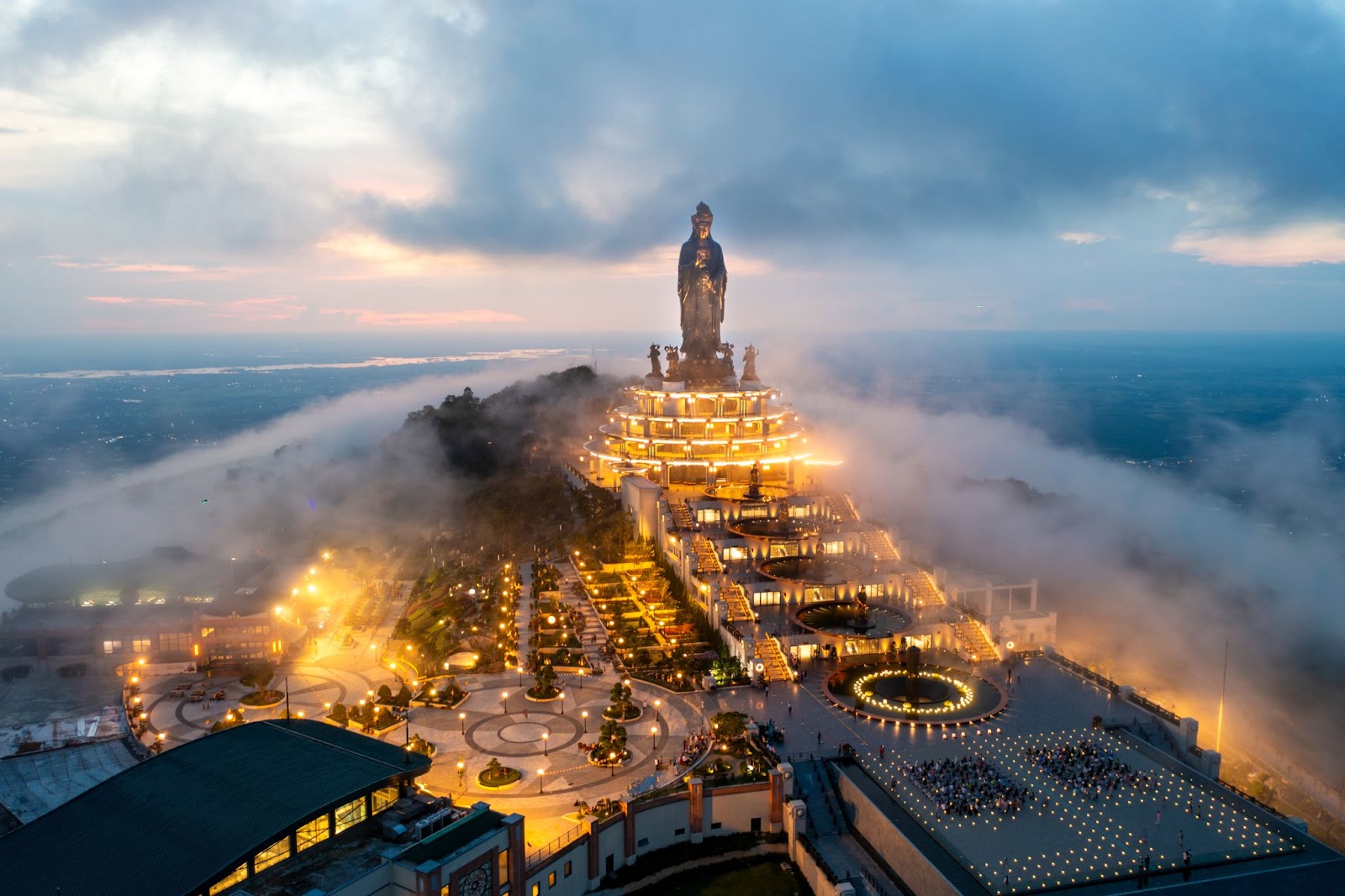
The beauty of the spiritual cultural complex Sun World Ba Den Mountain on the mountaintop.
Amidst the drifting clouds, the temple bells chime, visitors can worship the Buddha's relics of Shakyamuni, spin the prayer wheels, or find peace beside the Prajnaparamita sutra pillar inscribed with 12,000 Tibetan characters. On Saturday evenings, the entire mountaintop sparkles in the lamp-offering ceremony with thousands of lights shining brightly like prayers for peace sent to the Buddhas. Ba Den Mountain is not only a famous tourist destination but also a place to rediscover inner peace, helping people to calm down and understand the value of faith and kindness.
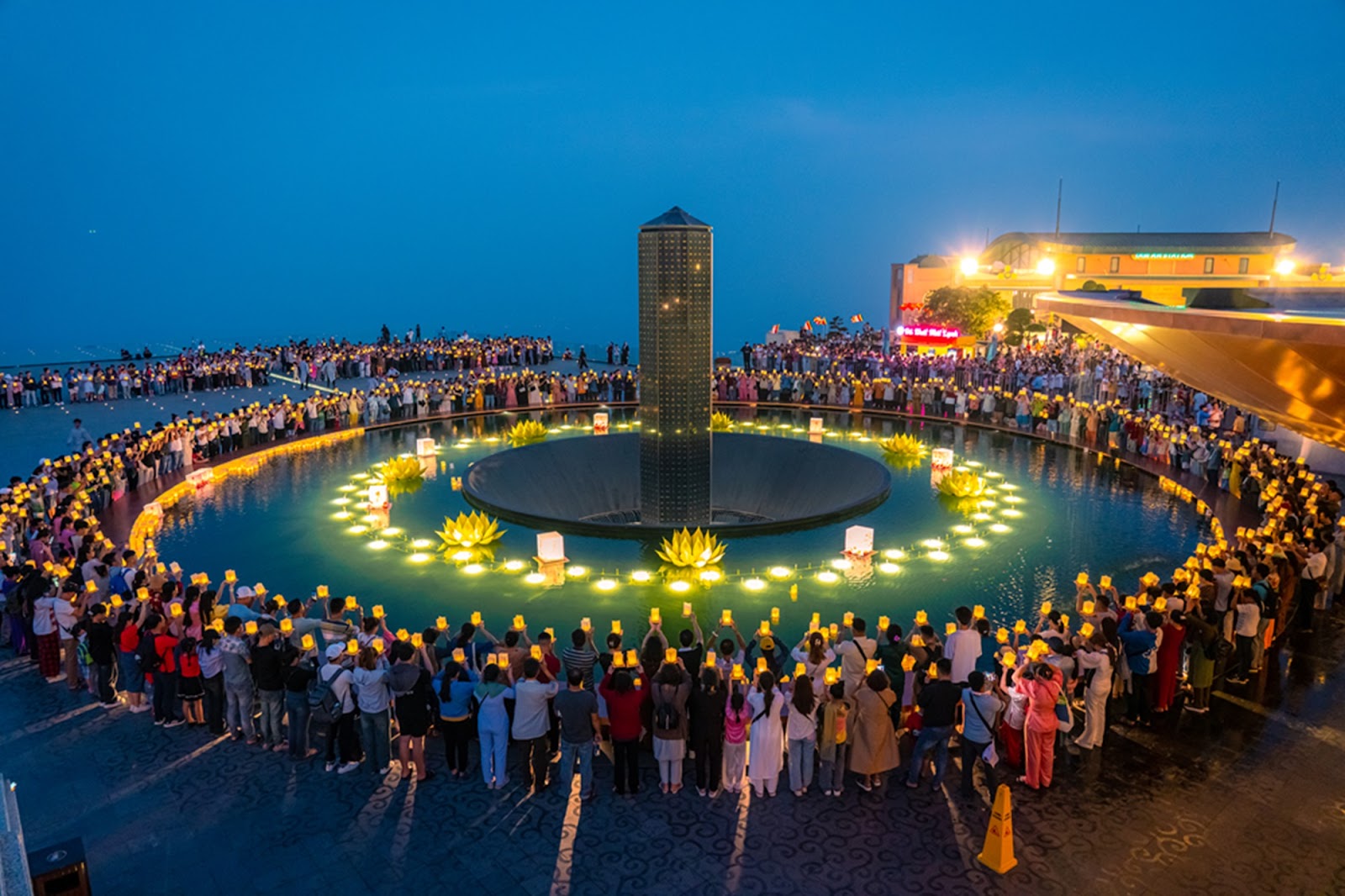
Tourists attend the lantern offering ceremony on the summit of Ba Den Mountain.
4.2. Linh Son Tien Thach Tu (Spirit Mountain Immortal Stone Temple)
Located at an altitude of about 350 m on the mountainside of Ba Den Mountain, Linh Son Tien Thach Tu (also known as Chua Ba) was built in 1745, making it the oldest pagoda in Tay Ninh. It enshrines Linh Son Thanh Mau, whom locals respectfully call Ba Den, associated with many sacred legends.
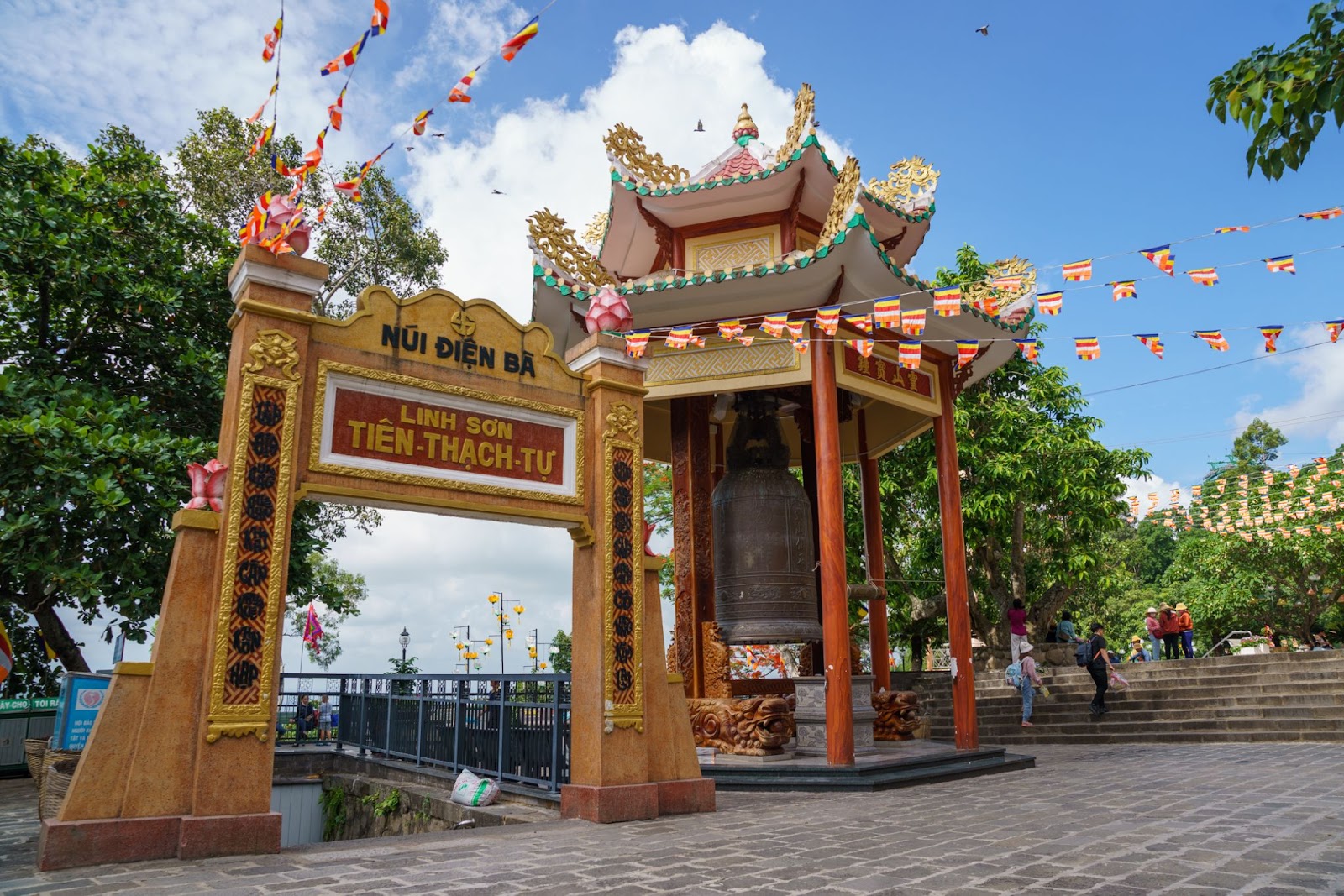
Linh Son Tien Thach Tu (Immortal Stone Temple) is located halfway up the mountain, at the center of the Ba Den mountain pagoda system.
Notably, the temple preserves Buddha relics, a treasure gifted by the King of Thailand, donated by Venerable Thich Hien Phap in 2000. Next to the pagoda is the Ba Linh Son Temple, with its natural rock roof forming a cave dedicated to the Holy Mother, Earth Deity, and God of Wealth. During each festival season, tens of thousands of Buddhists pilgrimage to pay homage, light incense for peace, love, and blessings, making Linh Son Tien Thach Tu the most sacred destination in Tay Ninh.
4.3. Quan Am Pagoda
Ascending hundreds of steep stone steps, visitors will reach Quan Am Pagoda, the highest pagoda in the spiritual complex of Ba Den Mountain. This small, simple pagoda solely worships Bodhisattva Avalokitesvara, symbolizing compassion and salvation from suffering. The tranquil atmosphere, with its lingering incense smoke, calms the soul, turning towards the benevolent Mother figure in folk belief.
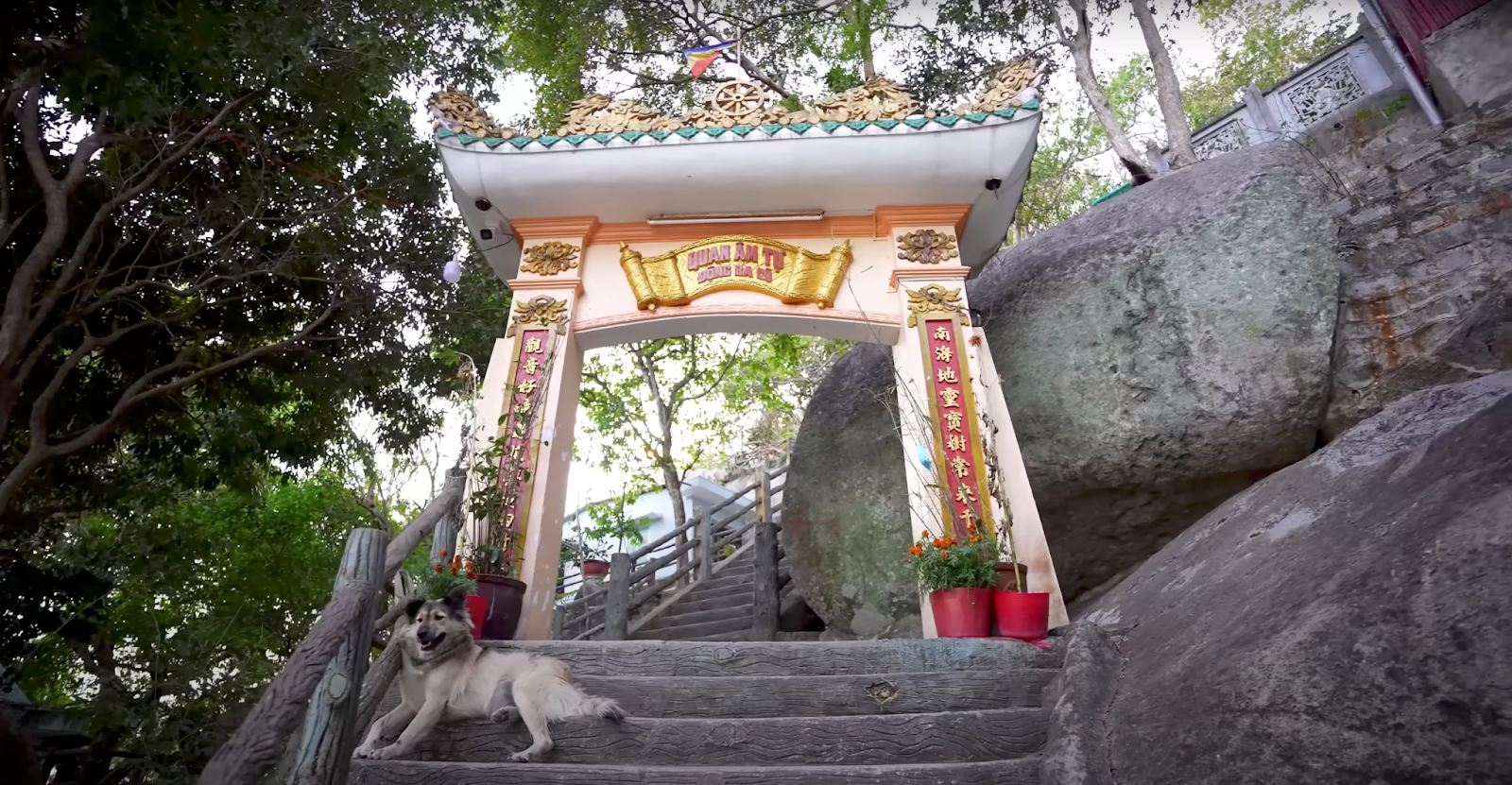
Quan Am Pagoda is the highest pagoda in the Ba Den Mountain pagoda system.
From the pagoda grounds, cast your eyes afar, and the entire panorama of Trang Bang, Dau Tieng Lake, and prosperous hamlets appears in the early mist. Beside the pagoda is Dong Ba Co Cave – a natural rock cave associated with the story of three virgin maidens who ascended the mountain to practice asceticism, leaving behind many sacred legends. This place is believed by locals to be efficacious for praying for love and health.
Each step of the pilgrimage up Ba Den Mountain is a step towards purifying the soul. Amidst the clouds, the sky, and the chanting of Buddhist instruments, one clearly feels the harmony between heaven and earth, between the human heart, between legend and faith.
4.4. Go Ken Pagoda
Not far from the center of Tay Ninh, Go Ken Pagoda (also known as Thien Lam Co Tu) is located in the Hòa Thành area, surrounded by vast fields and ancient, shady trees. The pagoda was founded in 1904 by Venerable Thich Tri Luong and is one of the typical ancient pagodas of the Southern region.
After many renovations, especially in 1970 and 2007, the pagoda boasts a magnificent appearance with traditional Northern architectural style, curved tiled roofs, yellow walls, and wooden pillars, exuding an ancient charm amidst the peaceful countryside. Visiting Go Ken Pagoda, tourists not only come to worship and pay homage to Buddha but also experience peace and harmony between religion and life. This is an ideal stop for a spiritual journey in Tay Ninh, where people can find serenity amidst expansive nature.
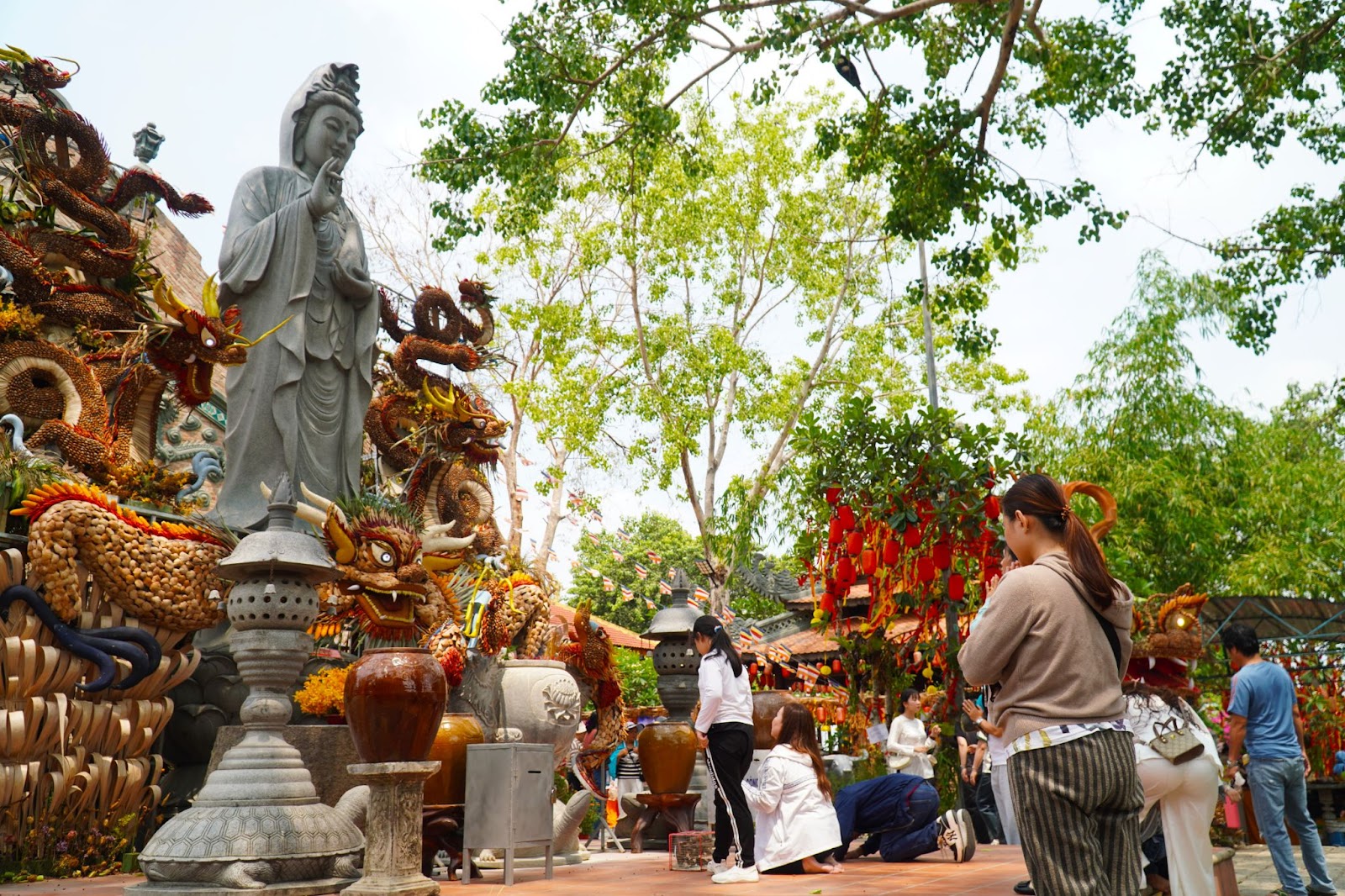
Go Ken Pagoda is visited by many tourists for pilgrimage and worship. (Source: Compilation)
Concluding the journey of exploring the sacred pagodas of Tay Ninh, Phuoc Luu Pagoda remains a special highlight in the hearts of tourists. Every stick of incense, every chime of the bell, every moss-covered tiled roof reminds of faith, compassion, and the spiritual cultural roots of the South. Visiting Tay Ninh once, to worship at Phuoc Luu Pagoda – an ancient temple nearly two centuries old, you will feel your heart soften, light as clouds drifting in this sacred land.