1. General introduction to Linh Son Phuoc Trung Pagoda
Located in Ninh Son ward, Tay Ninh city, right at the foot of Ba Den Mountain, Linh Son Phuoc Trung Pagoda (also known as Trung Pagoda) is one of the oldest and most sacred pagodas in the Southern region (Nam Bo). The pagoda belongs to the Mahayana sect, is located in protection zone I of the Sun World Ba Den Mountain National Tourist Area, and is the first stop on the pilgrimage route of the Zen temple system along the mountainside.
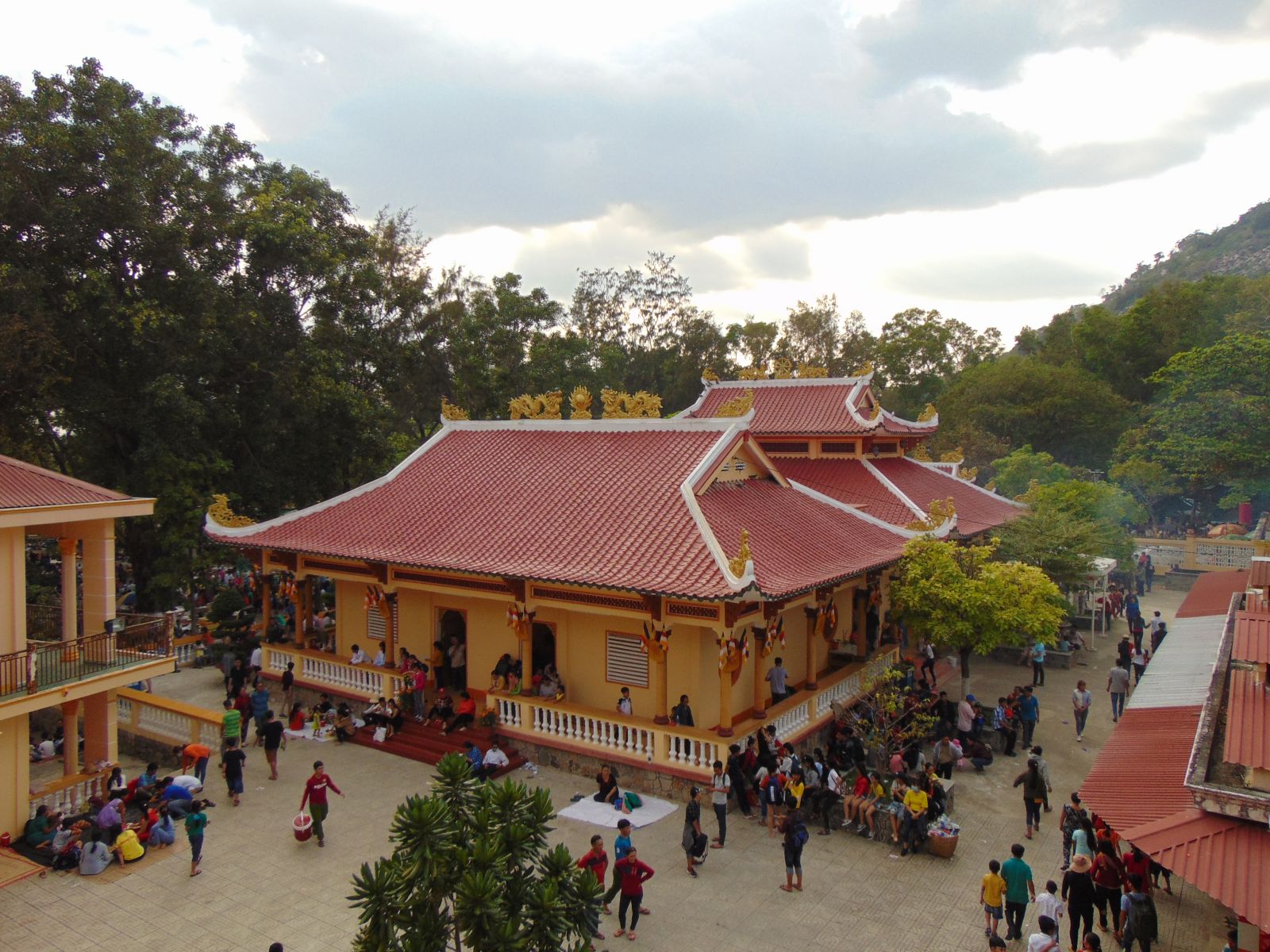
Linh Son Phuoc Trung Pagoda is located right at the foot of Ba Den Mountain. (Source: Collection)
Not only a familiar pilgrimage site, Linh Son Phuoc Trung Pagoda also bears strong marks of humanity and history. This place was once the venue where the Tây Ninh Provincial Resistance Administrative Committee organized the Conference on Building Resistance Forces against the French and the Provincial Farmers' Association Conference in 1946, becoming an important relic in the nation's struggle journey.
Today, the pagoda always upholds the spirit of "serving the faith, helping the community" through charitable activities such as distributing gifts to the poor, building Great Solidarity houses, supporting heart surgeries, treating illnesses, and building rural bridges. All of this has created an image of the pagoda that is both approachable and solemn – a place where spirituality and life harmonize in peace.
2. History of Formation
According to truyền truyền records, Linh Son Phuoc Trung Pagoda was founded in 1876 by Patriarch Thanh Thọ and Patriarch Phước Chí. Over more than a century and a half, the pagoda has witnessed many historical ups and downs, but it still stands firm in the flow of time, becoming a place where tens of thousands of Buddhists place their faith.
In 1946, this place was chosen as the venue for the Conference on Building Resistance Forces against the French, gathering representatives from 20 communes in Tây Ninh province. From this conference, the precursor unit of Tây Ninh's 11th Detachment, the province's first armed force, was formed. Therefore, the pagoda is the historical cradle of the Tây Ninh resistance movement, contributing significantly to the cause of national liberation.
Currently, the abbot of Linh Son Phuoc Trung Pagoda is Venerable Thich Nghiem Tam, who inherits the aspirations of his predecessors in preserving, restoring, and spreading the spiritual cultural values of this ancient pagoda. Under his guidance, the pagoda has become increasingly spacious and serene, yet still retains its ancient soul.

Altar of Linh Son Holy Mother at Linh Son Phuoc Trung Pagoda. (Source: Collected)
3. Architecture and space of Linh Son Phuoc Trung Pagoda
3.1. Main Hall Architecture
Located in the center of a campus of over 2,329.2 m², Linh Son Phuoc Trung Pagoda appears with solemn, ancient beauty, yet still exudes the elegant characteristics of Mahayana Buddhist architecture with delicate and unique floral, cloud patterns bas-reliefs.
Passing through the Tam Quan gate, visitors enter a tranquil world, where the temple bell's chime resonates with the mountain breeze. On both sides of the yard are the drum tower and bell tower, symbols of yin and yang harmony, and also two indispensable Buddhist ritual instruments. In the middle of the yard, the statue of Quan The Am Bodhisattva stands majestically under the sky, her benevolent face turned towards the human world as if listening to the prayers of sentient beings.
Entering the main hall, the worship space is arranged according to the familiar "Buddha in front, Mother behind" pattern in Vietnamese folk architecture. In the front is the statue of Lord Buddha Shakyamuni in the center, flanked by Quan The Am Bodhisattva and Dia Tang Vuong Bodhisattva, symbolizing compassion and salvation. Opposite is the altar of the Dragon God Protectors, maintaining the purity of the monastic sanctuary.
The left and right halls house altars for Ngoc Hoang and Gia Lam Holy Assembly, symbolizing protection, wisdom, and loyalty. A small passage at the back leads to the area dedicated to the Holy Mothers, with Linh Son Holy Mother in the center, flanked by Thien Hau Holy Mother and Dieu Tri Holy Mother, demonstrating the subtle blend of Buddhism and Mother Goddess worship.
On the high walls of the main hall are bas-reliefs depicting Buddhist patriarchs such as Ananda and Kashyapa, meticulously and delicately carved. The flowing patterns of flowers, clouds, and lotus petals evoke a sense of elegance and sanctity. All combine to create an architectural whole that harmonizes the golden color of the temple roof, the green of the mountains and forests, and the blue of the Tay Ninh sky, making anyone who sets foot here feel a spreading sense of peace.
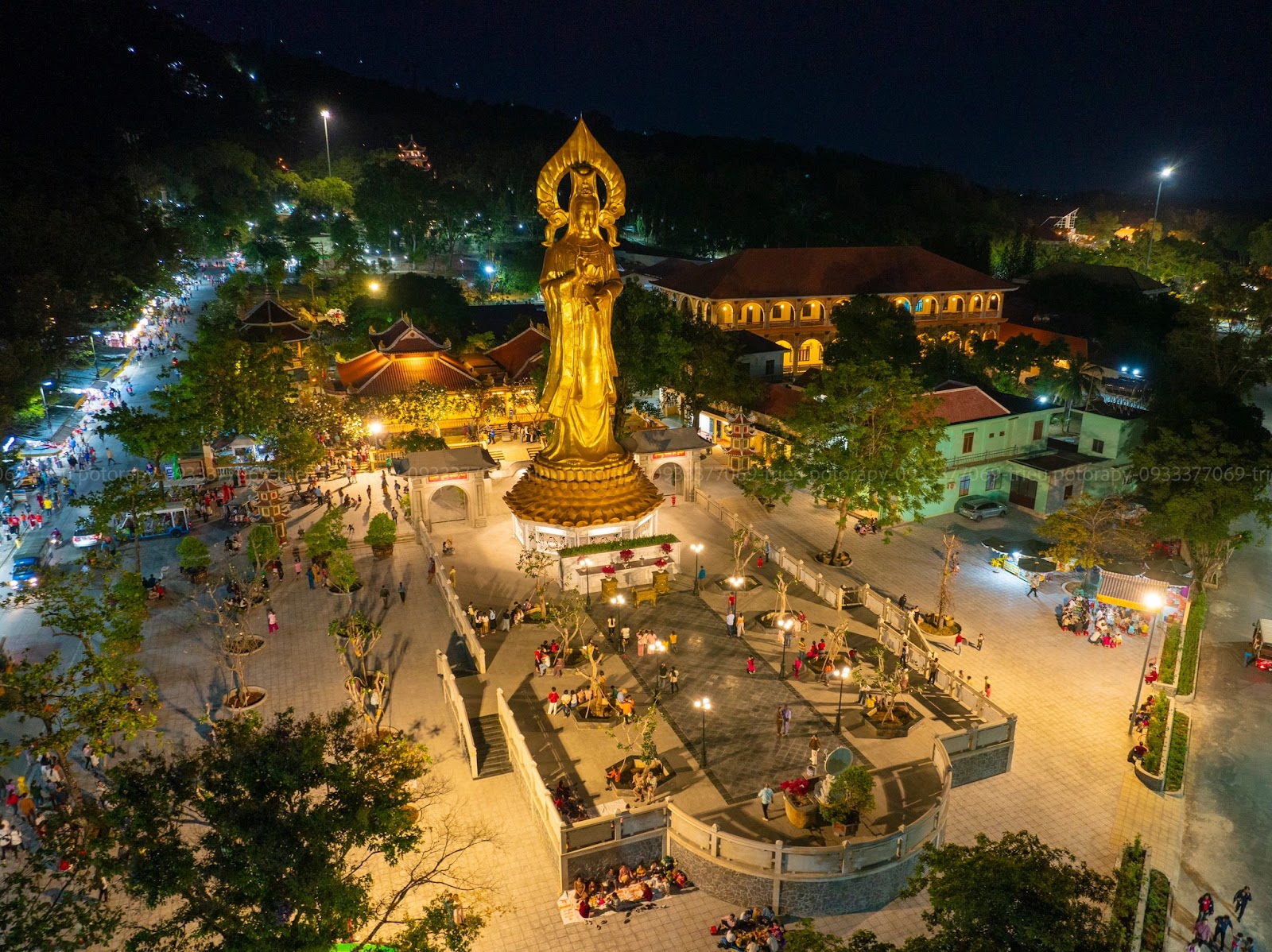
Impressive architecture of Linh Son Phuoc Trung Pagoda. (Source: Collected)
3.2. Campus and Landscape
The space outside the main hall of Linh Son Phuoc Trung Pagoda is a spacious, green garden, shaded by ancient Bodhi trees – a tree symbolizing Buddhist enlightenment and wisdom. Within that garden, the statue garden of Prince Siddhartha taking seven steps with seven blooming lotus flowers is a meaningful highlight. Each statue, each lotus flower is exquisitely crafted, recounting the sacred story of the Buddha's birth, making the pagoda's atmosphere even more mystical and meditative.
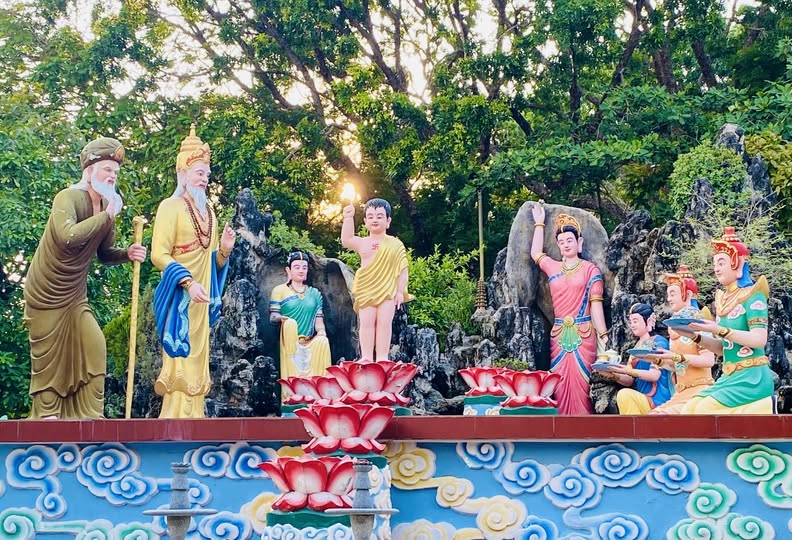
Prince Siddhartha Statue Garden at Linh Son Phuoc Trung Pagoda. (Source: Collected)
In front of the temple courtyard are stone steps leading to the main hall. On both sides are small shrines dedicated to local deities and fallen soldiers in this area, demonstrating the harmony between Buddhist teachings and the spirit of gratitude to origins. From here, visitors can see the Statue of the Black Lady Mountain Warrior, a symbol of the steadfast spirit of the people of Tay Ninh.
Amidst the fresh natural landscape, the temple bells echo with the babbling of the Golden Stream at the foot of the mountain, creating a rare peaceful scene. Every early morning, as mist still lingers around the tiled roofs, the first light of day gently covers the main hall, Linh Son Phuoc Trung Pagoda seems to light up, serene between heaven and earth, a spiritual place connecting people with nature and the compassion of Buddhism.
4. Directions to Linh Son Phuoc Trung Pagoda
Linh Son Phuoc Trung Pagoda is located right at the foot of Black Lady Mountain, about 8 km from the center of Tay Ninh. Visitors can easily reach here by various means of transportation.
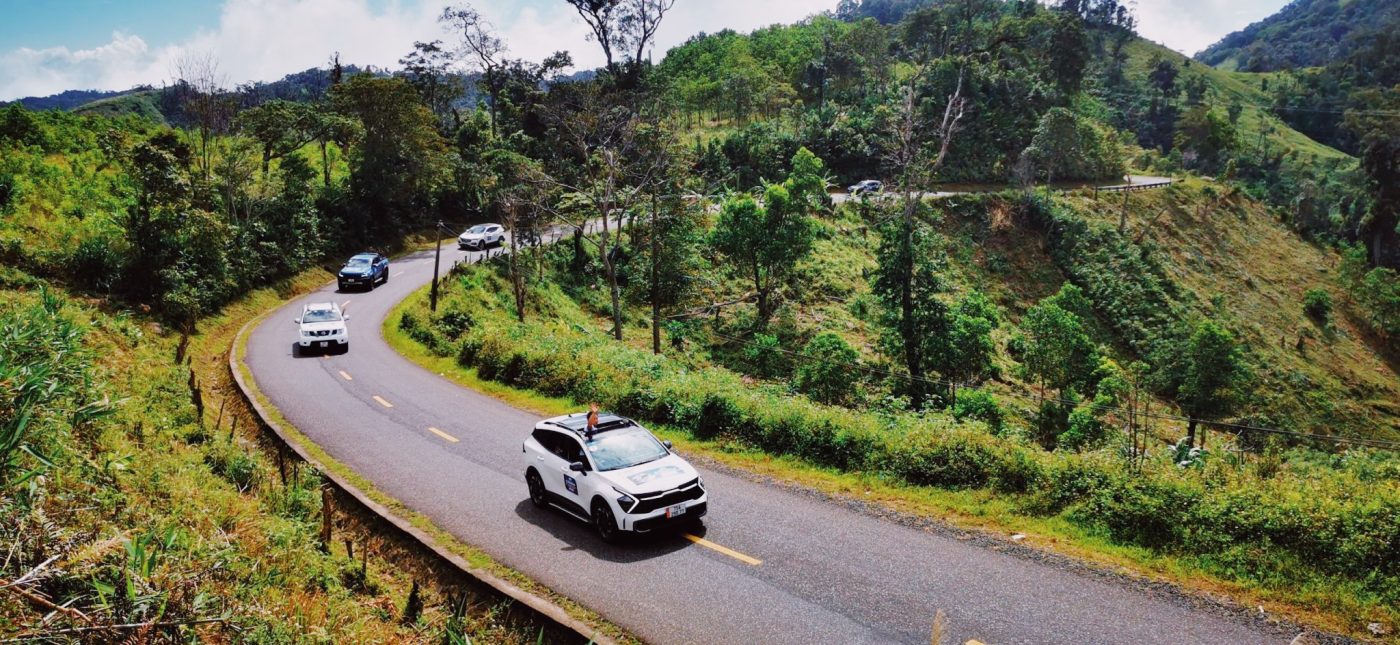
If traveling from Ho Chi Minh City (HCMC), a private car will be the most convenient mode of transport. (Source: Collected)
From Ho Chi Minh City (HCMC), the journey takes about 2 – 2.5 hours along National Highway 22A, then turn right at Trang Bang intersection to enter Provincial Road 782. Traveling about 62 km will lead you to Ba Den Mountain. Linh Son Phuoc Trung Pagoda is located right in this area, serving as the starting point on the pilgrimage route up the mountain.
5. Suggestions for spiritual destinations at Ba Den Mountain
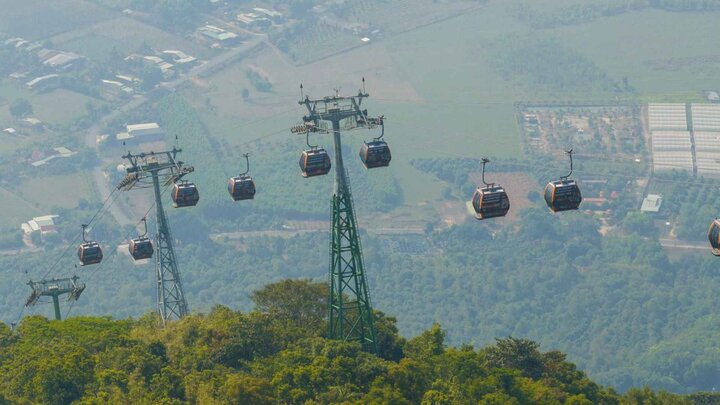
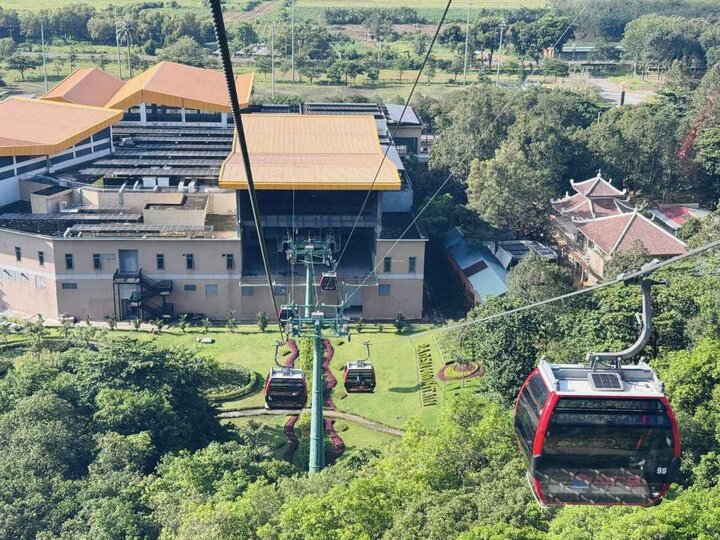
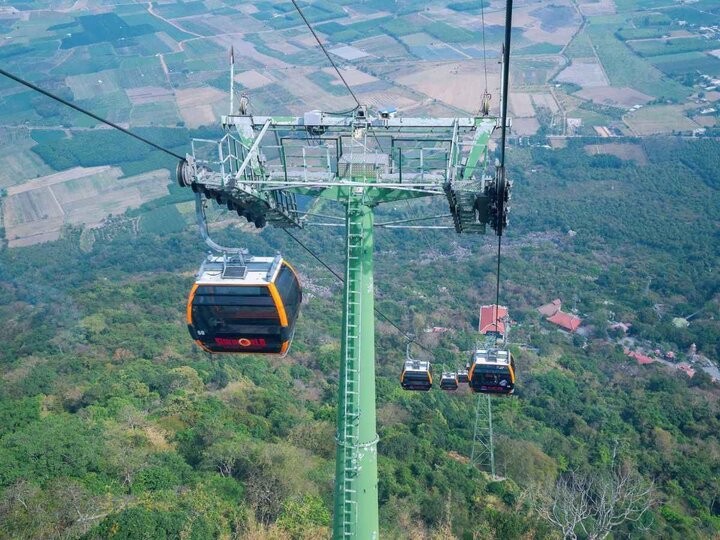
After worshipping at Linh Son Phuoc Trung Pagoda, visitors can continue their journey of exploration at Ba Den Mountain by modern cable car. Each structure on Ba Den Mountain is not only a place of worship but also a unique cultural and historical symbol, closely associated with the formation and development of Tay Ninh Buddhism.
5.1. Sun World Ba Den Mountain Spiritual Cultural Complex
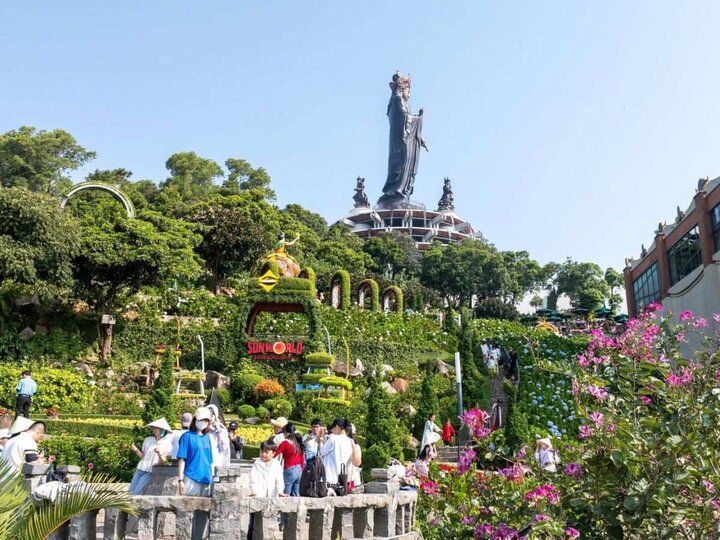
On the summit of Ba Den Mountain, Sun World Ba Den Mountain opens up a magnificent spiritual space, converging the essence of Buddhist culture and modern technology. Here, the Tay Bo Da Son Lady Buddha statue made of bronze, the tallest in Asia, stands majestically on the mountain summit amidst the land and sky of Tay Ninh, along with the Maitreya Bodhisattva statue assembled from 6,688 sandstone blocks, symbolizing boundless compassion and wisdom.
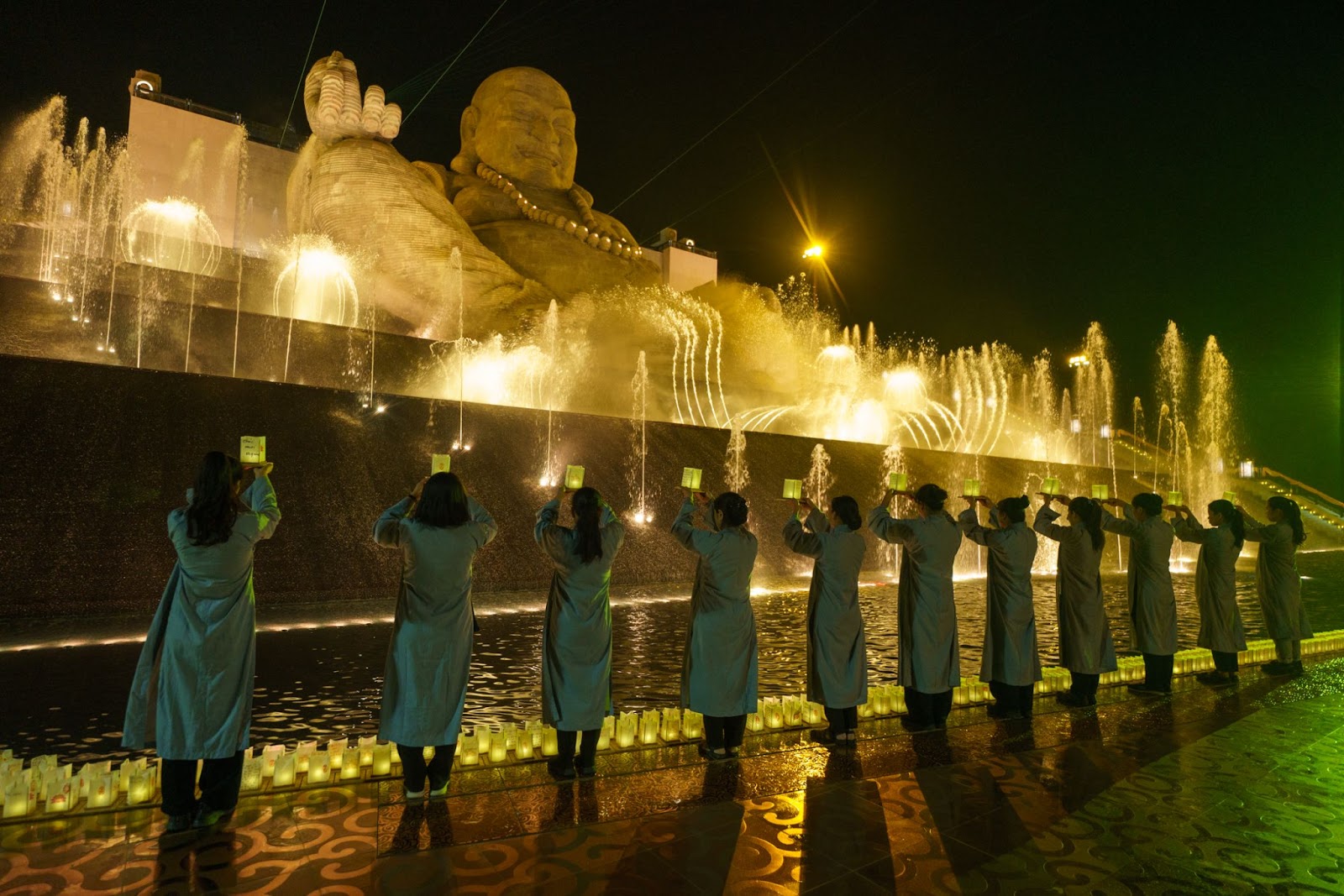
The statue of Bodhisattva Maitreya symbolizes peace and happiness.
The mountaintop area also features a Buddhist exhibition center applying advanced technology such as 3D mapping and 3D hologram, bringing visitors an experience of harmony between spirituality and art, recreated alongside technological advancements.

Experience modern 3D mapping at the Buddhist Exhibition Center at the foot of the Tay Bo Da Son Buddha statue.
Not only that, Sun World Ba Den Mountain is also the venue for many large-scale spiritual cultural festivals throughout the four seasons, such as: Ba Mountain Spring Festival, Di Lac Spring Festival, Ba Den Commemoration Ceremony, Buddha's Birthday Ceremony, Vu Lan filial piety ceremony, or Quan The Am Bodhisattva Commemoration Ceremony. Notably, the sacred lamp offering ritual every Saturday evening has become an iconic ceremony, attracting thousands of Buddhist followers and visitors from all directions to worship, pray for peace, and seek blessings.
5.2. Linh Son Tien Thach Tu (Ba Pagoda)
At an altitude of about 350 m halfway up Ba Den Mountain, Linh Son Tien Thach Tu (commonly known as Ba Pagoda) is considered the oldest pagoda in Tay Ninh, formed in 1745 and built in 1763. This over 300-year-old pagoda worships Linh Son Thanh Mau – the goddess respectfully called Ba Den by the people, a symbol of kindness and protection.
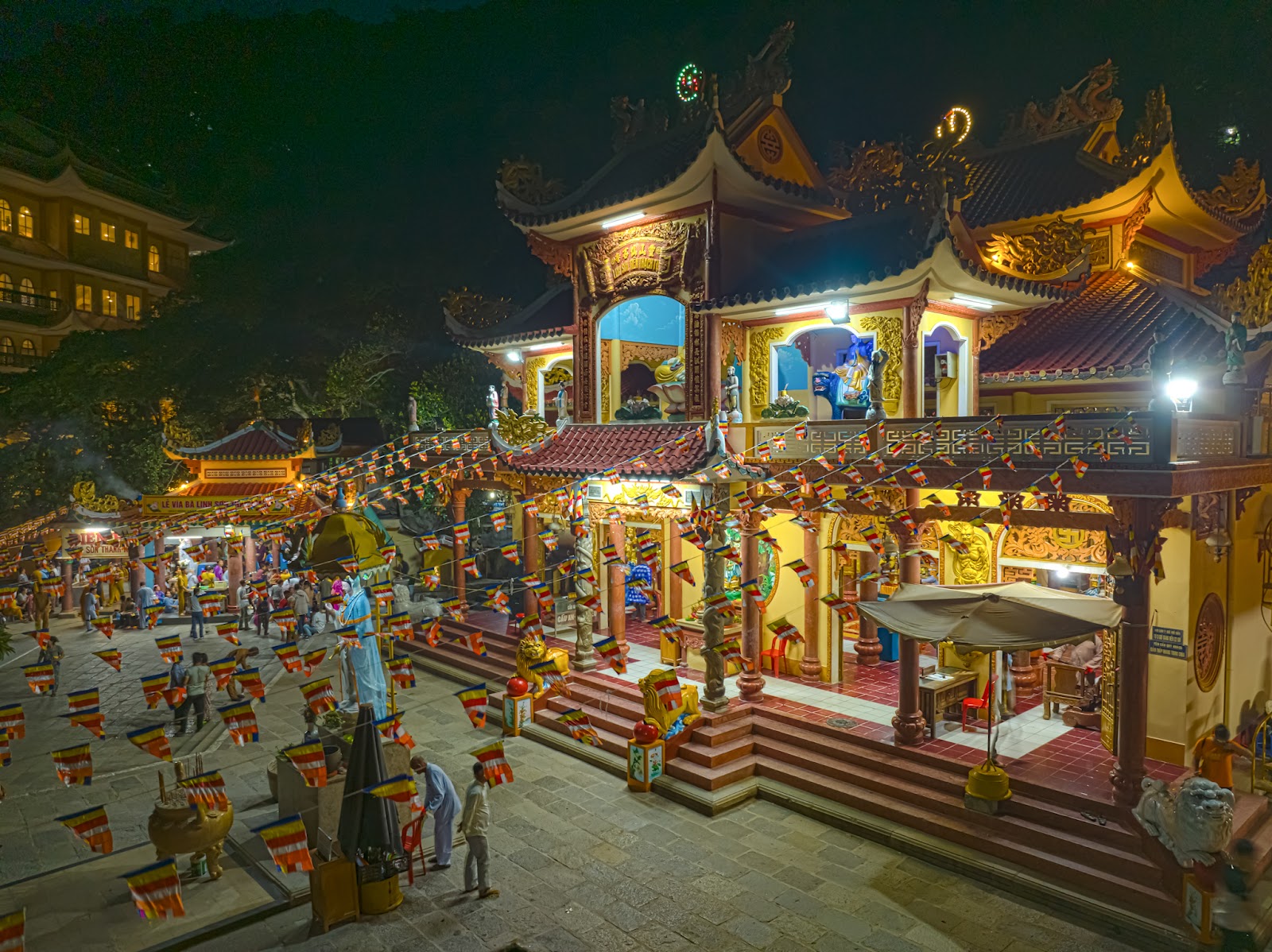
The pagoda is located in the center of the Ba Den Mountain pagoda system, worshipping Linh Son Thanh Mau. (Source: Collected)
Chùa Bà was renovated in 1997 and still preserves two ancient green stone pillars, 4.5m high, carved with winding dragons, a rare sculptural work from the early 20th century. The main hall, over 200 m², enshrines a 2.5m high statue of Sakyamuni Buddha along with majestic statues of Mahasthamaprapta Bodhisattva, Avalokitesvara Bodhisattva, and the Four Heavenly Kings.
A special feature is the Buddha sanctuary which houses the Buddha relics, a treasure donated to the pagoda in 2000 by Most Venerable Thich Hien Phap, Vice Chairman of the Executive Council of the Vietnam Buddhist Sangha. Behind the pagoda is the Ancestor Pagoda area, where patriarchs such as Tam Hoa, Giac Phu, Giac Dien, Trung Tung, and Thanh Tho are enshrined.
5.3. Ba Temple
Located adjacent to Ba Pagoda is the Ba Temple of Linh Son Thanh Mau, at an altitude of about 250m on the southeastern slope of Ba Den Mountain. This structure was established in 1872 by Patriarch Thanh Tho – Phuoc Chi, who pioneered the land, cleared the rocks, and built the temple in the cave. In 1957, the temple was renovated, retaining its ancient appearance.
Inside the cave, approximately 30 m², Linh Son Thanh Mau Bodhisattva is enshrined in the center, with the Four Mountain Deities worshipped on either side. Most impressive is the 240 kg jade statue of Linh Son Thanh Mau, exquisitely carved, reflecting shimmering light in the serene space. Despite its simplicity, Ba Temple exudes a solemn and sacred aura, serving as a place where people express their reverence for the 'Mother of the region'.
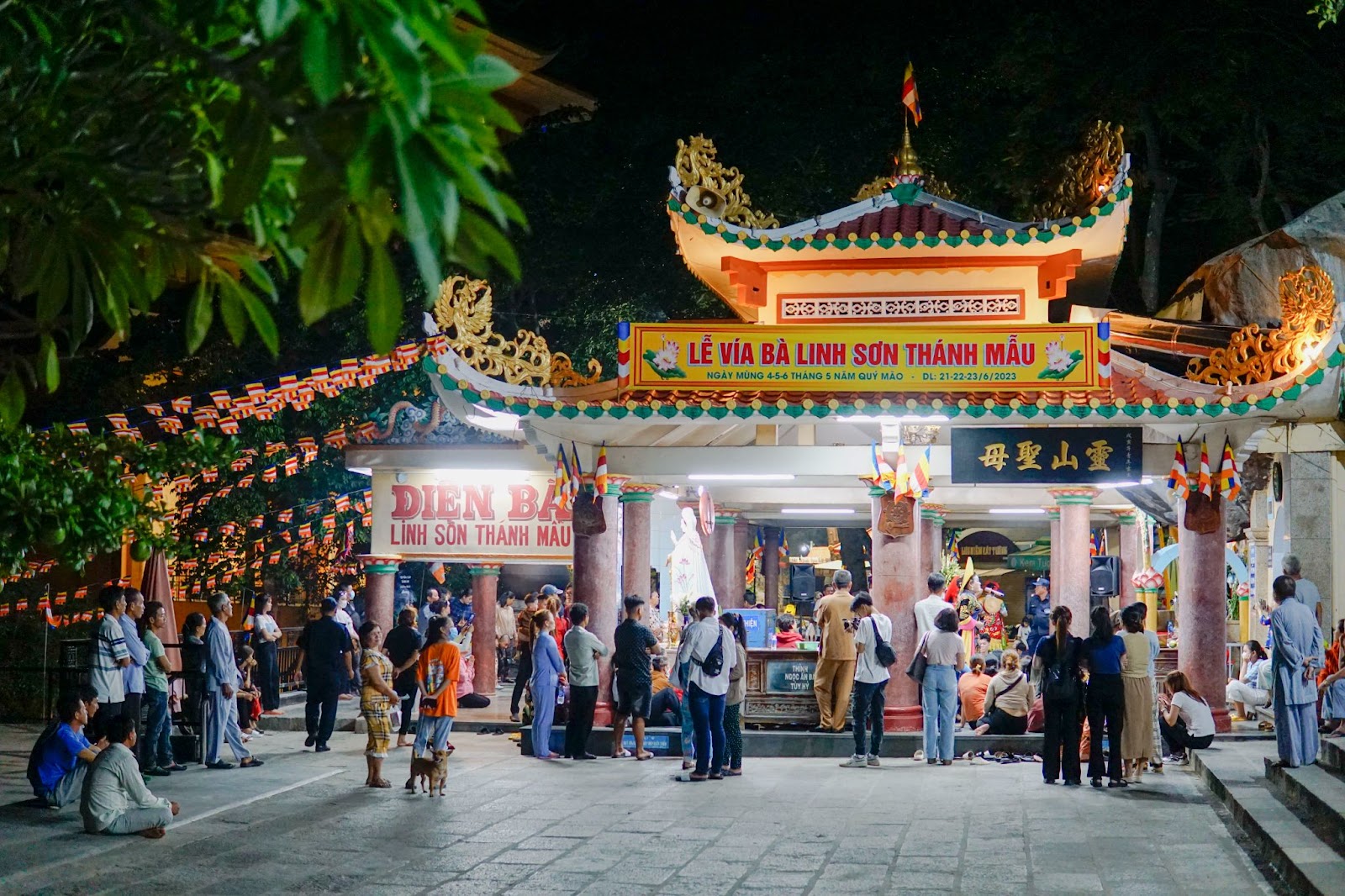
Annually, visitors from all directions flock to Dien Ba (Ba Den Temple) to pay homage, especially during festivals. (Source: Collected)
5.4. Linh Son Hoa Dong (Sacred Mountain Harmony)
Nestled in a corner of Nui Ba Den (Ba Den Mountain), the Linh Son Hoa Dong (Sacred Mountain Harmony) Pagoda was restored from an ancient pagoda where Venerable Thich Giac Dien practiced Buddhism in the mid-20th century. The pagoda has an area of about 200 m², small but solemn, co-worshipping Buddha Shakyamuni, Avalokitesvara Bodhisattva, and Linh Son Holy Mother.
A special feature on the way to Hoa Dong Pagoda is the statue of Buddha Shakyamuni entering Nirvana, a symbol of liberation and peace amidst nature. The space here is peaceful, separated from the noisy pace of life, making every pilgrimage step feel light and serene.
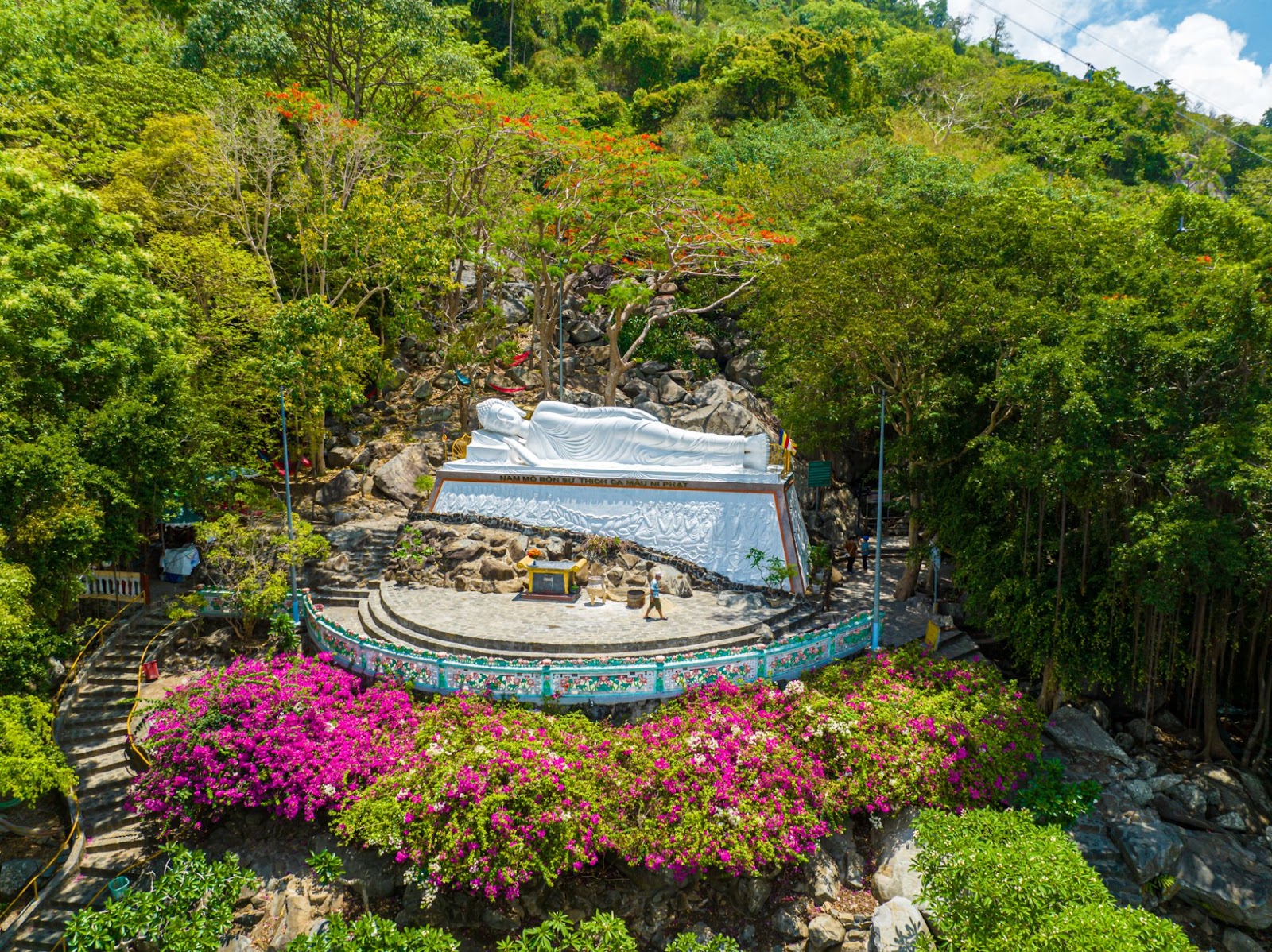
Statue of Buddha Shakyamuni entering Nirvana. (Source: Collected)
6. Experience visiting Linh Son Phuoc Trung Pagoda
Tay Ninh's climate is favorable for visitors to worship at any time. If visitors wish to worship at Linh Son Phuoc Trung Pagoda during festival seasons, they can come in January, when the Ba Den Mountain area is bustling with the Ba Den Mountain Spring Festival, in April for the Great Buddha's Birthday celebration, or attend the Ba Den Goddess Festival in May. Spiritual cultural events are held at Ba Den Mountain year-round.
Pilgrimage to Linh Son Phuoc Trung Pagoda is not just a journey of exploration, but also a journey to find inner peace. Therefore, to preserve the sacred atmosphere of this monastic place, visitors should note the following:
Attire: Dress politely and modestly, preferably in long-sleeved, subdued-colored clothing to show respect for the spiritual space.
Attitude: Maintain quietness, speak softly, and avoid loud laughter within the pagoda grounds.
Behavior: Do not arbitrarily film or photograph in the worship areas without permission; avoid touching statues or placing small change on altars.
Cleanliness: Keep the environment clean and beautiful, do not litter, do not pick flowers or break branches.
Participating in festivals: Approach with a devout mindset, so that each incense stick offered becomes a sincere prayer for peace, happiness, and compassion.

When visiting spiritual sites, it is advisable to wear polite attire to show reverence. (Source: Collected)
For those who wish to fully experience the spiritual complex of Ba Den Mountain, they can combine their pilgrimage journey from Linh Son Phuoc Trung Pagoda to Ba Pagoda, Ba Temple, Hang Pagoda, and the peak of Ba Den Mountain. Each step taken is a spiritual ascent, where one's heart gradually becomes serene and relieved amidst the echoing temple bells in the vast forest.
Linh Son Phuoc Trung Pagoda is an ancient pagoda at the foot of Ba Den Mountain, preserving the cultural, historical, and spiritual values of Tay Ninh. With over 140 years of existence, the pagoda always brings peace to visitors and is an indispensable stop on the spiritual exploration journey in Tay Ninh.