1. Overview of Go Ken Pagoda (Tay Ninh)
1.1. Location of Go Ken Pagoda (Tay Ninh)
Go Ken Pagoda is also known as Thien Lam Tu or Thien Lam Co Tu, located in Hoa Thanh ward, Tay Ninh province. The pagoda is built on an elevated piece of land, surrounded by lush green rice fields, creating a sense of peace and serenity.
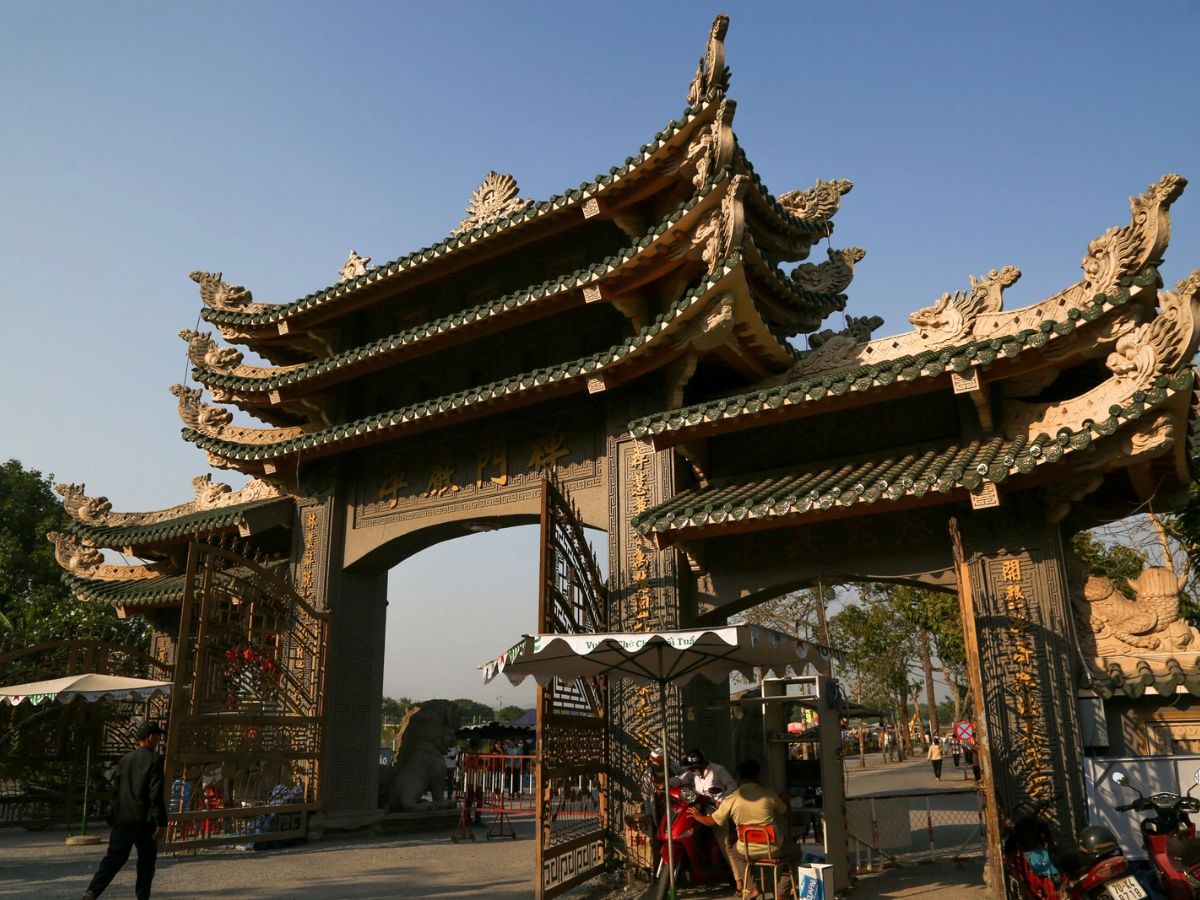
Go Ken Pagoda is only 8 km from the center of Tay Ninh, convenient to travel by motorbike or car. (Source: Collected)
The location of Go Ken Pagoda (Tay Ninh) is very convenient for travel, being only about 8 km from the center of Tay Ninh and about 90 km from Ho Chi Minh City. Visitors traveling by car or bus from major cities will only take about 2 to 2.5 hours to reach Go Ken Pagoda. Thanks to this special location, the pagoda is a suitable stopover on the journey to explore famous attractions in Tay Ninh.
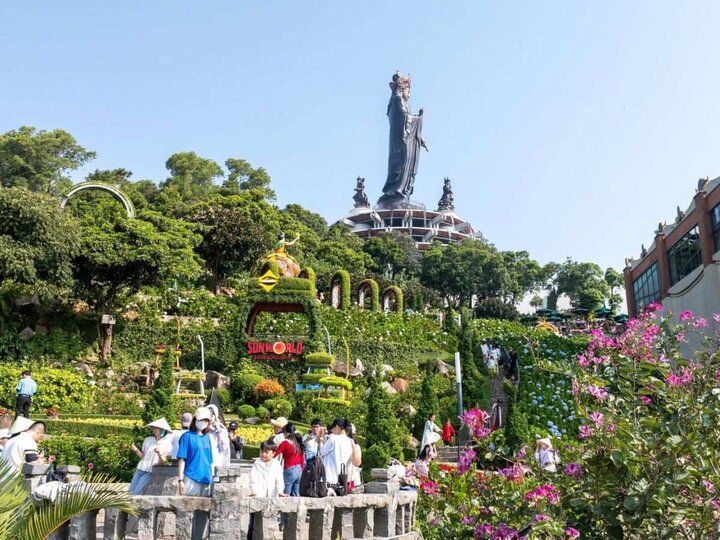
Another convenient point is that Go Ken Pagoda is located near many prominent tourist attractions such as Cao Dai Holy See (3 km away) and Black Lady Mountain along with the Sun World Ba Den Mountain ecosystem (16 km away). The convenient connection location helps visitors easily plan a full-day exploration.
1.2. Meaning of the name "Go Ken"
The name "Go Ken" originates from the area's natural terrain. Local legend says that the land where the pagoda was built was originally a high mound, surrounded by many 'ken' vines bearing ripe red fruits, with a taste that is a characteristic blend of sweet and sour.
Officially, the pagoda is named Thien Lam Tu, in line with the custom of naming Buddhist religious structures. However, in daily communication, locals and visitors often affectionately call it Go Ken Pagoda, showing familiarity and approachability.
The coexistence of both the formal name and the folk name not only reflects a part of the local culture but also demonstrates the closeness and connection of Go Ken Pagoda with the community of Tay Ninh residents, as well as pilgrims and visitors from afar.
2. History of Formation and Development
2.1. Construction Period of Go Ken Pagoda
Go Ken Pagoda (Tay Ninh) was built in the early 20th century, between approximately 1904 and 1909, founded by Most Venerable Thich Tri Luong. Some records also suggest that the pagoda began as a small hermitage in the late 19th century, before being expanded to its current scale.
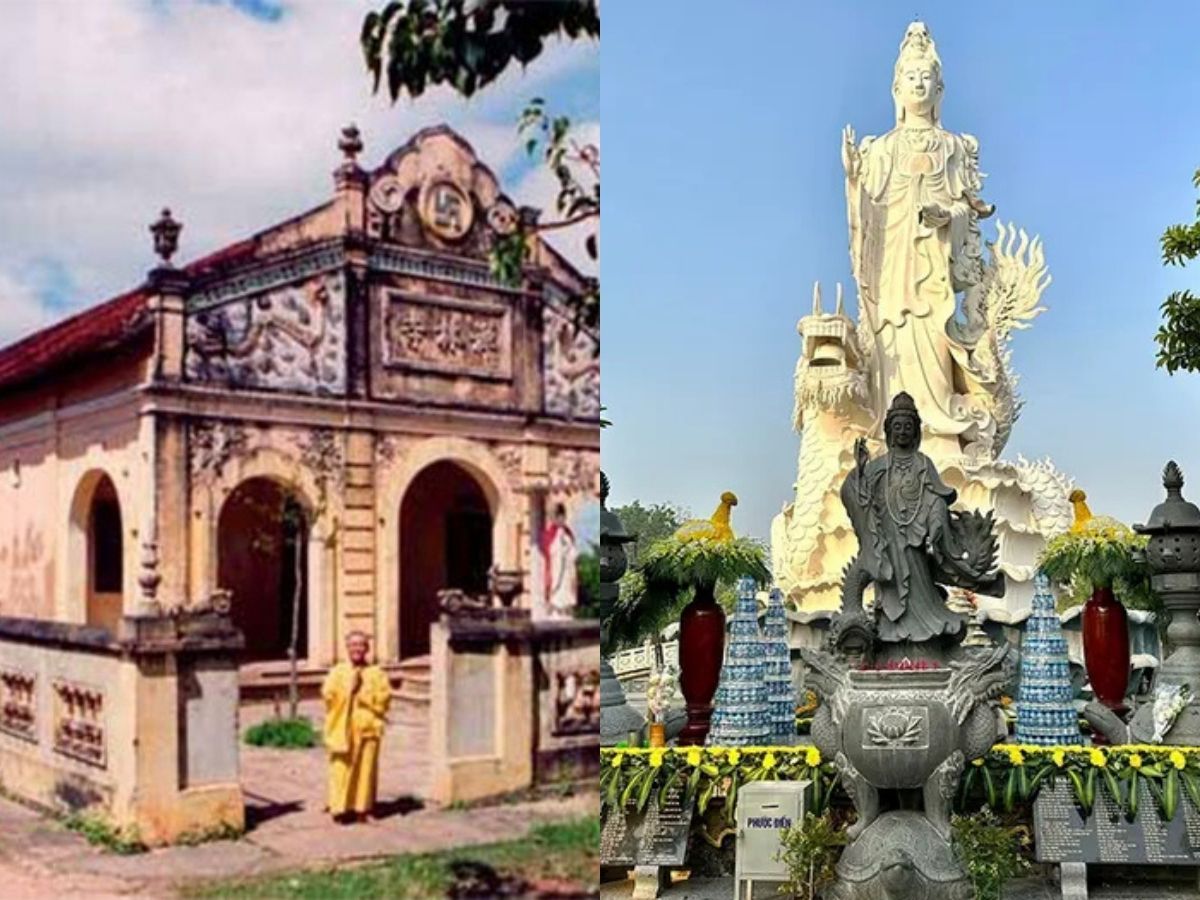
The formation process of Go Ken Pagoda has undergone many renovations and upgrades. (Source: Collected)
Over a century, Go Ken Pagoda has undergone many renovations and upgrades. What is commendable is that each renovation phase retains the ancient classic features, while also focusing on adding structures to serve the increasing spiritual and religious activities of the people and Buddhists.
The early period of the pagoda's construction marked a peaceful period in the Tay Ninh region at that time. From its establishment, the pagoda quickly became a reliable place for religious practice, earning respect in the Southern region.
2.2. Role in the Spiritual Life of the People of Tay Ninh
For over 100 years, Go Ken Pagoda (Tay Ninh) has become one of the largest and oldest Buddhist centers in the province. Not only a place for religious practice and activities, the pagoda also regularly organizes major festivals and religious events, attracting numerous Buddhists and visitors from all directions.
Some important ceremonies such as Buddha's Birthday, Vu Lan Festival, and the full moon of the first lunar month always carry a solemn and profound atmosphere. This is an occasion for the Buddhist community and visitors to interact and share meaningful spiritual values.
Besides that, the educational and charitable roles of Go Ken Pagoda are also regularly promoted through charitable activities such as organizing free medical examinations and treatments, awarding scholarships to disadvantaged children in remote areas, and building an increasingly strong community.
3. Unique Architecture of Go Ken Pagoda
3.1. East-West Interplay in the Architecture of Go Ken Pagoda
The outstanding highlight of Go Ken Pagoda (Tay Ninh) lies in its architecture that harmoniously combines traditional Eastern styles with lines that strongly carry a Western spirit. This blend creates a unique appearance, completely different from pagodas of the same period in the Southern region.
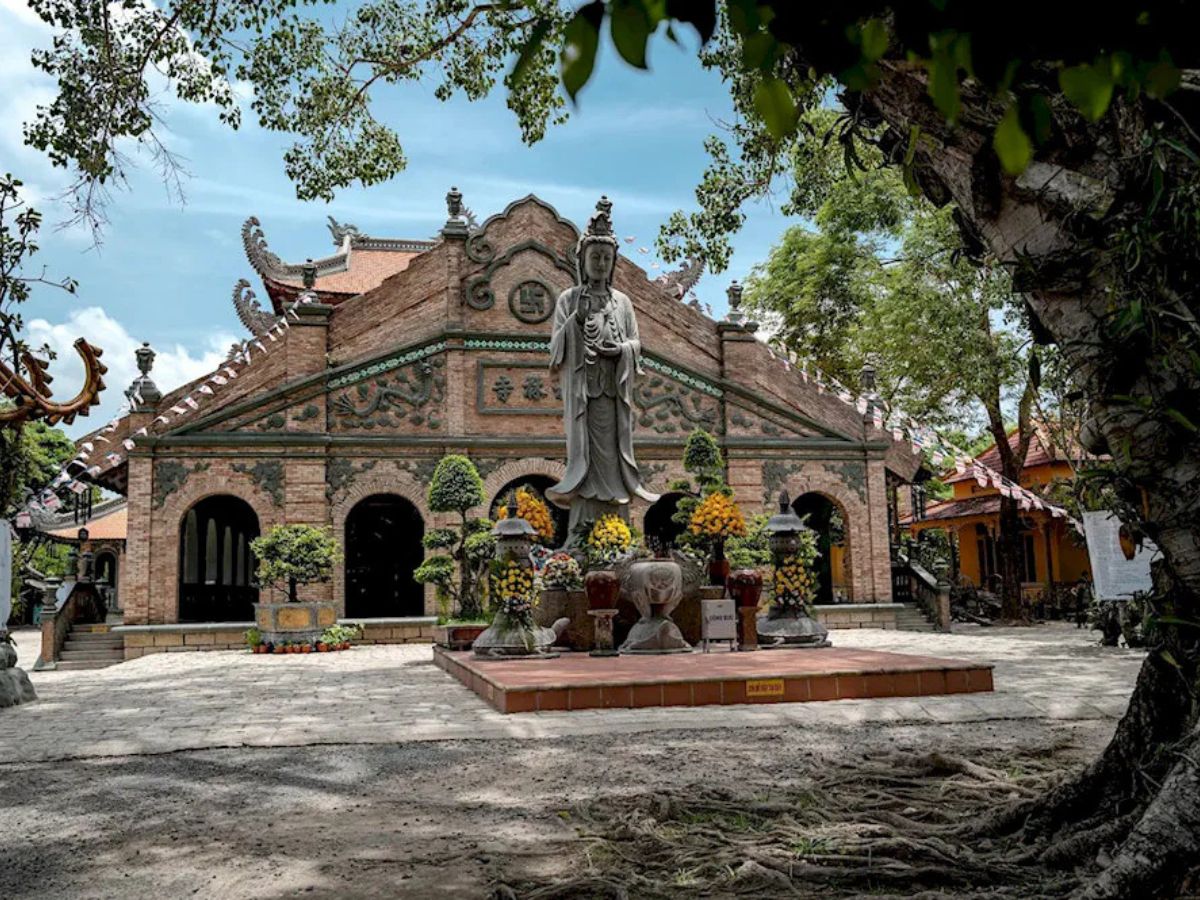
The architecture of Go Ken Pagoda (Tay Ninh) is over 100 years old. (Source: Collected)
Eastern Asian elements are evident through the curved tiled roofs, intricately carved wooden details, and interior space arrangement following traditional Feng Shui principles. The Buddha worship area is located in the center of the main hall, surrounded by couplets and horizontal boards showcasing skillful carving.
In terms of Western influences, the main gate leaves an impression with its large arches, European-style conical bell towers, and the use of bricks, stones, and modern materials. Go Ken Pagoda is truly an architectural masterpiece for those who love exploration and admire the creativity in cultural fusion.
3.2. Outstanding Structures within the Pagoda
The main hall of Go Ken Pagoda (Tay Ninh) impresses with two rows of columns running along, divided into three bays, creating a sense of spaciousness and solemnity. Altars made of precious wood are intricately carved, with the main altar nearly 3 meters high, contributing to the majestic and sacred atmosphere of the worship space.
The outdoor statue of Quan The Am is an impressive highlight of the pagoda, about 25 meters high, standing majestically on a dragon's back. This is considered one of the largest Quan Am statues in the Southeast region, attracting many Buddhists and tourists for worship and memorable moments. Next to it is the statue of Duc Thich Ca entering Nirvana, over 20 meters long, placed solemnly in the spacious grounds, adding to the solemnity of the pagoda's space.
The pagoda grounds also feature a large lotus pond next to the Buddha statue, surrounded by many ancient trees, creating a fresh and tranquil atmosphere. Auxiliary structures that honor artistic value and spiritual significance, such as the Lumbini Garden, Di Lac altar, bell tower, and stupas, are all meticulously cared for.
4. Experiences at Go Ken Pagoda (Tay Ninh)
4.1. Worshipping Buddha and Praying for Peace at Go Ken Pagoda (Tay Ninh)
The peaceful and solemn atmosphere at Go Ken Pagoda (Tay Ninh) is very suitable for early year pilgrimages, where everyone can send their prayers for themselves, family, and friends. The gentle sounds of chanting and the scent of incense wafting in the wind seem to bring visitors' souls to a state of peace and tranquility.
The two major festivals, the 15th day of the first lunar month and the Vu Lan festival, often welcome a large number of Buddhists and visitors to attend ceremonies. During these days, the pagoda bustles with activities such as Dharma talks, releasing flower lanterns, and participating in auspicious spiritual rituals.
The ceremonies at the pagoda are meticulously organized, yet maintain a close and familiar atmosphere. Visitors can participate in rituals for blessings, health, and academic success under the guidance of monks and nuns.
4.2. Visiting and Admiring the Architecture
Upon visiting Go Ken Pagoda (Tay Ninh), one can clearly notice the distinct architectural differences compared to folk pagodas in the South. The combination of traditional East Asian space and European features creates a novel yet sacred whole.
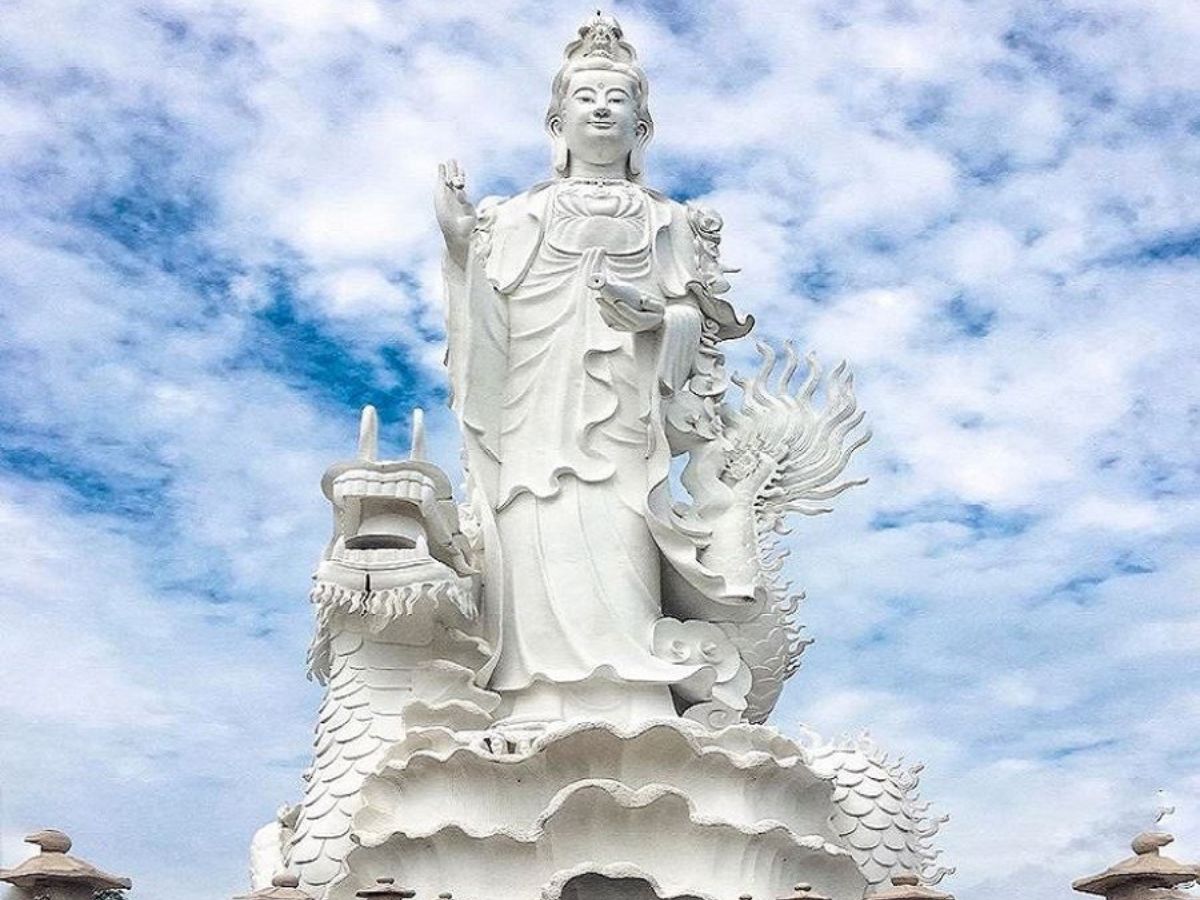
Admire the architectural space of Go Ken Pagoda (Tay Ninh). (Source: Collected)
Standing out is the large statue of Quan Am with a benevolent face amidst the serene space; the vibrant lotus garden, gracefully curved temple roofs, and clear blue lakes, all blend together to create a perfect backdrop for emotional photos.
Visiting Go Ken Pagoda is also an opportunity to broaden understanding of the convergence of Eastern and Western cultures through each decorative detail, the spatial arrangement, as well as the meaning of each structure within the overall ancient architecture.
4.3. Cultural and Community Activities
Not only a place of religious practice, Go Ken Pagoda (Tay Ninh) is also a center for developing commendable community cultural activities. The pagoda regularly organizes charitable programs such as helping disadvantaged families, building houses of compassion, and organizing free medical check-ups for the people.
Summer meditation retreats at Go Ken Pagoda are opportunities for the younger generation to cultivate morality, practice patience and compassion, thereby fostering a positive and virtuous lifestyle. Besides, the pagoda also regularly organizes Dharma talks and ethical living sessions, attracting many students to participate, contributing to spreading profound humanistic values.
At the same time, Go Ken Pagoda (Tay Ninh) is an ideal destination for spiritual tourism groups, helping visitors learn about the history of Southern Buddhism, traditional architectural values, and the local spiritual beauty.
5. Directions to Go Ken Pagoda
5.1. From Ho Chi Minh City and surrounding provinces to Go Ken Pagoda
Visitors departing from Ho Chi Minh City can choose buses from Mien Tay or An Suong bus stations with ticket prices ranging from 130,000 to 200,000 VND per person. Bus schedules are regular from morning to evening, offering many convenient choices for travelers.
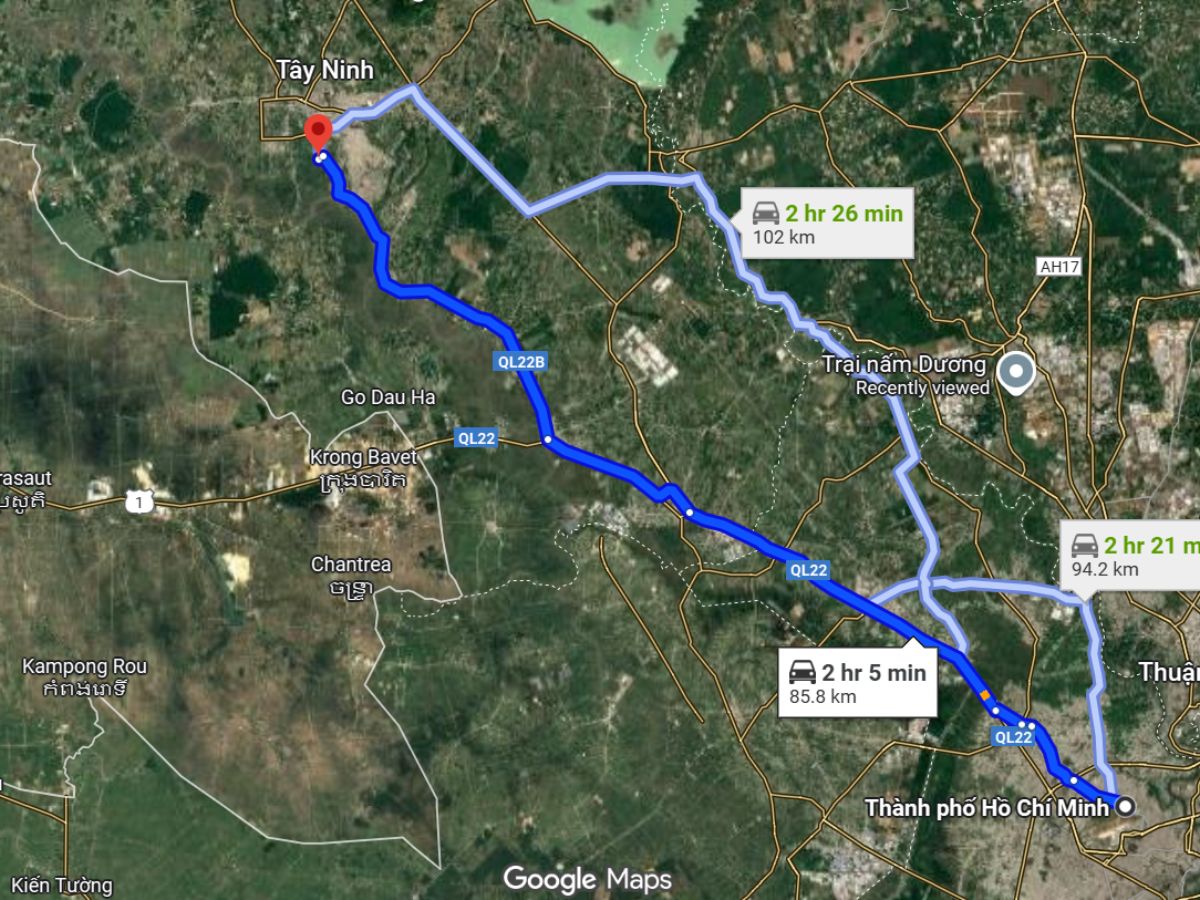
Moving from Ho Chi Minh City to Go Ken Pagoda (Tay Ninh) via QL22. (Source: Collected)
If driving a car or motorbike, the route from Ho Chi Minh City to Go Ken Pagoda (Tay Ninh) can follow National Highway 22 or the Ho Chi Minh City – Moc Bai Expressway, then turn onto provincial roads to Tay Ninh. The total distance is about 90 km, with travel time around 2 to 2.5 hours, depending on traffic conditions.
The roads leading to Go Ken Pagoda are well-built and maintained, making travel convenient and smooth. Visitors from neighboring provinces such as Long An, Dong Thap, An Giang can also easily travel thanks to the synchronized national highway network.
5.2. Traveling within Tay Ninh Province
From Tay Ninh center, it only takes about 10 - 15 minutes by motorbike or taxi to reach Go Ken Pagoda (Tay Ninh) . With a short and convenient distance, this destination is ideal to combine in a day trip exploring multiple locations.
The road to Go Ken Pagoda is equipped with clear signs, a wide road surface, and not much heavy truck traffic, making it suitable for all personal vehicles and families. Visitors can rent motorbikes at shops in the city for prices ranging from 100,000 to 150,000 VND/day.
Additionally, taxi services and ride-hailing apps in Tay Ninh are quite popular, providing convenient conditions for traveling to Go Ken Pagoda (Tay Ninh) without worrying about finding directions or parking.
6. Combine sightseeing near Go Ken Pagoda
With its convenient location, Go Ken Pagoda (Tay Ninh) allows visitors to easily combine visits to many other unique destinations in the same trip. About 3 km from the pagoda is the Cao Dai Holy See, which is large in scale and rich in religious value.
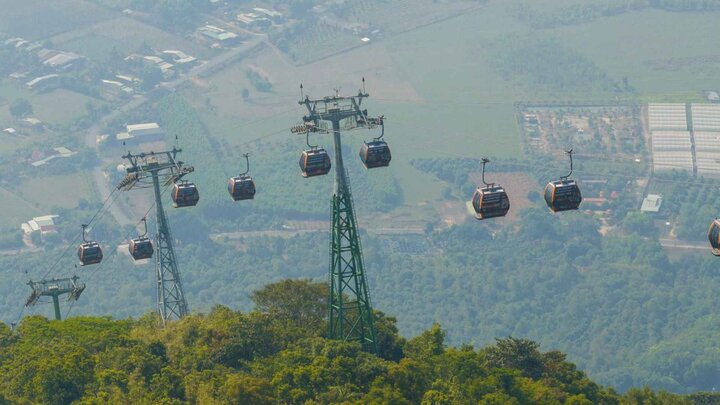
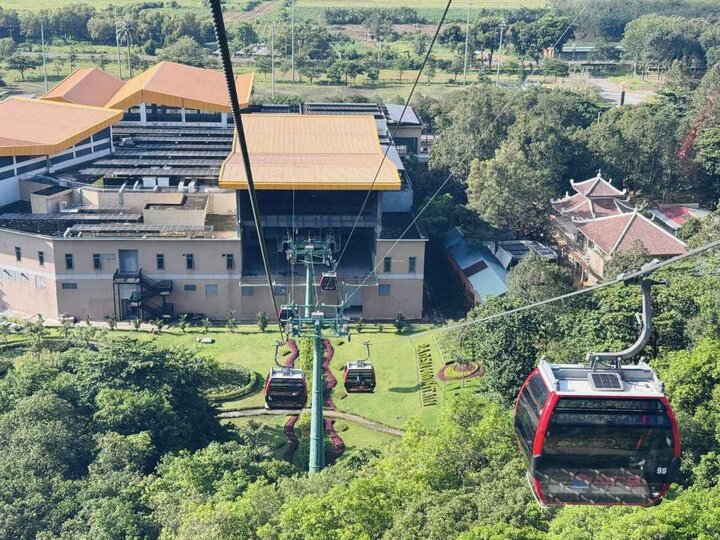
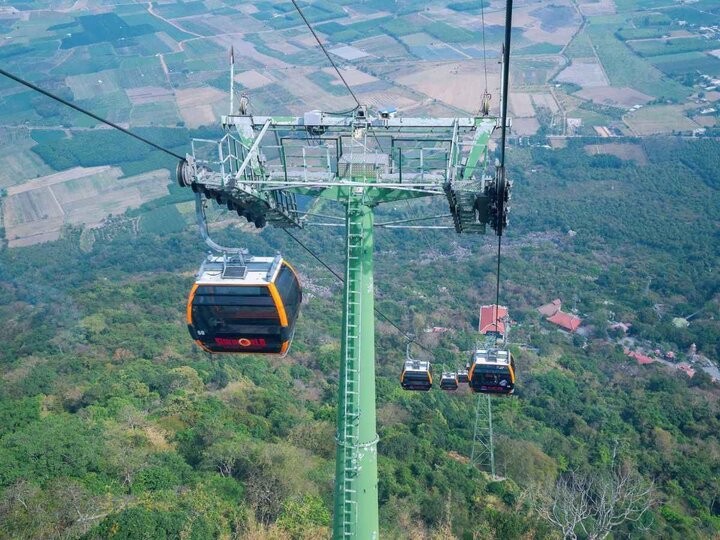
Ba Den Mountain along with the Sun World Ba Den Mountain ecosystem is located 16 km from Go Ken Pagoda, serving as a leading destination combining ecological and spiritual experiences in the southern region. Here, visitors can try the modern cable car system, explore the entertainment area, and enjoy the pleasant atmosphere on the mountaintop.
Tay Ninh Market and the central area are also ideal places to enjoy local delicacies. Specialties such as sun-dried rice paper, Tay Ninh shrimp salt, and many regional dishes will provide an unforgettable culinary experience for the journey to visit the ancient pagoda.
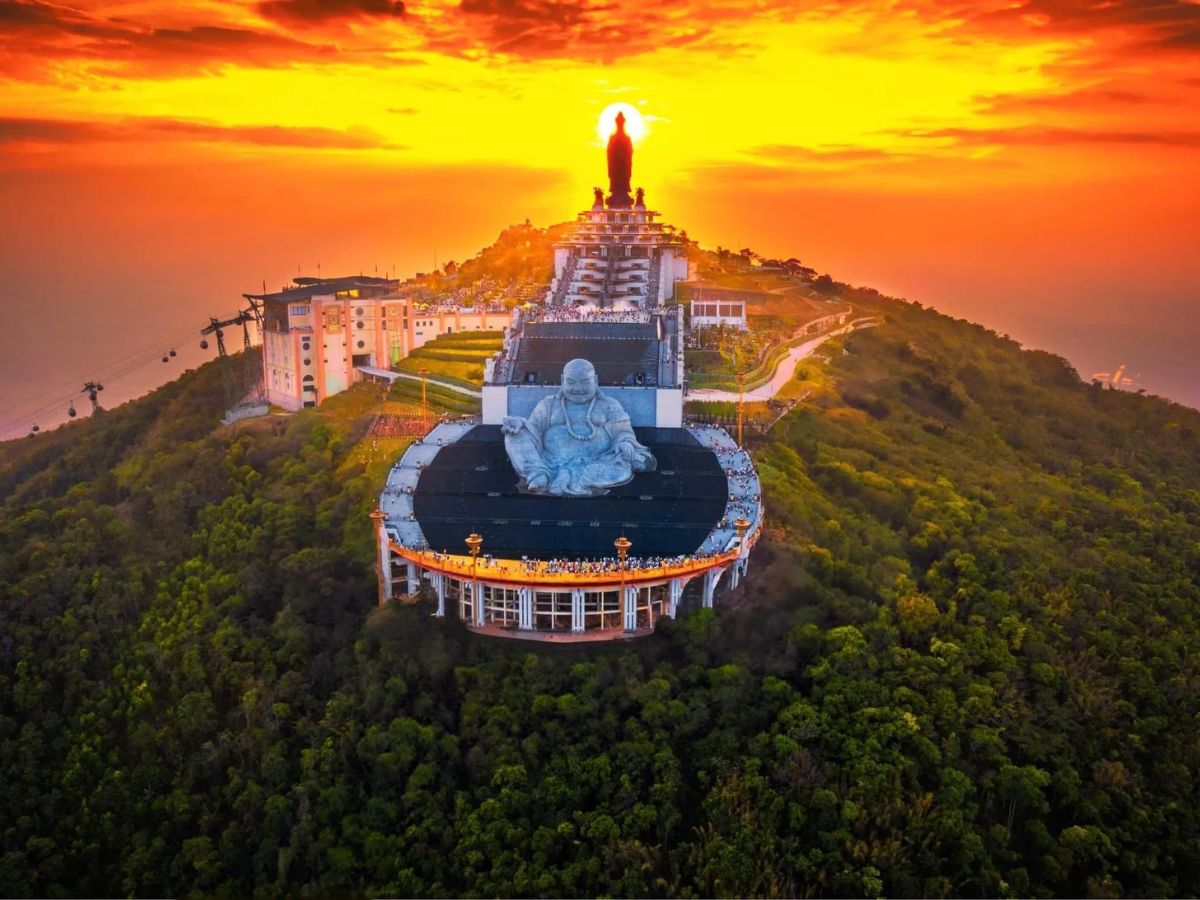
Combining worship at Go Ken Pagoda (Tay Ninh) and the pagoda system on Ba Den Mountain. (Source: Collected)
Go Ken Pagoda (Tay Ninh) not only preserves over a century of history but also stands out with its architecture harmoniously blending Eastern and Western styles. It is a solemn pilgrimage site, as well as an impressive architectural cultural space. In 2025, visit Go Ken Pagoda once to discover a precious spiritual journey and admire the unique architectural values here!